by Jason Joyner | Apr 21, 2008 | Bible, Blog, conspiracy, CSFF, reading, reviews, speculative fiction
Some of the best loved passages in the whole Bible come from the correspondence of the apostle Paul to the Corinthian church. The letters of 1 and 2 Corinthians teach on a number of issues and give insight that no other books in the New Testament have.
Interestingly, Paul had a greater conversation with the Corinthian church than what many people realize on the surface.
He first came to Corinth on his second missionary journey, after being chased out of other Grecian centers such as Thessalonica, Berea, and Athens. He met up with Priscilla and Aquila, fellow Jewish Christians and tentmakers. He stayed and worked with them, proclaiming the gospel in the famously immoral city. The record in Acts states he stayed there for “some time”, and then left to hit Ephesus on the way back to Antioch in Syria.
Paul hit the road almost immediately after his return, encouraging churches in Galatia before coming back to Ephesus, where he stayed for three years. It was during this time that scholars believe he wrote his letters to the Corinthian church. We have two letters included in the Bible, 1 and 2 Corinthians.
There are…more.
In 1 Corinthians 5:9-11 it refers to a prior letter that Paul wrote to the church, before 1 Corinthians. Apparantly he had written to them about issues regarding sexual immorality and he clarifies his position in the current letter. He gives much teaching in what we know as 1 Corinthians, and it seems to have been received poorly. When we move into 2 Corinthians, Paul references a “painful visit” in chapter 2 verse 1. It is thought that the letter of 1 Corinthians was not well received, and Paul made a visit to bring correction. After he left, he wrote yet another letter to the Corinthians, which seems to finally have the effect that he wanted, causing “sorrow that led…to repentence” (2 Cor 7:8-9, see also 10:9-11). Thus, the relationship between the teacher and the church is restored, and Paul can write a more joyful letter that becomes our 2 Corinthians.
This begs the question: what happened to the “other” Corinthian letters. By this count, there were at least four letters of Paul to the Corinthians. The two other letters I have mentioned have no other reference in Scripture, and no known copy or fragment exists. In early lists of approved New Testament books, there is no mention of other Corinthian letters. We have no idea, other than the two quick references listed above, what the other books contained.
I have heard people who criticize the Bible’s accuracy claim that the lack of 4 Corinthian letters shows the Bible wasn’t accurately preserved. To this I say hogwash. Just because it is mentioned in the Bible doesn’t mean that it was meant to be in the Bible. Paul quotes a pagan philosopher, should the pagan’s works be in the Bible? I believe that what we needed was preserved, and these other Corinthian letters were of such a personal nature that they weren’t pertinent to be kept in a global/general teaching manual like the Bible.
But…what if one of the “lost” letters to the Corinthians was found? What if it held explosive teaching and prophecy, threatening the status quo and becoming the centerpiece of a battle between good and evil?
What if?
Check back tomorrow for more…
Brandon Barr
Jim Black
Justin Boyer
Jackie Castle
Karri Compton
CSFF Blog Tour
Gene Curtis
D. G. D. Davidson
Jeff Draper
April Erwin
Karina Fabian
Beth Goddard
Marcus Goodyear
Todd Michael Greene
Michael Heald
Christopher Hopper
Joleen Howell
Kait
Carol Keen
Mike Lynch
Terri Main
Margaret
Melissa Meeks
Pamela Morrisson
John W. Otte
Rachelle
Steve Rice
Ashley Rutherford
Chawna Schroeder
James Somers
Rachelle Sperling
Stuart Stockton
Steve Trower
Speculative Faith
Robert Treskillard
Laura Williams
Timothy Wise
by Jason Joyner | Apr 21, 2008 | Bible, Blog, conspiracy, CSFF, reading, reviews, speculative fiction
Some of the best loved passages in the whole Bible come from the correspondence of the apostle Paul to the Corinthian church. The letters of 1 and 2 Corinthians teach on a number of issues and give insight that no other books in the New Testament have.
Interestingly, Paul had a greater conversation with the Corinthian church than what many people realize on the surface.
He first came to Corinth on his second missionary journey, after being chased out of other Grecian centers such as Thessalonica, Berea, and Athens. He met up with Priscilla and Aquila, fellow Jewish Christians and tentmakers. He stayed and worked with them, proclaiming the gospel in the famously immoral city. The record in Acts states he stayed there for “some time”, and then left to hit Ephesus on the way back to Antioch in Syria.
Paul hit the road almost immediately after his return, encouraging churches in Galatia before coming back to Ephesus, where he stayed for three years. It was during this time that scholars believe he wrote his letters to the Corinthian church. We have two letters included in the Bible, 1 and 2 Corinthians.
There are…more.
In 1 Corinthians 5:9-11 it refers to a prior letter that Paul wrote to the church, before 1 Corinthians. Apparantly he had written to them about issues regarding sexual immorality and he clarifies his position in the current letter. He gives much teaching in what we know as 1 Corinthians, and it seems to have been received poorly. When we move into 2 Corinthians, Paul references a “painful visit” in chapter 2 verse 1. It is thought that the letter of 1 Corinthians was not well received, and Paul made a visit to bring correction. After he left, he wrote yet another letter to the Corinthians, which seems to finally have the effect that he wanted, causing “sorrow that led…to repentence” (2 Cor 7:8-9, see also 10:9-11). Thus, the relationship between the teacher and the church is restored, and Paul can write a more joyful letter that becomes our 2 Corinthians.
This begs the question: what happened to the “other” Corinthian letters. By this count, there were at least four letters of Paul to the Corinthians. The two other letters I have mentioned have no other reference in Scripture, and no known copy or fragment exists. In early lists of approved New Testament books, there is no mention of other Corinthian letters. We have no idea, other than the two quick references listed above, what the other books contained.
I have heard people who criticize the Bible’s accuracy claim that the lack of 4 Corinthian letters shows the Bible wasn’t accurately preserved. To this I say hogwash. Just because it is mentioned in the Bible doesn’t mean that it was meant to be in the Bible. Paul quotes a pagan philosopher, should the pagan’s works be in the Bible? I believe that what we needed was preserved, and these other Corinthian letters were of such a personal nature that they weren’t pertinent to be kept in a global/general teaching manual like the Bible.
But…what if one of the “lost” letters to the Corinthians was found? What if it held explosive teaching and prophecy, threatening the status quo and becoming the centerpiece of a battle between good and evil?
What if?
Check back tomorrow for more…
Brandon Barr
Jim Black
Justin Boyer
Jackie Castle
Karri Compton
CSFF Blog Tour
Gene Curtis
D. G. D. Davidson
Jeff Draper
April Erwin
Karina Fabian
Beth Goddard
Marcus Goodyear
Todd Michael Greene
Michael Heald
Christopher Hopper
Joleen Howell
Kait
Carol Keen
Mike Lynch
Terri Main
Margaret
Melissa Meeks
Pamela Morrisson
John W. Otte
Rachelle
Steve Rice
Ashley Rutherford
Chawna Schroeder
James Somers
Rachelle Sperling
Stuart Stockton
Steve Trower
Speculative Faith
Robert Treskillard
Laura Williams
Timothy Wise
by Jason Joyner | Jan 24, 2008 | Auralia's Colors, Blog, CSFF, reviews, speculative fiction
I just had a couple of final thoughts on Auralia’s Colors.
1. Robert Treskillard described the book as being “poetic”. Dang! That was the word I was searching for all night writing my post, and I couldn’t come up with it. It is definitely a poetic book.
2. Marcus Goodyear commented “Funny that you describe the book as “truly an amazing accomplishment” but then say it isn’t one of your favorites. Did you find yourself appreciating the artistry without being engaged in the story?”
Appreciating the artistry is pretty close. Let me say it this way: I really enjoyed the book overall. When I compare it to books I considered my favorites of 2007, it didn’t quite make the list. However, in my opinion it is a very key book for Christian fiction. Overstreet gives us a book that challenges the boundaries of what Christian sci-fi and fantasy can be. It tells a story artfully and boldly, without having to explain to the reader every detail of what is meant from the story.
I was engaged with the story to a great degree, but there was a little that held back. There was a little distance to it. As I said yesterday, it seemed to be part of a grander vision, but lacked a little of what it needed to stand on its own.
Overall, the use of language and the challenge Overstreet set for himself in telling his story is what made me describe it as an amazing accomplishment. I think I can appreciate that without it being one of my top favorites (not to say that I didn’t really enjoy it). Is it analogous to saying I know that Beethoven is a master, but I prefer Bach? Perhaps.
So, if you haven’t read Auralia’s Color, then I do encourage you to take a look at it and give it a chance. I think you’ll be rewarded if you do.
by Jason Joyner | Jan 24, 2008 | Auralia's Colors, Blog, CSFF, reviews, speculative fiction
I just had a couple of final thoughts on Auralia’s Colors.
1. Robert Treskillard described the book as being “poetic”. Dang! That was the word I was searching for all night writing my post, and I couldn’t come up with it. It is definitely a poetic book.
2. Marcus Goodyear commented “Funny that you describe the book as “truly an amazing accomplishment” but then say it isn’t one of your favorites. Did you find yourself appreciating the artistry without being engaged in the story?”
Appreciating the artistry is pretty close. Let me say it this way: I really enjoyed the book overall. When I compare it to books I considered my favorites of 2007, it didn’t quite make the list. However, in my opinion it is a very key book for Christian fiction. Overstreet gives us a book that challenges the boundaries of what Christian sci-fi and fantasy can be. It tells a story artfully and boldly, without having to explain to the reader every detail of what is meant from the story.
I was engaged with the story to a great degree, but there was a little that held back. There was a little distance to it. As I said yesterday, it seemed to be part of a grander vision, but lacked a little of what it needed to stand on its own.
Overall, the use of language and the challenge Overstreet set for himself in telling his story is what made me describe it as an amazing accomplishment. I think I can appreciate that without it being one of my top favorites (not to say that I didn’t really enjoy it). Is it analogous to saying I know that Beethoven is a master, but I prefer Bach? Perhaps.
So, if you haven’t read Auralia’s Color, then I do encourage you to take a look at it and give it a chance. I think you’ll be rewarded if you do.
by Jason Joyner | Jan 23, 2008 | Auralia's Colors, Blog, CSFF, reviews, speculative fiction
An Impressive Palette
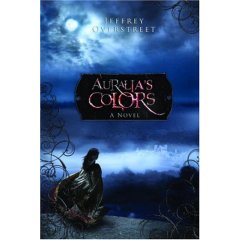
At first glance, Auralia’s Colors may have a beautiful cover with an intriguing back copy. I was interested when hearing about the book a few months ago on Becky Miller’s blog. What you get when you open the pages is the literary equivalent of a master tapestry.
Trying to write a book that prominently features colors is an inspiration that I don’t envy. However, Jeffrey Overstreet’s first novel is truly an amazing accomplishment.
It doesn’t really have a comparison in Christian fiction. That is definitely a good thing (as it shows that this “genre” is growing), but it can be a little harder to characterize it then.
I haven’t been to a lot of blogs on this tour yet, but one word that keeps coming up is literary. I think what is meant by that is that the book treats language as a beautiful thing in and of itself, rather than being secondary to the plot or action. The book seems to be carefully crafted, and the choice of words is very picturesque. Even though a major theme is color and beauty, the descriptions of birds taking flight, people’s reactions, and other things that could be mundane paint just as compelling of imagery in the reader’s mind.
The book takes chances aplenty, and it wins on a lot of them. One of the main characters is only called “ale boy” throughout the book. The plot zigs instead of zagging. There are surprises toward the end that I really didn’t see coming. The themes are deeply spiritual, but not clearly allegorical: you can not pin “this is Jesus” on one character and “this is Satan” on another. The mysterious Keeper stays mysterious throughout, and it is not fully revealed. It allows the reader to mine their own conclusions from the book.
Even though this book was very enjoyable, it didn’t quite make my list of top books for 2007. I’m sure part of this is just my taste in books – I am usually drawn to a little more fast and furious. Still, some of the plot took a long time to describe without discernible payoff later on in the book, and overall the book seems a little too much like a set-up for the whole series. I am sure it is a very hard thing to make one book self-sufficient and inclusive when imagining a whole series, but as I think about it, this is the reason that the book didn’t fully resonate with me.
Overall, this book is a very welcome entry into Christian fiction, and is a well-crafted, entertaining work that should be read by any fan of fantasy. This colorful literature is one of the most important books in Christian speculative fiction in a long time, due to its creativity and daring.
by Jason Joyner | Jan 23, 2008 | Auralia's Colors, Blog, CSFF, reviews, speculative fiction
An Impressive Palette
At first glance, Auralia’s Colors may have a beautiful cover with an intriguing back copy. I was interested when hearing about the book a few months ago on Becky Miller’s blog. What you get when you open the pages is the literary equivalent of a master tapestry.
Trying to write a book that prominently features colors is an inspiration that I don’t envy. However, Jeffrey Overstreet’s first novel is truly an amazing accomplishment.
It doesn’t really have a comparison in Christian fiction. That is definitely a good thing (as it shows that this “genre” is growing), but it can be a little harder to characterize it then.
I haven’t been to a lot of blogs on this tour yet, but one word that keeps coming up is literary. I think what is meant by that is that the book treats language as a beautiful thing in and of itself, rather than being secondary to the plot or action. The book seems to be carefully crafted, and the choice of words is very picturesque. Even though a major theme is color and beauty, the descriptions of birds taking flight, people’s reactions, and other things that could be mundane paint just as compelling of imagery in the reader’s mind.
The book takes chances aplenty, and it wins on a lot of them. One of the main characters is only called “ale boy” throughout the book. The plot zigs instead of zagging. There are surprises toward the end that I really didn’t see coming. The themes are deeply spiritual, but not clearly allegorical: you can not pin “this is Jesus” on one character and “this is Satan” on another. The mysterious Keeper stays mysterious throughout, and it is not fully revealed. It allows the reader to mine their own conclusions from the book.
Even though this book was very enjoyable, it didn’t quite make my list of top books for 2007. I’m sure part of this is just my taste in books – I am usually drawn to a little more fast and furious. Still, some of the plot took a long time to describe without discernible payoff later on in the book, and overall the book seems a little too much like a set-up for the whole series. I am sure it is a very hard thing to make one book self-sufficient and inclusive when imagining a whole series, but as I think about it, this is the reason that the book didn’t fully resonate with me.
Overall, this book is a very welcome entry into Christian fiction, and is a well-crafted, entertaining work that should be read by any fan of fantasy. This colorful literature is one of the most important books in Christian speculative fiction in a long time, due to its creativity and daring.
