
by Jason Joyner | Aug 15, 2008 | Blog, CFBA, fiction, reading
This week, the
Christian Fiction Blog Alliance
is introducing
That’s (Not Exactly) Amore
FaithWords (August 14, 2008)
by
Tracey Bateman
ABOUT THE AUTHOR:
Tracey Bateman published her first novel in 2000 and has been busy ever since. There are two other books in the Drama Queen Series, Catch A Rising Star (#1) and You Had Me At Goodbye (#2)
She learned to write by writing, and improved by listening to critique partners and editors. She has sold over 30 books in six years.
She became a member of American Christian Fiction Writers in the early months of its inception in 2000 and served as president for a year.
She has been married to her husband Rusty for 18 years, has four kids, and lives in Lebanon, Missouri.
ABOUT THE BOOK
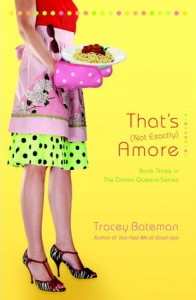 When Laini Sullivan lands a job designing Nick Pantalone’s coffee shop, there are two problems: one, Nick’s nephew Joe hates all of her ideas and two, Laini has to admit he’s right–she’s a disaster at design. Still, she can’t risk losing the job. To compromise, Joe brings in help on the project, while Laini continues to bake the goodies that keep his customers lining up.
Their relationship is moving along, so when new guy Officer Mark Hall implies that Joe’s family is tied to the mob, Laini doesn’t want to believe it. But things spin out of control when she meets the family, including “the uncles,” who seem to confirm Mark’s suspicions. To make things worse, Nana Pantalone makes it clear Laini isn’t the kind of girl she has in mind for her grandson. Laini’s not sure if she should give Joe the benefit of the doubt or just set her sights on Mark and fuhgetaboutit.
Jason says: My wife did read this one. She could tell it was in a series, but it was a refreshing, enjoyable read. She can sit and read all day if she gets into a book, and I didn’t really see her the day she dove into this one!
by Jason Joyner | Jul 23, 2008 | Blog, fiction, reviews, writing craft
There’s a saying that those who can’t do a certain something end up being teachers of that topic. That certainly isn’t true of this week’s CFBA Tour author, James Scott Bell. He writes for Writer’s Digest magazine and has published “How To” writing books through their imprint. He got to that point by developing into a fine author in his own right.
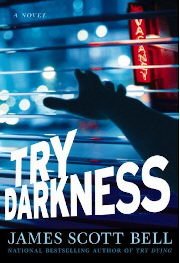
His latest book is Try Darkness, the sequel to last year’s Try Dying (one of my favorite books in ’07). Bell is a former trial lawyer, and this series features Ty Buchanan, a former big-shot lawyer who is currently helping down and outers while living as a guest at a monastery and uses a coffee shop as his office. He is approached by a woman being forced out of a hotel that won’t allow long-term tenants (illegally). The woman has a young daughter in tow named Kylie. Ty promises to look into this case, along with other jobs such as defending a murder suspect. The woman ends up dead and Kylie, who has no known last name, is left with no one to care for her but Buchanan. The search for answers takes him from the haunts of forgotten veterans and crazy people to the yachts of the rich and famous. The answers are not always what they seem, and Ty finds that he has a darkness on the inside he must battle as well.
I hadn’t read any of Bell’s fiction until last year – a fact I continue to regret. I had never read much in the way of legal thrillers before. If other authors aren’t up to par with Mr. Bell, I may not want to still. Try Darkness comes across even better than the first book. He hooks you with the opening line and has the reader wriggling on the line by the closing.
Ty Buchanan is a smart-mouthed, fast thinking young lawyer, and his verbal sparring and conflicted character is very enjoyable. Bell has a penchant for sharp, witty dialogue. This is a book to study for how to write good dialogue. I laughed out loud in several passages. The characters are well-developed, from the pious, basketball playing nun Sister Mary Veritas, to Sam DeCosse the real estate magnate, to crazy Disco Freddy down at the run-down hotel. The book also brings Los Angeles to life, from the desert on the outskirts to the rich exclusive neighborhoods in the hills.
The plot is fast paced with short, punchy chapters and enough twists to keep a contortionist occupied. I tried but couldn’t guess the “whodunit” for the main storyline. I enjoyed the book through and through. The only picky little complaint I have is that many people in the book liked to “blink” when Buchanan zinged them with a witty line. That observation is probably due to a wannabe writer who can’t turn off the internal editor, so enjoy the well-crafted story.
My final verdict (groan) is that Bell has written another winning story and has developed Ty Buchanan into a very likable roguish leading man. This book is in serious running for my favorite of the year so far. I look forward to the next book in the series, especially since he truly does leave us dangling…
If you would like to read chapters 1 & 2, go HERE
ABOUT THE AUTHOR:
 JAMES SCOTT BELL is a former trial lawyer who now writes full time. He has also been the fiction columnist for Writers Digest magazine and adjunct professor of writing at Pepperdine University.
The national bestselling author of several novels of suspense, he grew up and still lives in Los Angeles. His first Buchanan thriller, TRY DYING, was released to high critical praise, while his book on writing, Plot and Structure is one of the most popular writing books available today.
“Bell has created in Buchanan an appealing and series-worthy protagonist, and the tale equally balances action and drama, motion and emotion. Readers who pride themselves on figuring out the answers before an author reveals them are in for a surprise, too: Bell is very good at keeping secrets. Fans of thrillers with lawyers as their central characters—Lescroart and Margolin, especially—will welcome this new addition to their must-read lists.”
—Booklist
“Engaging whodunit series kickoff . . . Readers will enjoy Bell’s talent for description and character development.”
—Publishers Weekly
“James Scott Bell has written himself into a niche that traditionally has been reserved for the likes of Raymond Chandler.”
—Los Angeles Times
“A master of suspense.”
—Library Journal
“One of the best writers out there, bar none.”
—In the Library Review
by Jason Joyner | Jul 23, 2008 | Blog, fiction, reviews, writing craft
There’s a saying that those who can’t do a certain something end up being teachers of that topic. That certainly isn’t true of this week’s CFBA Tour author, James Scott Bell. He writes for Writer’s Digest magazine and has published “How To” writing books through their imprint. He got to that point by developing into a fine author in his own right.
His latest book is Try Darkness, the sequel to last year’s Try Dying (one of my favorite books in ’07). Bell is a former trial lawyer, and this series features Ty Buchanan, a former big-shot lawyer who is currently helping down and outers while living as a guest at a monastery and uses a coffee shop as his office. He is approached by a woman being forced out of a hotel that won’t allow long-term tenants (illegally). The woman has a young daughter in tow named Kylie. Ty promises to look into this case, along with other jobs such as defending a murder suspect. The woman ends up dead and Kylie, who has no known last name, is left with no one to care for her but Buchanan. The search for answers takes him from the haunts of forgotten veterans and crazy people to the yachts of the rich and famous. The answers are not always what they seem, and Ty finds that he has a darkness on the inside he must battle as well.
I hadn’t read any of Bell’s fiction until last year – a fact I continue to regret. I had never read much in the way of legal thrillers before. If other authors aren’t up to par with Mr. Bell, I may not want to still. Try Darkness comes across even better than the first book. He hooks you with the opening line and has the reader wriggling on the line by the closing.
Ty Buchanan is a smart-mouthed, fast thinking young lawyer, and his verbal sparring and conflicted character is very enjoyable. Bell has a penchant for sharp, witty dialogue. This is a book to study for how to write good dialogue. I laughed out loud in several passages. The characters are well-developed, from the pious, basketball playing nun Sister Mary Veritas, to Sam DeCosse the real estate magnate, to crazy Disco Freddy down at the run-down hotel. The book also brings Los Angeles to life, from the desert on the outskirts to the rich exclusive neighborhoods in the hills.
The plot is fast paced with short, punchy chapters and enough twists to keep a contortionist occupied. I tried but couldn’t guess the “whodunit” for the main storyline. I enjoyed the book through and through. The only picky little complaint I have is that many people in the book liked to “blink” when Buchanan zinged them with a witty line. That observation is probably due to a wannabe writer who can’t turn off the internal editor, so enjoy the well-crafted story.
My final verdict (groan) is that Bell has written another winning story and has developed Ty Buchanan into a very likable roguish leading man. This book is in serious running for my favorite of the year so far. I look forward to the next book in the series, especially since he truly does leave us dangling…
If you would like to read chapters 1 & 2, go HERE
ABOUT THE AUTHOR:
JAMES SCOTT BELL is a former trial lawyer who now writes full time. He has also been the fiction columnist for Writers Digest magazine and adjunct professor of writing at Pepperdine University.
The national bestselling author of several novels of suspense, he grew up and still lives in Los Angeles. His first Buchanan thriller, TRY DYING, was released to high critical praise, while his book on writing, Plot and Structure is one of the most popular writing books available today.
“Bell has created in Buchanan an appealing and series-worthy protagonist, and the tale equally balances action and drama, motion and emotion. Readers who pride themselves on figuring out the answers before an author reveals them are in for a surprise, too: Bell is very good at keeping secrets. Fans of thrillers with lawyers as their central characters—Lescroart and Margolin, especially—will welcome this new addition to their must-read lists.”
—Booklist
“Engaging whodunit series kickoff . . . Readers will enjoy Bell’s talent for description and character development.”
—Publishers Weekly
“James Scott Bell has written himself into a niche that traditionally has been reserved for the likes of Raymond Chandler.”
—Los Angeles Times
“A master of suspense.”
—Library Journal
“One of the best writers out there, bar none.”
—In the Library Review
by Jason Joyner | Jul 23, 2008 | Blog, dragons, fiction, speculative fiction
Here’s day 2 of the tour focusing on Donita Paul’s latest book, DragonLight.
I had a couple of responses to the “are dragons appropriate for Christian fiction” question. Thanks guys. My opinion fits in with both of the comments on this matter. Dragons don’t have to be intrinsically “bad”, as in never write about them. I don’t imagine people running out to find dragons to hang with (except maybe this guy). It depends wholly on how the author uses them. A dragon could be an example of evil (such as Frank Peretti’s The Oath – chilling!) or a force for good like in the world of the DragonKeeper Chronicles. Like Mark shared, God has given us imagination to use for his glory. And Robert made a point that God didn’t make anything that was evil in origin – the evil came from choice. Dragons and fantasy in general can be used for evil purposes, but there’s no reason a creative, imaginative Christian couldn’t use them for good.
My other thoughts on this tour came from looking at the reviews and summaries of Donita Paul’s books on Amazon. I wasn’t sure of the plot and how dragons were used, so I browsed each of the five books on Amazon. I wanted to share this quote from the School Library Journal regarding her first book, DragonSpell:
As in C. S. Lewis’s “Narnia” books (HarperCollins), Christian allegories and messages are clearly presented and easily found, but it is equally possible to read this as Kale’s story as it happened in Amara, a world completely separate from our own. It would be a shame to limit readership by relegating this clever and inventive story to the genre of Christian fiction. There is plenty of room for sequels, and readers will want to know much more about Kale and the remainder of her quest.–Susan L. Rogers, Chestnut Hill Academy, PA
Note the quote in bold – don’t miss this series! Make sure to see the other tourmates for more…specific information on this book, like reviews and such.
by Jason Joyner | Jul 23, 2008 | Blog, dragons, fiction, speculative fiction
Here’s day 2 of the tour focusing on Donita Paul’s latest book, DragonLight.
I had a couple of responses to the “are dragons appropriate for Christian fiction” question. Thanks guys. My opinion fits in with both of the comments on this matter. Dragons don’t have to be intrinsically “bad”, as in never write about them. I don’t imagine people running out to find dragons to hang with (except maybe this guy). It depends wholly on how the author uses them. A dragon could be an example of evil (such as Frank Peretti’s The Oath – chilling!) or a force for good like in the world of the DragonKeeper Chronicles. Like Mark shared, God has given us imagination to use for his glory. And Robert made a point that God didn’t make anything that was evil in origin – the evil came from choice. Dragons and fantasy in general can be used for evil purposes, but there’s no reason a creative, imaginative Christian couldn’t use them for good.
My other thoughts on this tour came from looking at the reviews and summaries of Donita Paul’s books on Amazon. I wasn’t sure of the plot and how dragons were used, so I browsed each of the five books on Amazon. I wanted to share this quote from the School Library Journal regarding her first book, DragonSpell:
As in C. S. Lewis’s “Narnia” books (HarperCollins), Christian allegories and messages are clearly presented and easily found, but it is equally possible to read this as Kale’s story as it happened in Amara, a world completely separate from our own. It would be a shame to limit readership by relegating this clever and inventive story to the genre of Christian fiction. There is plenty of room for sequels, and readers will want to know much more about Kale and the remainder of her quest.–Susan L. Rogers, Chestnut Hill Academy, PA
Note the quote in bold – don’t miss this series! Make sure to see the other tourmates for more…specific information on this book, like reviews and such.
by Jason Joyner | Jul 18, 2008 | Blog, fiction, reading, writing craft
Writers are well aware of the importance of first lines. If a reader can open your book and be hooked by the first line or the first paragraph, you’ve baited the hook very well. I’m reading Sol Stein’s Stein on Writing, and his first major chapter after the introduction deals with the critical nature of first lines.
I am also finishing up Try Darkness by James Scott Bell (stick around for my review next week). I think it has the best opening line I’ve read in a looooong time:
“The nun hit me in the mouth and said, ‘Get out of my house.'”

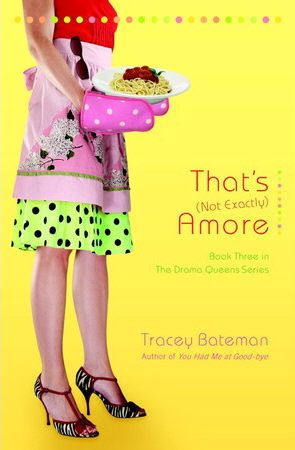 When Laini Sullivan lands a job designing Nick Pantalone’s coffee shop, there are two problems: one, Nick’s nephew Joe hates all of her ideas and two, Laini has to admit he’s right–she’s a disaster at design. Still, she can’t risk losing the job. To compromise, Joe brings in help on the project, while Laini continues to bake the goodies that keep his customers lining up.