by Jason Joyner | Sep 8, 2010 | Blog, boundaries, christian fiction, Mike Duran, Ted Dekker
Some are getting seriously tired of the label “edgy” when discussing Christian fiction. I can understand. Without an objective definition, one person’s edgy is another person’s milquetoast.
That being said, there have been a couple of interesting posts on the subject of edgy last week.
Mike Duran had an interesting post over at Decompose, and he disputes whether Christian fiction is really delving into the edgy or not. With 40+ comments this week, the dialogue has been interesting to say the least. If you’re interested in this conversation, be sure to check it out.
Ted Dekker has had a first: his latest novel Immanuel’s Veins has been banned in Holland. Strange, I know. It is only banned because the Christian publisher that produces his books there feels it is too “sensual” for their audience. Ted is not afraid to state a point, so he has a thought-provoking reply on his Facebook page.
For now I don’t have anything new to say in regards to these issues. Rather than rehashing them here, go check them out. Go on, off with ya now…
—
by Jason Joyner | Aug 29, 2010 | Blog, speculative fiction, urban fantasy
Merrie DeStefano is a buddy of Spoiled for the Ordinary, and she has a debut novel coming out later this year: Afterlife. It is urban fantasy, and it looks intriguing. Check out the blog Supernatural Underground for more info from Merrie, as well as her blog.
I’ll be looking forward to this one.
—
by Jason Joyner | Aug 29, 2010 | Blog, speculative fiction, urban fantasy
Merrie DeStefano is a buddy of Spoiled for the Ordinary, and she has a debut novel coming out later this year: Afterlife. It is urban fantasy, and it looks intriguing. Check out the blog Supernatural Underground for more info from Merrie, as well as her blog.
I’ll be looking forward to this one.
—
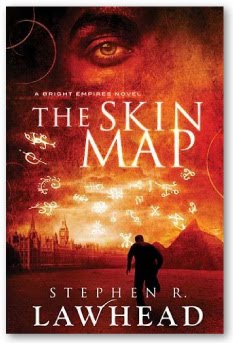
by Jason Joyner | Aug 26, 2010 | Blog, Stephen Lawhead, TitleTrakk, writing craft
Stephen Lawhead is one of the best speculative fiction authors out there currently, and even though he is a Christian who writes, he has had success crossing over into the general market.
He recently did an interview with C.J. Darlington over at TitleTrakk.com (a great resource on fiction, movies, and music that I too often overlook) that had an excellent discussion on his approach to writing. Below is the extended quote, but I encourage you to check out the whole interview, buy Stephen’s new book, and bookmark TitleTrakk for frequent viewing! The highlighted areas are by me:
“CJ: You are a Christian, but you don’t necessarily write what people call “Christian fiction”. The Skin Map touches on some greater themes without the bad language and violence. Is that purposeful on your part?
SL: I write for the widest possible readership, and I always have, even at Campus Life magazine. This whole thing about earning the right to be heard is important. I always enjoyed the classic, golden age of the novel, back in the 1880’s and 1890’s. It’s amazing how many men of faith were involved in that, and yet the books they produced are not labeled Christian fiction; they just wrote books for people like themselves who liked to read. That’s what I’ve tried to do. Sometimes I would like to have a little freer hand with the language, but I know that can also be a barrier. I’ve learned that most people in books when they use off color language, that is usually a failure of imagination, if nothing else. It’s also a moral failure. It’s so easy to put a graphic word or a swear word for shock value. But when I use a word I want it to mean what it means and have the value that I put on it. There are rare times when an artist needs to even have black on his pallette. You have to draw the line somewhere, and where I choose to draw it may be over the line for some people and others sail right by it. I don’t willfully try to offend, but sometimes you reach for a word and there are only one or two that will do. In The Skin Map we use the word “bastard” a couple times in the way it is intended to be used, but I’m sure some people will not appreciate that.
A fiction story is meant to present a dream, a sort of waking dream for the reader. You want to create a world where they can enter in and participate. You try everything you can to keep that dream alive in a continuous, seamless, whole. Any jolts that wake the reader up from the dream have to go, whether it’s a clunky scene or a sentence that isn’t quite right. You try to minimize shocks that will wake up the reader that you are trying to lull into a dream. Language can do that. Sex scenes are quite overdone these days, so I try to write scenes that aren’t dependent on that. I got in trouble with that with Patrick, because he’s a 17 year old young guy whose attracted to all the young ladies. To make it true to his life as a saint who has to battle these demons there was a scene or two that was illustrative of this point. Some people don’t understand why that has to be there, especially for good ol’ Saint Patrick, but even the best saints struggle. That is part of the human condition.”
—
