by Jason Joyner | Feb 22, 2011 | Blog, christian fiction, reviews, speculative fiction, writing craft
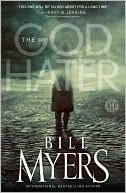
Welcome back to the CSFF Tour for February. This month’s featured book is The God Hater by Bill Myers.
For a synopsis, check out yesterday’s post introducing the book.
This book fits a “speculative fiction” category by supposing that we can build an artificial computer world, with completely independent artificial intelligence, that can be used to see how humanity will respond to variables and make better predictions.
My prediction is that this book will do well with general Christian fiction (specifically CBA readers). And that is perhaps a shame.
This book is written for a purpose. It has a specific aim – to show the logic God used in creating our world and the need for divine intervention (per the Questions to the Author in the back of the book). The book is designed to be a challenge to the New Atheists who are challenging Christian belief with old arguments and renewed fervor. It is a noble purpose, certainly. From a personal standpoint I would love to see it succeed.
Reviewing it for artistic purposes is another story.
Often Christian art is considered to be in one of two categories: it is made with creativity as the primary goal, and the theme taken from the book is incidental, or it is made with a message as the anchor, and the story is conceived and created around it. I don’t think it is necessarily bad to have a book written with the second point as the motivation, but it means that the story will require a very deft touch to make the work stand on artistic merits, apart from the theme (however holy it may be).
The God Haters, in my opinion, fails to rise above the forced preconceptions and stand as a quality piece of fiction. The story suffers from several flaws. The characters are generally 2D cut-outs, created to hold a place in the story without much depth or empathy. The Christian professor Annie escapes this to a degree, but she doesn’t carry enough of the story to overcome the other flat people. He uses several writing techniques that jarred me out of the imaginary world he was attempting to create, from using parentheses for several asides to a character with an annoying vocal tic (“bro!”). There were also a couple of scientific mistakes that threw me as a biology major, but that is me being overly picky.
The suspense and plot is pulled along well enough, and isn’t all that bad. It just isn’t all that good either. I didn’t get bored, but I wasn’t invested in what was happening. There are some touching moments as he delves into the computer simulation and the professor’s avatar gains more and more compassion for the “creation,” but it is too little, too late to save the book. A major issue seems to be that the book is too short to give the depth needed to make everything more believable. Perhaps it would be a different story if it had the length to give the depth required.
The book gives the whole back copy to quotes of endorsements. There’s no place to get a synopsis of the book, and I think that will be a disservice to readers as well.
I don’t like to give such negative reviews, but I have to be honest in my impression of a book to have some integrity as a reviewer. Christian art can be especially tricky, because the charge can be brought that I’m harming a brother in their ministry or something similar. Like I said, I admire the intent, and wish it could have worked out better. It was an ambitious project, but my opinion is that it isn’t a great book for those looking for a story with in-depth characters and a carefully crafted plot. If you’re looking for a book to shore up your Christian beliefs, then this book would be entertaining enough. I wouldn’t recommend it to a non-believer, but I really won’t be recommending it anyway.
If you make it past this gloomy review, tomorrow I want to talk about the issue of art and theme raised by this book, and compare it with another recent read.
I did receive a copy of this book from the publisher for review purposes, and was obviously not required to give a positive endorsement in exchange for the book. The opinions are my own.
Oh, and check out my tourmates at Becky’s blog for the latest and greatest from the others in the CSFF Tour.
—

by Jason Joyner | Feb 21, 2011 | angry college professors, Blog, books, CSFF, speculative fiction
|
| I hate God, and you too! |
I had one of *those* professors.
You know, one of those college PhD’s who enjoyed destroying the faith of unsuspecting freshmen coming to college with their parents’ religion shackled to them like mental bungie cords, holding them back from truly learning in the world of higher learning. (See, you can tell by that sentence that I’m a college graduate!)
The only problem for Dr. Bob Anderson is that I didn’t take him as a freshmen.
I would have done fine if I had. I’d done enough study into my own faith to shore it up. But I took him as a senior majoring in biology, taking the long put-off Botany 101 that I was hoping to avoid by getting into the physician assistant program before I had to take some rabbit classes (you know, botany, ecology – all the plant stuff). I’d also spent 9 months in YWAM’s School of Biblical Studies, so I wasn’t worried when I showed up to the first day of class and Dr. Anderson was at the podium (he wasn’t supposed to teach it, but they must have needed a switch, since he was an entomologist).
He required us to buy his own little screed in addition to our botany textbook. He spent six weeks discussing his philosophy of science and learning, while spending less than one full lecture on photosynthesis (which seems to be a fairly important biochemical reaction, but whatever dude). It was quite frustrating, but it didn’t shake me up at all. It was my main experience with this common college happenstance.
This leads us to this month’s feature book, The God Hater by Bill Myers. The book features such an atheistic professor, Nicholas Mackenzie, who delights in tearing down religion and showing it for the farce he believes it to be. He’s a cranky curmudgeon who is only really close to sweet Annie Brooks, another professor who happens to be a Christian, and her young son Rusty.
He is estranged from his computer genius brother Travis, but he gets a cryptic message from him asking for help. It seems that Travis has managed to create a true artificial intelligence, with a computer world filled with about 1000 denizens who keep wiping each other out in simulation after simulation. Travis needs his philosphical brother to create a worldview that will allow the simulation to proceed with a foundation that will keep them from obliterating each other. The key part is that their free will must be kept intact, or it will be no better than the programmers telling their creation what to do.
While the Mackenzies wrestle with their philosophical dilemna, it seems Travis has had to do some questionable hacking to rustle up enough computer power to keep this “super-secret” project going – and some people are interested enough in the outcome of this experiment that they are willing to use Annie and Rusty as leverage against Nicholas.
As they dodge the guys in black suits, Nicholas is failing in his attempts to influence the program’s inhabitants to follow a simple, materialistically-devised philosophy. Maybe if he has a digital avatar go and explain the rules of life to the simulations, he will have better success…
And with that, I leave you for my review of the book tomorrow. But check out my tourmates below for more discussion and other antics.
Noah Arsenault
Red Bissell
Thomas Clayton Booher
Keanan Brand
Kathy Brasby
Rachel Briard
Beckie Burnham
Morgan L. Busse
Carol Bruce Collett
Valerie Comer
Karri Compton
CSFF Blog Tour
April Erwin
Amber French
Andrea Graham
Tori Greene
Katie Hart
Ryan Heart
Joleen Howell
Bruce Hennigan
Becky Jesse
Cris Jesse
Becca Johnson
Jason Joyner
Carol Keen
Emily LaVigne
Shannon McDermott
Matt Mikalatos
Rebecca LuElla Miller
Mirtika
MollyBuuklvr81
John W. Otte
Sarah Sawyer
Chawna Schroeder
Andrea Schultz
Tammy Shelnut
Kathleen Smith
James Somers
Donna Swanson
Jessica Thomas
Steve Trower
Fred Warren
Dona Watson
Nicole White
Dave Wilson
—
by Jason Joyner | Feb 21, 2011 | angry college professors, Blog, books, CSFF, speculative fiction
|
| I hate God, and you too! |
I had one of *those* professors.
You know, one of those college PhD’s who enjoyed destroying the faith of unsuspecting freshmen coming to college with their parents’ religion shackled to them like mental bungie cords, holding them back from truly learning in the world of higher learning. (See, you can tell by that sentence that I’m a college graduate!)
The only problem for Dr. Bob Anderson is that I didn’t take him as a freshmen.
I would have done fine if I had. I’d done enough study into my own faith to shore it up. But I took him as a senior majoring in biology, taking the long put-off Botany 101 that I was hoping to avoid by getting into the physician assistant program before I had to take some rabbit classes (you know, botany, ecology – all the plant stuff). I’d also spent 9 months in YWAM’s School of Biblical Studies, so I wasn’t worried when I showed up to the first day of class and Dr. Anderson was at the podium (he wasn’t supposed to teach it, but they must have needed a switch, since he was an entomologist).
He required us to buy his own little screed in addition to our botany textbook. He spent six weeks discussing his philosophy of science and learning, while spending less than one full lecture on photosynthesis (which seems to be a fairly important biochemical reaction, but whatever dude). It was quite frustrating, but it didn’t shake me up at all. It was my main experience with this common college happenstance.
This leads us to this month’s feature book, The God Hater by Bill Myers. The book features such an atheistic professor, Nicholas Mackenzie, who delights in tearing down religion and showing it for the farce he believes it to be. He’s a cranky curmudgeon who is only really close to sweet Annie Brooks, another professor who happens to be a Christian, and her young son Rusty.
He is estranged from his computer genius brother Travis, but he gets a cryptic message from him asking for help. It seems that Travis has managed to create a true artificial intelligence, with a computer world filled with about 1000 denizens who keep wiping each other out in simulation after simulation. Travis needs his philosphical brother to create a worldview that will allow the simulation to proceed with a foundation that will keep them from obliterating each other. The key part is that their free will must be kept intact, or it will be no better than the programmers telling their creation what to do.
While the Mackenzies wrestle with their philosophical dilemna, it seems Travis has had to do some questionable hacking to rustle up enough computer power to keep this “super-secret” project going – and some people are interested enough in the outcome of this experiment that they are willing to use Annie and Rusty as leverage against Nicholas.
As they dodge the guys in black suits, Nicholas is failing in his attempts to influence the program’s inhabitants to follow a simple, materialistically-devised philosophy. Maybe if he has a digital avatar go and explain the rules of life to the simulations, he will have better success…
And with that, I leave you for my review of the book tomorrow. But check out my tourmates below for more discussion and other antics.
Noah Arsenault
Red Bissell
Thomas Clayton Booher
Keanan Brand
Kathy Brasby
Rachel Briard
Beckie Burnham
Morgan L. Busse
Carol Bruce Collett
Valerie Comer
Karri Compton
CSFF Blog Tour
April Erwin
Amber French
Andrea Graham
Tori Greene
Katie Hart
Ryan Heart
Joleen Howell
Bruce Hennigan
Becky Jesse
Cris Jesse
Becca Johnson
Jason Joyner
Carol Keen
Emily LaVigne
Shannon McDermott
Matt Mikalatos
Rebecca LuElla Miller
Mirtika
MollyBuuklvr81
John W. Otte
Sarah Sawyer
Chawna Schroeder
Andrea Schultz
Tammy Shelnut
Kathleen Smith
James Somers
Donna Swanson
Jessica Thomas
Steve Trower
Fred Warren
Dona Watson
Nicole White
Dave Wilson
—
by Jason Joyner | Feb 21, 2011 | arts, Blog, boundaries, christian fiction, creativity
It seems in the blogosphere there has been new conversation on the topic of language use and violence in Christian art. Note that the ideas presented aren’t necessarily new, but a healthy conversation is brewing in a few different sectors.
Mike Duran is always up to stirring up contention, discussion on his blog Decompose. He uses the example of the counting of different potentially offensive terms in the movie The Blind Side to springboard into a discussion of language in Christian fiction. His recent novel The Resurrection had a jaded construction worker, who couldn’t say damn or hell because it was produced for the CBA market.
In the recent issue of Relevant, Dan Haseltine of Jars of Clay asks if “offensive art can be Christian.” He starts off talking about a secular band declaring their allegiance to Jesus in a song that also drops an F-bomb. Does the fact that they used such a word demean their otherwise Christian content? For a little more food for thought, check out this quote from the article:
We have come so far from reflecting the rebel Jesus in our art and cultural engagement that we do not recognize Him when He surfaces. I still wrestle with the fact that Jesus hung out with prostitutes not simply to tell them what they were doing wrong, but to love them where they were. He was in the world, and His agenda was to love. He was not looking for reasons to be offended. He was not looking for reasons to stay home, safely out of harm’s way. We weren’t set apart in order to live apart. We were called God’s own so we could confidently go into the world.
In a contrary grain, another author writes in Relevant that “Christian artists should (not) use violence.” He uses the term “violence” to include gratuitous sex and language. His contention is that the world is so jaded that using rough violence or stark violence or sex doesn’t faze the world anymore. When our morals were on a similar level, works like Flannery O’Connor’s provided a shock that hit complacency. Now when modern art tries to find new levels to shock and awe, then perhaps the answer for the Christian artist is to paint a picture of beauty to be the contrast.
Whatever should be done, it is clear the Christian artist faces a peculiar enemy today: the expanding boredom of the modern age, which has the power to wash out even the severest expressions, and violence is its latest casualty. It is the constant duty of the Christian artist to outwit this amoebic tendency to consume and excrete, to make retail of riches. She must forge new paths of expression and restore old ones. When the world builds for itself a Tower of Babel, then she must paint a pile of rubble, and then when it is knocked down and the peoples wander in the refuse, she must paint a glittering city with jasper walls and foundations of precious stone.
A very intriguing article, and if you have to pick one, I think this would be it.
Finally, the flavor du jour here has been The Civil Wars. In an article in the Los Angeles Times, Joy Williams describes the freedom she now experiences being out of the Contemporary Christian Music realm.
“The process of being with John Paul (White, her band partner) is this wonderful discovery of creative freedom that I didn’t know that I had,” she said. “I started in a very restrictive genre of music. But the reality is that I’m able to write a lot more about the world around me, if it’s about faith or about cigarettes, or about murder or adultery, or about a movie that I saw, or a book we’ve both read.” Emphasis mine.
I like to put out interesting thoughts and articles for people to explore more. If you have thoughts on it, I’d enjoy your comments here as well.
—
by Jason Joyner | Feb 21, 2011 | arts, Blog, boundaries, christian fiction, creativity
It seems in the blogosphere there has been new conversation on the topic of language use and violence in Christian art. Note that the ideas presented aren’t necessarily new, but a healthy conversation is brewing in a few different sectors.
Mike Duran is always up to stirring up contention, discussion on his blog Decompose. He uses the example of the counting of different potentially offensive terms in the movie The Blind Side to springboard into a discussion of language in Christian fiction. His recent novel The Resurrection had a jaded construction worker, who couldn’t say damn or hell because it was produced for the CBA market.
In the recent issue of Relevant, Dan Haseltine of Jars of Clay asks if “offensive art can be Christian.” He starts off talking about a secular band declaring their allegiance to Jesus in a song that also drops an F-bomb. Does the fact that they used such a word demean their otherwise Christian content? For a little more food for thought, check out this quote from the article:
We have come so far from reflecting the rebel Jesus in our art and cultural engagement that we do not recognize Him when He surfaces. I still wrestle with the fact that Jesus hung out with prostitutes not simply to tell them what they were doing wrong, but to love them where they were. He was in the world, and His agenda was to love. He was not looking for reasons to be offended. He was not looking for reasons to stay home, safely out of harm’s way. We weren’t set apart in order to live apart. We were called God’s own so we could confidently go into the world.
In a contrary grain, another author writes in Relevant that “Christian artists should (not) use violence.” He uses the term “violence” to include gratuitous sex and language. His contention is that the world is so jaded that using rough violence or stark violence or sex doesn’t faze the world anymore. When our morals were on a similar level, works like Flannery O’Connor’s provided a shock that hit complacency. Now when modern art tries to find new levels to shock and awe, then perhaps the answer for the Christian artist is to paint a picture of beauty to be the contrast.
Whatever should be done, it is clear the Christian artist faces a peculiar enemy today: the expanding boredom of the modern age, which has the power to wash out even the severest expressions, and violence is its latest casualty. It is the constant duty of the Christian artist to outwit this amoebic tendency to consume and excrete, to make retail of riches. She must forge new paths of expression and restore old ones. When the world builds for itself a Tower of Babel, then she must paint a pile of rubble, and then when it is knocked down and the peoples wander in the refuse, she must paint a glittering city with jasper walls and foundations of precious stone.
A very intriguing article, and if you have to pick one, I think this would be it.
Finally, the flavor du jour here has been The Civil Wars. In an article in the Los Angeles Times, Joy Williams describes the freedom she now experiences being out of the Contemporary Christian Music realm.
“The process of being with John Paul (White, her band partner) is this wonderful discovery of creative freedom that I didn’t know that I had,” she said. “I started in a very restrictive genre of music. But the reality is that I’m able to write a lot more about the world around me, if it’s about faith or about cigarettes, or about murder or adultery, or about a movie that I saw, or a book we’ve both read.” Emphasis mine.
I like to put out interesting thoughts and articles for people to explore more. If you have thoughts on it, I’d enjoy your comments here as well.
—
by Jason Joyner | Feb 17, 2011 | Blog, Christian marketplace, creativity, music, The Civil Wars
Call it a case of “put your money where your mouth is.”
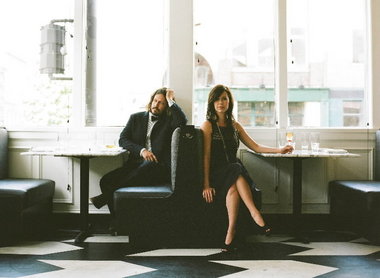
Last week I blogged about The Civil Wars and their debut album, Barton Hollow (or as they pronounce it, “Barton Hawller”). This beautiful set of songs has really captured my attention. It has also forced me to stand on some of the principles I’ve stated at this blog.
Many times I have proclaimed that Christian artists should have the freedom to produce the art they feel called to make, whether it is specifically “Christian” (which is a tricky definition) or not. So many times, we pigeon-hole Christian artists to make a certain type of music, or write only uplifting, God-honoring lyrics.
As far as I know, The Civil Wars are not a “Christian” band. However, Joy Williams had a career in CCM (contemporary Christian music) prior to joining John Paul White to form The Civil Wars. As far as I know, Mr. White has not had such a career.
In the midst of their moving vocals, there are lines such as:
“Ain’t going back to Barton Hollow
Devil gonna follow me e’er I go
Won’t do me no good washing in the river
Can’t no preacher man save my soul”
or
“If I die before I wake
I know the Lord my soul won’t take”
Doesn’t sound like typical CCM fare to me. In fact, initially I stumbled on this a little. It bothered me hearing them sing this at first, because I took it as denying that the Lord can save.
Is this really what they’re saying?
Of course not! I didn’t consider the point of view of the song – from the perspective of a man who has at least robbed a large sum of money, who didn’t think he deserved redemption. It’s a typical theme in Southern music, but I fell into the trap of taking the song very superficially.
How about their first well-known song, Poison and Wine?
“Your mouth is poison, your mouth is wine”
or
“I don’t love you, but I always will”
Honestly, I was disappointed in myself for tripping up over something that wasn’t there. Listening deeper, their lyrics like from Poison and Wine talk about the dichotomy in a relationship that is so strong that sometimes you can’t stand the person, but you can’t be without them. It is honest and provocative in the presentation, but it speaks to a dynamic those of us who have been in a deep relationship can identify with, even if we can’t speak the sentiment.
I’m glad that I can realize and own up to my hypocrisy. Quality art, when it has depth, will challenge us in our preconceived ideas if we let it. If we get tangled up with a superficial glance, then we will miss out on the riches beneath.
The Civil Wars are a band that has found a niche the two artists would never have found alone. I applaud them for their music, and I applaud Joy for running in a new direction. By the way, they are produced by Charlie Peacock, head of the Art House, and a strong Christian who is a creative genius. Also, they sing a song in their live set, “Pray”, that is a strong tune for crying out to Him, without succumbing to Christianese. The surface can be deceiving – the truth lies deeper than that.
Here’s to mining the riches that Jesus our Creator, our Master Artist, has for His people!
—
