by Jason Joyner | Apr 25, 2008 | Blog, reviews, speculative fiction, theology
Okay, so the CSFF tour has moved on, but I want to post quickly on two questions that may arise from the book The Begotten.
First of all, what made this book “speculative”?
The book is set in a historical time (1300’s Italy), so it is clearly not science fiction. It is not really a fanatsy. Why did it end up in a book tour for speculative fiction? Well, it might be a little of a reach for the core audience for a focus of Christian sci-fi and fantasy. However, it focuses on alternative history with a mix of supernatural power and “speculation” on what would happen if certain letters of Paul, containing prophecies, was found at some time that led to the plot of the book. In my opinion, that premise is enough to support highlighting it during the CSFF tour. Plus, it was a very well written and enjoyable book, so what is the harm in promoting such a product when it is pretty close to the intention of the tour?
The other question is, isn’t the idea of a “lost” book of Scripture dangerous territory?
Yes, this premise is dangerous territory. If it was done by someone without respect for the Bible and Christian tradition, it would most likely be a book that I could not support and recommend. Again, a comparison to DaVinci Code comes to mind. Lisa Bergren clearly holds to ideas that show her deep love for Jesus and the gospel message. The book has a rich spiritual message (that doesn’t come across preachy), and it overall is a vehicle that combines truth and entertainment in a good way.
Now, there was some liberty with how her characters responded to the lost Corinthian level, and they probably acted a little too out of character for the time frame. They sounded like modern day Pentecostals a lot of the time, not like Roman Catholics confronted with strange new teaching that would be heretical. I think the answer to this will come in the conclusion of the series, but this could be a critique of the first book.
Fiction in general is only a “what if” that happens in the author’s mind. Intertwining fiction and the Bible can be a tricky issue. Randy Ingermanson has two novels about time travel that deal with the apostles. Anne Rice is writing a series based off of Jesus’ childhood, in areas of history that we have no record for, at least Biblically. One commenter suggested that it made the premise of the book a little harder to handle since Bergren used Paul. However, it also gives the premise more legitimacy since Paul did actually make extra correspondence to Corinth that we don’t have in the Bible.
Ultimately, I think Lisa did well in her book, and it must come down to that this is fiction, and not Bible study or teaching. We have to use discernment in ANY book we read, even if it is from a respected scholar, and whether it is fiction or non-fiction. Fiction is meant to be false, yet it can be an avenue for us to examine issues in the hypothetical. Fiction is above all creative, art, and entertainment, so we have to hold to that as a baseline regarding any book.
by Jason Joyner | Apr 25, 2008 | Blog, reviews, speculative fiction, theology
Okay, so the CSFF tour has moved on, but I want to post quickly on two questions that may arise from the book The Begotten.
First of all, what made this book “speculative”?
The book is set in a historical time (1300’s Italy), so it is clearly not science fiction. It is not really a fanatsy. Why did it end up in a book tour for speculative fiction? Well, it might be a little of a reach for the core audience for a focus of Christian sci-fi and fantasy. However, it focuses on alternative history with a mix of supernatural power and “speculation” on what would happen if certain letters of Paul, containing prophecies, was found at some time that led to the plot of the book. In my opinion, that premise is enough to support highlighting it during the CSFF tour. Plus, it was a very well written and enjoyable book, so what is the harm in promoting such a product when it is pretty close to the intention of the tour?
The other question is, isn’t the idea of a “lost” book of Scripture dangerous territory?
Yes, this premise is dangerous territory. If it was done by someone without respect for the Bible and Christian tradition, it would most likely be a book that I could not support and recommend. Again, a comparison to DaVinci Code comes to mind. Lisa Bergren clearly holds to ideas that show her deep love for Jesus and the gospel message. The book has a rich spiritual message (that doesn’t come across preachy), and it overall is a vehicle that combines truth and entertainment in a good way.
Now, there was some liberty with how her characters responded to the lost Corinthian level, and they probably acted a little too out of character for the time frame. They sounded like modern day Pentecostals a lot of the time, not like Roman Catholics confronted with strange new teaching that would be heretical. I think the answer to this will come in the conclusion of the series, but this could be a critique of the first book.
Fiction in general is only a “what if” that happens in the author’s mind. Intertwining fiction and the Bible can be a tricky issue. Randy Ingermanson has two novels about time travel that deal with the apostles. Anne Rice is writing a series based off of Jesus’ childhood, in areas of history that we have no record for, at least Biblically. One commenter suggested that it made the premise of the book a little harder to handle since Bergren used Paul. However, it also gives the premise more legitimacy since Paul did actually make extra correspondence to Corinth that we don’t have in the Bible.
Ultimately, I think Lisa did well in her book, and it must come down to that this is fiction, and not Bible study or teaching. We have to use discernment in ANY book we read, even if it is from a respected scholar, and whether it is fiction or non-fiction. Fiction is meant to be false, yet it can be an avenue for us to examine issues in the hypothetical. Fiction is above all creative, art, and entertainment, so we have to hold to that as a baseline regarding any book.
by Jason Joyner | Apr 23, 2008 | Blog, CSFF, reviews, speculative fiction
I finally have a contender for favorite book of 2008.
Monday I posted about the Corinthian letters from Paul in the New Testament due to the featured book in the CSFF blog tour this month:
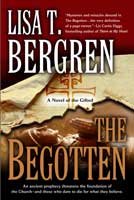
The Begotten. Written by Lisa T. Bergren, it is the first of the Gifted trilogy, with the second book
The Betrayed already available, and
The Blessed being released in fall 2008.
The Gifted trilogy is centered around a fictional “lost” letter of Paul, that speaks of a group called the Gifted who will arise to fight evil and proclaim God’s love with magnificent gifts. Father Piero is a Dominican priest in 1300’s Italy who is the chosen carrier of one section of this lost book, with other sections scattered by time due to factions trying to destroy the work. He meets Daria D’Angelo, a wealthy aristocrat in the city of Siena who is single because she was unable to conceive during a handfasting. The beautiful Daria has the gift of healing, and the two join together to complete their mission of bringing together the rest of the Gifted and following through with their prophesied destiny.
Sir Gianni is an Italian knight for the Vatican who is chasing a child-sacrificing Sorcerer through the Roman catacombs. After a harrowing chase, the Sorcerer escapes, and begins plotting to find the Gifted and twist their holy purpose to serve his vile plans. Also, Cardinal Boeri watches for both the Gifted and Sorcerer to further his agenda as well.
I wasn’t sure what to expect when I read the back cover. It has a bit of a Da Vinci Code feel from the cover. If only Dan Brown had respect for his subject matter and wrote more than cardboard characters, he might raise to the level of The Begotten. The book is not quite like Code, as it is fully set in a historical setting, but it is a very entertaining book.
Bergren manages to combine great historical research and detail with multi-dimensional characters who grow and have flaws and a moving, suspenseful plot. She keeps the reader guessing with who the “Judas” character might be, wondering if a character will be good or bad, and putting the Gifted in deeper peril through the book. I felt that I was living in the time, and the way I was drawn in to the story was very enjoyable. Sometimes the plot slowed as the characters seemed to wander around a little bit to set up a scene or plot twist in the middle, but overall the whole came together in a delightful package.
I ordered the next book, The Betrayed, before I finished the first one. I have a feeling I will be waiting impatiently for the fall when the series concludes. So if you are a fan of suspense, historical fiction, or speculative fiction, this book meets many tastes and ought to entertain and challenge with the powerful theme woven through the pages.
I want to post a little more about two questions:
What makes this book “speculative”?
Isn’t the idea of a “lost” book of Scripture dangerous territory?
Make sure to check back on this. In the meantime, see the author’s website and on Monday’s post visit some of my fellow tourmates’ sites. There’s good stuff always in the CSFF tour.
by Jason Joyner | Apr 23, 2008 | Blog, CSFF, reviews, speculative fiction
I finally have a contender for favorite book of 2008.
Monday I posted about the Corinthian letters from Paul in the New Testament due to the featured book in the CSFF blog tour this month:
The Begotten. Written by Lisa T. Bergren, it is the first of the Gifted trilogy, with the second book
The Betrayed already available, and
The Blessed being released in fall 2008.
The Gifted trilogy is centered around a fictional “lost” letter of Paul, that speaks of a group called the Gifted who will arise to fight evil and proclaim God’s love with magnificent gifts. Father Piero is a Dominican priest in 1300’s Italy who is the chosen carrier of one section of this lost book, with other sections scattered by time due to factions trying to destroy the work. He meets Daria D’Angelo, a wealthy aristocrat in the city of Siena who is single because she was unable to conceive during a handfasting. The beautiful Daria has the gift of healing, and the two join together to complete their mission of bringing together the rest of the Gifted and following through with their prophesied destiny.
Sir Gianni is an Italian knight for the Vatican who is chasing a child-sacrificing Sorcerer through the Roman catacombs. After a harrowing chase, the Sorcerer escapes, and begins plotting to find the Gifted and twist their holy purpose to serve his vile plans. Also, Cardinal Boeri watches for both the Gifted and Sorcerer to further his agenda as well.
I wasn’t sure what to expect when I read the back cover. It has a bit of a Da Vinci Code feel from the cover. If only Dan Brown had respect for his subject matter and wrote more than cardboard characters, he might raise to the level of The Begotten. The book is not quite like Code, as it is fully set in a historical setting, but it is a very entertaining book.
Bergren manages to combine great historical research and detail with multi-dimensional characters who grow and have flaws and a moving, suspenseful plot. She keeps the reader guessing with who the “Judas” character might be, wondering if a character will be good or bad, and putting the Gifted in deeper peril through the book. I felt that I was living in the time, and the way I was drawn in to the story was very enjoyable. Sometimes the plot slowed as the characters seemed to wander around a little bit to set up a scene or plot twist in the middle, but overall the whole came together in a delightful package.
I ordered the next book, The Betrayed, before I finished the first one. I have a feeling I will be waiting impatiently for the fall when the series concludes. So if you are a fan of suspense, historical fiction, or speculative fiction, this book meets many tastes and ought to entertain and challenge with the powerful theme woven through the pages.
I want to post a little more about two questions:
What makes this book “speculative”?
Isn’t the idea of a “lost” book of Scripture dangerous territory?
Make sure to check back on this. In the meantime, see the author’s website and on Monday’s post visit some of my fellow tourmates’ sites. There’s good stuff always in the CSFF tour.
by Jason Joyner | Apr 21, 2008 | Bible, Blog, conspiracy, CSFF, reading, reviews, speculative fiction
Some of the best loved passages in the whole Bible come from the correspondence of the apostle Paul to the Corinthian church. The letters of 1 and 2 Corinthians teach on a number of issues and give insight that no other books in the New Testament have.
Interestingly, Paul had a greater conversation with the Corinthian church than what many people realize on the surface.
He first came to Corinth on his second missionary journey, after being chased out of other Grecian centers such as Thessalonica, Berea, and Athens. He met up with Priscilla and Aquila, fellow Jewish Christians and tentmakers. He stayed and worked with them, proclaiming the gospel in the famously immoral city. The record in Acts states he stayed there for “some time”, and then left to hit Ephesus on the way back to Antioch in Syria.
Paul hit the road almost immediately after his return, encouraging churches in Galatia before coming back to Ephesus, where he stayed for three years. It was during this time that scholars believe he wrote his letters to the Corinthian church. We have two letters included in the Bible, 1 and 2 Corinthians.
There are…more.
In 1 Corinthians 5:9-11 it refers to a prior letter that Paul wrote to the church, before 1 Corinthians. Apparantly he had written to them about issues regarding sexual immorality and he clarifies his position in the current letter. He gives much teaching in what we know as 1 Corinthians, and it seems to have been received poorly. When we move into 2 Corinthians, Paul references a “painful visit” in chapter 2 verse 1. It is thought that the letter of 1 Corinthians was not well received, and Paul made a visit to bring correction. After he left, he wrote yet another letter to the Corinthians, which seems to finally have the effect that he wanted, causing “sorrow that led…to repentence” (2 Cor 7:8-9, see also 10:9-11). Thus, the relationship between the teacher and the church is restored, and Paul can write a more joyful letter that becomes our 2 Corinthians.
This begs the question: what happened to the “other” Corinthian letters. By this count, there were at least four letters of Paul to the Corinthians. The two other letters I have mentioned have no other reference in Scripture, and no known copy or fragment exists. In early lists of approved New Testament books, there is no mention of other Corinthian letters. We have no idea, other than the two quick references listed above, what the other books contained.
I have heard people who criticize the Bible’s accuracy claim that the lack of 4 Corinthian letters shows the Bible wasn’t accurately preserved. To this I say hogwash. Just because it is mentioned in the Bible doesn’t mean that it was meant to be in the Bible. Paul quotes a pagan philosopher, should the pagan’s works be in the Bible? I believe that what we needed was preserved, and these other Corinthian letters were of such a personal nature that they weren’t pertinent to be kept in a global/general teaching manual like the Bible.
But…what if one of the “lost” letters to the Corinthians was found? What if it held explosive teaching and prophecy, threatening the status quo and becoming the centerpiece of a battle between good and evil?
What if?
Check back tomorrow for more…
Brandon Barr
Jim Black
Justin Boyer
Jackie Castle
Karri Compton
CSFF Blog Tour
Gene Curtis
D. G. D. Davidson
Jeff Draper
April Erwin
Karina Fabian
Beth Goddard
Marcus Goodyear
Todd Michael Greene
Michael Heald
Christopher Hopper
Joleen Howell
Kait
Carol Keen
Mike Lynch
Terri Main
Margaret
Melissa Meeks
Pamela Morrisson
John W. Otte
Rachelle
Steve Rice
Ashley Rutherford
Chawna Schroeder
James Somers
Rachelle Sperling
Stuart Stockton
Steve Trower
Speculative Faith
Robert Treskillard
Laura Williams
Timothy Wise
by Jason Joyner | Apr 21, 2008 | Bible, Blog, conspiracy, CSFF, reading, reviews, speculative fiction
Some of the best loved passages in the whole Bible come from the correspondence of the apostle Paul to the Corinthian church. The letters of 1 and 2 Corinthians teach on a number of issues and give insight that no other books in the New Testament have.
Interestingly, Paul had a greater conversation with the Corinthian church than what many people realize on the surface.
He first came to Corinth on his second missionary journey, after being chased out of other Grecian centers such as Thessalonica, Berea, and Athens. He met up with Priscilla and Aquila, fellow Jewish Christians and tentmakers. He stayed and worked with them, proclaiming the gospel in the famously immoral city. The record in Acts states he stayed there for “some time”, and then left to hit Ephesus on the way back to Antioch in Syria.
Paul hit the road almost immediately after his return, encouraging churches in Galatia before coming back to Ephesus, where he stayed for three years. It was during this time that scholars believe he wrote his letters to the Corinthian church. We have two letters included in the Bible, 1 and 2 Corinthians.
There are…more.
In 1 Corinthians 5:9-11 it refers to a prior letter that Paul wrote to the church, before 1 Corinthians. Apparantly he had written to them about issues regarding sexual immorality and he clarifies his position in the current letter. He gives much teaching in what we know as 1 Corinthians, and it seems to have been received poorly. When we move into 2 Corinthians, Paul references a “painful visit” in chapter 2 verse 1. It is thought that the letter of 1 Corinthians was not well received, and Paul made a visit to bring correction. After he left, he wrote yet another letter to the Corinthians, which seems to finally have the effect that he wanted, causing “sorrow that led…to repentence” (2 Cor 7:8-9, see also 10:9-11). Thus, the relationship between the teacher and the church is restored, and Paul can write a more joyful letter that becomes our 2 Corinthians.
This begs the question: what happened to the “other” Corinthian letters. By this count, there were at least four letters of Paul to the Corinthians. The two other letters I have mentioned have no other reference in Scripture, and no known copy or fragment exists. In early lists of approved New Testament books, there is no mention of other Corinthian letters. We have no idea, other than the two quick references listed above, what the other books contained.
I have heard people who criticize the Bible’s accuracy claim that the lack of 4 Corinthian letters shows the Bible wasn’t accurately preserved. To this I say hogwash. Just because it is mentioned in the Bible doesn’t mean that it was meant to be in the Bible. Paul quotes a pagan philosopher, should the pagan’s works be in the Bible? I believe that what we needed was preserved, and these other Corinthian letters were of such a personal nature that they weren’t pertinent to be kept in a global/general teaching manual like the Bible.
But…what if one of the “lost” letters to the Corinthians was found? What if it held explosive teaching and prophecy, threatening the status quo and becoming the centerpiece of a battle between good and evil?
What if?
Check back tomorrow for more…
Brandon Barr
Jim Black
Justin Boyer
Jackie Castle
Karri Compton
CSFF Blog Tour
Gene Curtis
D. G. D. Davidson
Jeff Draper
April Erwin
Karina Fabian
Beth Goddard
Marcus Goodyear
Todd Michael Greene
Michael Heald
Christopher Hopper
Joleen Howell
Kait
Carol Keen
Mike Lynch
Terri Main
Margaret
Melissa Meeks
Pamela Morrisson
John W. Otte
Rachelle
Steve Rice
Ashley Rutherford
Chawna Schroeder
James Somers
Rachelle Sperling
Stuart Stockton
Steve Trower
Speculative Faith
Robert Treskillard
Laura Williams
Timothy Wise
