by Jason Joyner | May 7, 2008 | Blog, Christianity, fiction, music, pop culture
I came across an article on Slate entitled “Pop Goes Christianity” discussing a book from Daniel Radosh entitled Rapture Ready! : Adventures in the Parallel Universe of Christian Pop Culture. It is an interesting indictment on the subject of the sub-culture created by American Evangelicals. I think it raises some interesting issues on one hand, and dismisses or misunderstands other ideas mentioned.
How about an inflammatory quote taken out of context?
For faith, the results can be dangerous. A young Christian can get the idea that her religion is a tinny, desperate thing that can’t compete with the secular culture. A Christian friend who’d grown up totally sheltered once wrote to me that the first time he heard a Top 40 station he was horrified, and not because of the racy lyrics: “Suddenly, my lifelong suspicions became crystal clear,” he wrote. “Christian subculture was nothing but a commercialized rip-off of the mainstream, done with wretched quality and an apocryphal insistence on the sanitization of reality.”
I think this article touches on things that this blog and many other of my friends have addressed. There is a problem in how Christian culture is promoting itself, and if we look like a “parallel universe,” it is not to our credit. However, the article doesn’t understand some of the topics it is talking about either.
Read the article, and I’ll talk about it more this weekend.
by Jason Joyner | May 7, 2008 | Blog, Christianity, fiction, music, pop culture
I came across an article on Slate entitled “Pop Goes Christianity” discussing a book from Daniel Radosh entitled Rapture Ready! : Adventures in the Parallel Universe of Christian Pop Culture. It is an interesting indictment on the subject of the sub-culture created by American Evangelicals. I think it raises some interesting issues on one hand, and dismisses or misunderstands other ideas mentioned.
How about an inflammatory quote taken out of context?
For faith, the results can be dangerous. A young Christian can get the idea that her religion is a tinny, desperate thing that can’t compete with the secular culture. A Christian friend who’d grown up totally sheltered once wrote to me that the first time he heard a Top 40 station he was horrified, and not because of the racy lyrics: “Suddenly, my lifelong suspicions became crystal clear,” he wrote. “Christian subculture was nothing but a commercialized rip-off of the mainstream, done with wretched quality and an apocryphal insistence on the sanitization of reality.”
I think this article touches on things that this blog and many other of my friends have addressed. There is a problem in how Christian culture is promoting itself, and if we look like a “parallel universe,” it is not to our credit. However, the article doesn’t understand some of the topics it is talking about either.
Read the article, and I’ll talk about it more this weekend.
by Jason Joyner | May 1, 2008 | Blog, Christianity, fiction
I had a very interesting comment on my post “The Begotten – Final Questions.” I can’t verify it, because the Blogger profile attached to it is listed as “not shown”, but it is labeled as being from one Anne Rice.
Thanks for your kind mention of my novels on Christ the Lord. —- And I enjoyed your comments on fiction in general. My vocation is to write realistic novels that are about Our Blessed Lord as both Human and Divine, and to keep the probable reality within the truth of Matthew, Mark, Luke and John. I believe this is not only valid but imperative for me now as a Christian. In my childhood, we had those big novels, The Robe, Ben Hur, Quo Vadis. We need a new Christian realism I think for this generation, and I’m trying to provide my take on it. Again, Thanks, Anne.
I thought this would be good food for thought over the next few days as I’m away from the computer. If this was really Anne, (and I believe it is), then thank you very much for taking time to stop by and comment!
by Jason Joyner | May 1, 2008 | Blog, Christianity, fiction
I had a very interesting comment on my post “The Begotten – Final Questions.” I can’t verify it, because the Blogger profile attached to it is listed as “not shown”, but it is labeled as being from one Anne Rice.
Thanks for your kind mention of my novels on Christ the Lord. —- And I enjoyed your comments on fiction in general. My vocation is to write realistic novels that are about Our Blessed Lord as both Human and Divine, and to keep the probable reality within the truth of Matthew, Mark, Luke and John. I believe this is not only valid but imperative for me now as a Christian. In my childhood, we had those big novels, The Robe, Ben Hur, Quo Vadis. We need a new Christian realism I think for this generation, and I’m trying to provide my take on it. Again, Thanks, Anne.
I thought this would be good food for thought over the next few days as I’m away from the computer. If this was really Anne, (and I believe it is), then thank you very much for taking time to stop by and comment!
by Jason Joyner | Apr 30, 2008 | Blog, Christianity, Olympics, social justice
The Olympics are going to be in China this year?
…
I want to reassure people that I haven’t been living under a rock lately. Yes, I knew that the Olympics will be in Beijing in August. It has been hard not to notice with the amount of attention it has drawn in the media recently.
It seems that China’s plan of a tour de force of public relations, showcasing modern China to the world, has hit some serious snags. The torch relay around the world is the longest in Olympic history, yet it has been marred by protesters in numerous countries, notably in the U.K. and France.
The timing didn’t help, as there was a crackdown in Tibet just prior to the start of the tour. This led to a lot of groups who have grievances against China protesting along the torch relay route, even to the point of trying to douse the flame.
I am not an expert in the Tibet issue, but it sure seems to me that China is continuing with long-standing behavior of suppressing the full cultural expression and freedom of the Tibetan people. A persecuted people like this reminds us that we do not live in a world where all enjoy the freedoms we have in America. I pray for true freedom for Tibet and that their culture will be allowed to flourish, and I support the protesters using the torch relay to highlight their cause.
Yet, I don’t want people to forget that the Tibetans are only one group that suffers persecution and discrimination in China. Another group that the regular media likes to showcase that suffers religious persecution is the Fulan Gong movement. Again, I don’t like to see people forbidden to practice what they believe, but there is a much larger group that feels the pressure and is mostly ignored by the media.
By many accounts, there are well over 100 million Christians in China. When the Maoist movement took over the country, there were only up to 1 million Christians. Obviously there has been a remarkable increase in the number of believers in a country that is still officially atheist. The majority of these Christians are subject to persecution for their beliefs, and live with the potential for harassment and harm all the time.
There is an officially government sanctioned Christian church, but it is also controlled by the government. Therefore there is a large underground church, groups that meet informally and have to take care in publicizing themselves so they do not become a target for the authorities. There are so many stories of leaders and believers being imprisoned and punished for walking out their faith, and these are likely just the tip of the iceberg.
As the Olympics approach, I am sure that more attention will be paid not only to China’s impressive history and culture, but to controversy on how the regime treats minorities, Tibet, and religious groups. Remember that even if Christians are left off of the official media reports, they probably account for the largest group to suffer under the Maoist leaders in Beijing. Keep them in prayer, and keep this story in mind for the propaganda that will be fed to the public come August. The brothers and sisters in Christ upholding the faith there deserve no less.
For more information, check out the impressive report from Operation World.
by Jason Joyner | Apr 30, 2008 | Blog, Christianity, Olympics, social justice
The Olympics are going to be in China this year?
…
I want to reassure people that I haven’t been living under a rock lately. Yes, I knew that the Olympics will be in Beijing in August. It has been hard not to notice with the amount of attention it has drawn in the media recently.
It seems that China’s plan of a tour de force of public relations, showcasing modern China to the world, has hit some serious snags. The torch relay around the world is the longest in Olympic history, yet it has been marred by protesters in numerous countries, notably in the U.K. and France.
The timing didn’t help, as there was a crackdown in Tibet just prior to the start of the tour. This led to a lot of groups who have grievances against China protesting along the torch relay route, even to the point of trying to douse the flame.
I am not an expert in the Tibet issue, but it sure seems to me that China is continuing with long-standing behavior of suppressing the full cultural expression and freedom of the Tibetan people. A persecuted people like this reminds us that we do not live in a world where all enjoy the freedoms we have in America. I pray for true freedom for Tibet and that their culture will be allowed to flourish, and I support the protesters using the torch relay to highlight their cause.
Yet, I don’t want people to forget that the Tibetans are only one group that suffers persecution and discrimination in China. Another group that the regular media likes to showcase that suffers religious persecution is the Fulan Gong movement. Again, I don’t like to see people forbidden to practice what they believe, but there is a much larger group that feels the pressure and is mostly ignored by the media.
By many accounts, there are well over 100 million Christians in China. When the Maoist movement took over the country, there were only up to 1 million Christians. Obviously there has been a remarkable increase in the number of believers in a country that is still officially atheist. The majority of these Christians are subject to persecution for their beliefs, and live with the potential for harassment and harm all the time.
There is an officially government sanctioned Christian church, but it is also controlled by the government. Therefore there is a large underground church, groups that meet informally and have to take care in publicizing themselves so they do not become a target for the authorities. There are so many stories of leaders and believers being imprisoned and punished for walking out their faith, and these are likely just the tip of the iceberg.
As the Olympics approach, I am sure that more attention will be paid not only to China’s impressive history and culture, but to controversy on how the regime treats minorities, Tibet, and religious groups. Remember that even if Christians are left off of the official media reports, they probably account for the largest group to suffer under the Maoist leaders in Beijing. Keep them in prayer, and keep this story in mind for the propaganda that will be fed to the public come August. The brothers and sisters in Christ upholding the faith there deserve no less.
For more information, check out the impressive report from Operation World.
by Jason Joyner | Apr 25, 2008 | Blog, CFBA, fiction, reviews, suspense
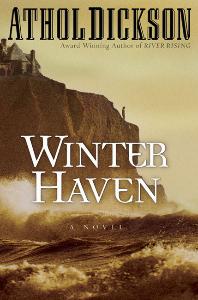
Athol Dickson won a lot of acclaim and awards for his last book, River Rising. I didn’t read that one, so when his latest work, Winter Haven, was available for review, I didn’t want to miss out.
Winter Haven is the name of an island off the coast of Maine. Vera Gambles, a 24 year old accountant, travels there because the body of her long-lost brother, Sigmund or “Siggy”, had washed up on the north shore of the island. In the midst of the opening of old wounds, the question of how an autistic savant made it from Texas to the Atlantic is her main concern.
When she sees his body and finds he hasn’t aged from thirteen years ago, new questions arise.
What is the connection between this appearance, the strange fog over the north part of the island, the legend of a lost Puritan colony, a figure clothed in black, and Siggy’s body? Vera struggles with the strangeness of the island, her own demons, and the mysterious Captain Evan Frost in her journey to discover the secret of Winter Haven.
The characterization is probably the strength of the book. Vera is mousy and flawed – she’s not the gorgeous and confident heroine we see in so many other books, and to me, the change is welcome. She has a lot to overcome, and you’re not sure if she can rise to it. Evan Frost is very hard to pin down, and even the cranky widow has her moments of sympathy.
The book is an easy read, and it is fairly engaging. The book is written in first person, from Vera’s perspective. This allows the author to introduce a lot of suspense that she has problems figuring out, but some sections where she is wrestling with her past were confusing. I got bogged down a couple of times in these spots. The suspense is gripping at times, and overall I enjoyed the book, but it wasn’t my favorite in this genre.
I recommend the book, but honestly I would wait for paperback if I were to buy it for someone.
by Jason Joyner | Apr 25, 2008 | Blog, CFBA, fiction, reviews, suspense
Athol Dickson won a lot of acclaim and awards for his last book, River Rising. I didn’t read that one, so when his latest work, Winter Haven, was available for review, I didn’t want to miss out.
Winter Haven is the name of an island off the coast of Maine. Vera Gambles, a 24 year old accountant, travels there because the body of her long-lost brother, Sigmund or “Siggy”, had washed up on the north shore of the island. In the midst of the opening of old wounds, the question of how an autistic savant made it from Texas to the Atlantic is her main concern.
When she sees his body and finds he hasn’t aged from thirteen years ago, new questions arise.
What is the connection between this appearance, the strange fog over the north part of the island, the legend of a lost Puritan colony, a figure clothed in black, and Siggy’s body? Vera struggles with the strangeness of the island, her own demons, and the mysterious Captain Evan Frost in her journey to discover the secret of Winter Haven.
The characterization is probably the strength of the book. Vera is mousy and flawed – she’s not the gorgeous and confident heroine we see in so many other books, and to me, the change is welcome. She has a lot to overcome, and you’re not sure if she can rise to it. Evan Frost is very hard to pin down, and even the cranky widow has her moments of sympathy.
The book is an easy read, and it is fairly engaging. The book is written in first person, from Vera’s perspective. This allows the author to introduce a lot of suspense that she has problems figuring out, but some sections where she is wrestling with her past were confusing. I got bogged down a couple of times in these spots. The suspense is gripping at times, and overall I enjoyed the book, but it wasn’t my favorite in this genre.
I recommend the book, but honestly I would wait for paperback if I were to buy it for someone.
by Jason Joyner | Apr 25, 2008 | Blog, reviews, speculative fiction, theology
Okay, so the CSFF tour has moved on, but I want to post quickly on two questions that may arise from the book The Begotten.
First of all, what made this book “speculative”?
The book is set in a historical time (1300’s Italy), so it is clearly not science fiction. It is not really a fanatsy. Why did it end up in a book tour for speculative fiction? Well, it might be a little of a reach for the core audience for a focus of Christian sci-fi and fantasy. However, it focuses on alternative history with a mix of supernatural power and “speculation” on what would happen if certain letters of Paul, containing prophecies, was found at some time that led to the plot of the book. In my opinion, that premise is enough to support highlighting it during the CSFF tour. Plus, it was a very well written and enjoyable book, so what is the harm in promoting such a product when it is pretty close to the intention of the tour?
The other question is, isn’t the idea of a “lost” book of Scripture dangerous territory?
Yes, this premise is dangerous territory. If it was done by someone without respect for the Bible and Christian tradition, it would most likely be a book that I could not support and recommend. Again, a comparison to DaVinci Code comes to mind. Lisa Bergren clearly holds to ideas that show her deep love for Jesus and the gospel message. The book has a rich spiritual message (that doesn’t come across preachy), and it overall is a vehicle that combines truth and entertainment in a good way.
Now, there was some liberty with how her characters responded to the lost Corinthian level, and they probably acted a little too out of character for the time frame. They sounded like modern day Pentecostals a lot of the time, not like Roman Catholics confronted with strange new teaching that would be heretical. I think the answer to this will come in the conclusion of the series, but this could be a critique of the first book.
Fiction in general is only a “what if” that happens in the author’s mind. Intertwining fiction and the Bible can be a tricky issue. Randy Ingermanson has two novels about time travel that deal with the apostles. Anne Rice is writing a series based off of Jesus’ childhood, in areas of history that we have no record for, at least Biblically. One commenter suggested that it made the premise of the book a little harder to handle since Bergren used Paul. However, it also gives the premise more legitimacy since Paul did actually make extra correspondence to Corinth that we don’t have in the Bible.
Ultimately, I think Lisa did well in her book, and it must come down to that this is fiction, and not Bible study or teaching. We have to use discernment in ANY book we read, even if it is from a respected scholar, and whether it is fiction or non-fiction. Fiction is meant to be false, yet it can be an avenue for us to examine issues in the hypothetical. Fiction is above all creative, art, and entertainment, so we have to hold to that as a baseline regarding any book.
by Jason Joyner | Apr 25, 2008 | Blog, reviews, speculative fiction, theology
Okay, so the CSFF tour has moved on, but I want to post quickly on two questions that may arise from the book The Begotten.
First of all, what made this book “speculative”?
The book is set in a historical time (1300’s Italy), so it is clearly not science fiction. It is not really a fanatsy. Why did it end up in a book tour for speculative fiction? Well, it might be a little of a reach for the core audience for a focus of Christian sci-fi and fantasy. However, it focuses on alternative history with a mix of supernatural power and “speculation” on what would happen if certain letters of Paul, containing prophecies, was found at some time that led to the plot of the book. In my opinion, that premise is enough to support highlighting it during the CSFF tour. Plus, it was a very well written and enjoyable book, so what is the harm in promoting such a product when it is pretty close to the intention of the tour?
The other question is, isn’t the idea of a “lost” book of Scripture dangerous territory?
Yes, this premise is dangerous territory. If it was done by someone without respect for the Bible and Christian tradition, it would most likely be a book that I could not support and recommend. Again, a comparison to DaVinci Code comes to mind. Lisa Bergren clearly holds to ideas that show her deep love for Jesus and the gospel message. The book has a rich spiritual message (that doesn’t come across preachy), and it overall is a vehicle that combines truth and entertainment in a good way.
Now, there was some liberty with how her characters responded to the lost Corinthian level, and they probably acted a little too out of character for the time frame. They sounded like modern day Pentecostals a lot of the time, not like Roman Catholics confronted with strange new teaching that would be heretical. I think the answer to this will come in the conclusion of the series, but this could be a critique of the first book.
Fiction in general is only a “what if” that happens in the author’s mind. Intertwining fiction and the Bible can be a tricky issue. Randy Ingermanson has two novels about time travel that deal with the apostles. Anne Rice is writing a series based off of Jesus’ childhood, in areas of history that we have no record for, at least Biblically. One commenter suggested that it made the premise of the book a little harder to handle since Bergren used Paul. However, it also gives the premise more legitimacy since Paul did actually make extra correspondence to Corinth that we don’t have in the Bible.
Ultimately, I think Lisa did well in her book, and it must come down to that this is fiction, and not Bible study or teaching. We have to use discernment in ANY book we read, even if it is from a respected scholar, and whether it is fiction or non-fiction. Fiction is meant to be false, yet it can be an avenue for us to examine issues in the hypothetical. Fiction is above all creative, art, and entertainment, so we have to hold to that as a baseline regarding any book.
