by Jason Joyner | Feb 17, 2009 | Blog, CSFF, Cyndere's Midnight, interviews, Jeffrey Overstreet, speculative fiction
Hey! Day 2 of our CSFF tour featuring Jeffrey Overstreet and his new book, Cyndere’s Midnight. I gave an introduction to the book yesterday, and listed multiple links to check out if you’re curious about the unique approach Jeffrey has when it comes to his writing: other’s in the tour, reviews of his previous book, Auralia’s Colors, and links to Jeffrey’s websites.
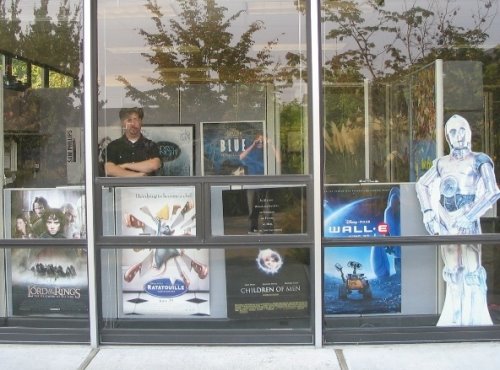
Jeffrey was gracious enough to answer a few questions I had, so please check out his replies below. Tomorrow I’ll wrap up with my review of Cyndere’s Midnight.
1. What are your writing influences?
It’s tough for me to point to influences. I imagine readers will have a better sense of that than me. But I can tell you who I found inspirational while I was writing.
Annie Dillard writes about the natural world with passion, honesty, and stirring prose. Her attention to the wonders and horrors of our fantastic, fallen world are compelling, awe-inspiring, and sometimes truly disturbing.
I read a lot of poetry while I work on The Auralia Thread. I’m especially fond of Scott Cairns, Jane Hirshfield, and my wife Anne’s poetry, which takes me to so many vivid places. Anne and I spend a lot of time exploring the outdoors in the Pacific Northwest and in the Southwest, and I’m sure that the places we go inspire my writing more than any writers do.
I don’t think many fiction writers have had much influence on The Auralia Thread. I’m sure there are echoes of Tolkien, Lewis, Macdonald, and especially Richard Adams and Frank Herbert. But when it comes to style, I often revisit Patricia McKillip’s The Book of Atrix Wolfe and Mervyn Peake’s Gormenghast series for the music of their language and the phantasmagoric detail of their worlds.
2. What was your inspiration for the Auralia’s Colors series?
My wife Anne and I had a conversation about make-believe while we were hiking near Flathead Lake, Montana. Anne said something about how most people reach a certain age where they stop using their imaginations, stop expressing themselves creatively, and put make believe behind them. I started thinking about that while we walked through this beautiful, forested landscape.
I began to imagine a kingdom in which the people bury all of their creative expressions. And then I envisioned an artist who wandered into that culture, and who was both celebrated and persecuted for her vision. That’s where it all started.
3. You are known for your work in film critique. How did your film influence affect your writing?
Film reviewing has taught me to pay attention to small details, and to cherish those experiences in which characters take you into places and situations you’ve never thought about before.
It has also taught me to think about beauty, and how a picture can say so much more than a lesson or an allegory. So I focus on painting pictures in prose, trying to share images instead of morals, questions instead of answers.
The movies that stick with me are those that don’t preach, but instead offer me encounters with beauty and imagery that give me new insights every time I enjoy them.
I want to write a story that does that. I don’t want to tell readers what to think–I want to invite them on an adventure, and let them have their own unique experience, develop their own interpretation along the way.
4. What is your opinion about the state of Christian fiction in the CBA world and culture in general?
I don’t have much time to read, so when I do, I read a lot of poetry and literature that has proven itself to be timeless and beautiful.
Unfortunately, very little that is published in the CBA market stands up to that kind of test. “Christian fiction” is usually notable because of the “message.” It is very rarely written with the kind of artistry that will stand up to critique. I don’t want to write stuff that will only be read by people who believe what I believe. I want it to be read by people who love imaginative storytelling… and I want them to still be reading it a hundred years from now. That’s why Tolkien, Lewis, and L’Engle’s books are standing the test of time. They’re imaginative, rich with truth, and beautiful.
I don’t read stories because I want a message. I read because I want to have an experience. I want to use my imagination. I only get the chance to read a limited number of books in my life, and I want to read the most beautiful, rich, meaningful stuff I can find. I firmly believe that that how we say something is just as important as what we say. Christian bookstores are full of books that say good things. But many of those books say good things very poorly, or without much imagination.
If a book is well-written, many readers all over the world — Christian and non-Christian alike — will find that book compelling. That’s why most “Christian books” are only ever read by people who shop in Christian bookstores.
5. What would you like people to know about your two current books that they may not know already?
I hope that readers will open the pages of Auralia’s Colors and Cyndere’s Midnight out of curiosity and a desire for an adventure.
If they come expecting an allegory, I think they’ll be frustrated. A lot of reviewers have said that this is a story about Christ, or the Christian life. Fine… there’s nothing wrong with that interpretation. But that’s not what I was thinking about when I wrote them. You might just as well read tehm as a story about an artist’s struggles and temptations, or a story about talents and gifts, or a story about beauty and what it does to us. Readers have discovered themes that have pleasantly surprised me. But I know where this story is going, and it doesn’t work as an allegory.
I’m very interested in hearing what readers think the story is about. Fantasy is a mysterious genre. We learn about each other when we share our experience of a work of art. I never want to write a story that has an obvious “moral” or “lesson.” Why bother? If I wanted to do that, I would just teach lessons and not bother with a story. No, I want to tell stories the way Jesus shared parables — I want to tell a story that teases readers’ minds into contemplation, that gets them arguing about what it all means. I know what they mean to me, but that keeps changing. What do they mean to you?
by Jason Joyner | Feb 17, 2009 | Blog, CSFF, Cyndere's Midnight, interviews, Jeffrey Overstreet, speculative fiction
Hey! Day 2 of our CSFF tour featuring Jeffrey Overstreet and his new book, Cyndere’s Midnight. I gave an introduction to the book yesterday, and listed multiple links to check out if you’re curious about the unique approach Jeffrey has when it comes to his writing: other’s in the tour, reviews of his previous book, Auralia’s Colors, and links to Jeffrey’s websites.
Jeffrey was gracious enough to answer a few questions I had, so please check out his replies below. Tomorrow I’ll wrap up with my review of Cyndere’s Midnight.
1. What are your writing influences?
It’s tough for me to point to influences. I imagine readers will have a better sense of that than me. But I can tell you who I found inspirational while I was writing.
Annie Dillard writes about the natural world with passion, honesty, and stirring prose. Her attention to the wonders and horrors of our fantastic, fallen world are compelling, awe-inspiring, and sometimes truly disturbing.
I read a lot of poetry while I work on The Auralia Thread. I’m especially fond of Scott Cairns, Jane Hirshfield, and my wife Anne’s poetry, which takes me to so many vivid places. Anne and I spend a lot of time exploring the outdoors in the Pacific Northwest and in the Southwest, and I’m sure that the places we go inspire my writing more than any writers do.
I don’t think many fiction writers have had much influence on The Auralia Thread. I’m sure there are echoes of Tolkien, Lewis, Macdonald, and especially Richard Adams and Frank Herbert. But when it comes to style, I often revisit Patricia McKillip’s The Book of Atrix Wolfe and Mervyn Peake’s Gormenghast series for the music of their language and the phantasmagoric detail of their worlds.
2. What was your inspiration for the Auralia’s Colors series?
My wife Anne and I had a conversation about make-believe while we were hiking near Flathead Lake, Montana. Anne said something about how most people reach a certain age where they stop using their imaginations, stop expressing themselves creatively, and put make believe behind them. I started thinking about that while we walked through this beautiful, forested landscape.
I began to imagine a kingdom in which the people bury all of their creative expressions. And then I envisioned an artist who wandered into that culture, and who was both celebrated and persecuted for her vision. That’s where it all started.
3. You are known for your work in film critique. How did your film influence affect your writing?
Film reviewing has taught me to pay attention to small details, and to cherish those experiences in which characters take you into places and situations you’ve never thought about before.
It has also taught me to think about beauty, and how a picture can say so much more than a lesson or an allegory. So I focus on painting pictures in prose, trying to share images instead of morals, questions instead of answers.
The movies that stick with me are those that don’t preach, but instead offer me encounters with beauty and imagery that give me new insights every time I enjoy them.
I want to write a story that does that. I don’t want to tell readers what to think–I want to invite them on an adventure, and let them have their own unique experience, develop their own interpretation along the way.
4. What is your opinion about the state of Christian fiction in the CBA world and culture in general?
I don’t have much time to read, so when I do, I read a lot of poetry and literature that has proven itself to be timeless and beautiful.
Unfortunately, very little that is published in the CBA market stands up to that kind of test. “Christian fiction” is usually notable because of the “message.” It is very rarely written with the kind of artistry that will stand up to critique. I don’t want to write stuff that will only be read by people who believe what I believe. I want it to be read by people who love imaginative storytelling… and I want them to still be reading it a hundred years from now. That’s why Tolkien, Lewis, and L’Engle’s books are standing the test of time. They’re imaginative, rich with truth, and beautiful.
I don’t read stories because I want a message. I read because I want to have an experience. I want to use my imagination. I only get the chance to read a limited number of books in my life, and I want to read the most beautiful, rich, meaningful stuff I can find. I firmly believe that that how we say something is just as important as what we say. Christian bookstores are full of books that say good things. But many of those books say good things very poorly, or without much imagination.
If a book is well-written, many readers all over the world — Christian and non-Christian alike — will find that book compelling. That’s why most “Christian books” are only ever read by people who shop in Christian bookstores.
5. What would you like people to know about your two current books that they may not know already?
I hope that readers will open the pages of Auralia’s Colors and Cyndere’s Midnight out of curiosity and a desire for an adventure.
If they come expecting an allegory, I think they’ll be frustrated. A lot of reviewers have said that this is a story about Christ, or the Christian life. Fine… there’s nothing wrong with that interpretation. But that’s not what I was thinking about when I wrote them. You might just as well read tehm as a story about an artist’s struggles and temptations, or a story about talents and gifts, or a story about beauty and what it does to us. Readers have discovered themes that have pleasantly surprised me. But I know where this story is going, and it doesn’t work as an allegory.
I’m very interested in hearing what readers think the story is about. Fantasy is a mysterious genre. We learn about each other when we share our experience of a work of art. I never want to write a story that has an obvious “moral” or “lesson.” Why bother? If I wanted to do that, I would just teach lessons and not bother with a story. No, I want to tell stories the way Jesus shared parables — I want to tell a story that teases readers’ minds into contemplation, that gets them arguing about what it all means. I know what they mean to me, but that keeps changing. What do they mean to you?
by Jason Joyner | Feb 16, 2009 | Blog, CSFF, Cyndere's Midnight, fantasy, reading, speculative fiction
This month the CSFF Tour is featuring Cyndere’s Midnight, the latest book from film critic Jeffrey Overstreet. It is the second book in the Auralia’s Thread series (the Blue Thread).
In the first book of the series, Auralia’s Colors, we are introduced to the world of the Expanse, home of four great Houses. The House Abascar in the East is where a mysterious young girl is found as a baby. As Abascar grows cold and bleak, this girl breaks forth with a gift of colors that enchant and enrage. Events involving the royal family, poor servants, exiled criminals, and this young Auralia swirl together until the House is brought low, and the remnant must flee to the cliffs farther south.
The second book takes us to the western House Bel Amica, where a lonely heiress contemplates life without her consort and the pressures of being the sole heir of their throne. She shared visions with her love of helping the beastmen of Cent Regus, a once magnificent house in the South that has fallen into a literal corruption, with the people being transformed by a strange Essence into the form of animals, with the mind of savages as well.
Four brothers of the beastmen are led by their oldest brother toward a plot involving the weakened refugees of Abascar. However, one of the brothers, Jordam, has developed a new awareness by his exposure to Auralia’s colors, and he begins to question his purpose and direction.
Passions, power, and politics threaten to engulf the Expanse as two solitary figures collide at a well, painted blue by an orphan girl, unaware of their place in the coming conflagration.
—
I am excited for this tour for several reasons. First, I’ve finally managed to read one of the books (missed out on the last few offerings). Second, I was highly impressed with Auralia’s Colors, and was curious on how the story continued in Midnight. Finally, I think that Jeffrey is an important voice in Christian fantasy, and I want to see what comes of his work.
I have several things, including a review of the book and an interview with the author. I have several past posts covering Auralia’s Colors (here, here, here, and there).
You can also visit Jeffrey Overstreet’s Web site, blog, or find him on Facebook. And as always, see my amazing tourmates below (Rebecca LuElla Miller always keeps a list of those that have posted each day).
Brandon Barr
Keanan Brand
Rachel Briard
Valerie Comer
Amy Cruson
CSFF Blog Tour
Stacey Dale
D. G. D. Davidson
Shane Deal
Jeff Draper
April Erwin
Karina Fabian
Andrea Graham
Todd Michael Greene
Katie Hart
Timothy Hicks
Jason Isbell
Kait
Carol Keen
Magma
Rebecca LuElla Miller
Eve Nielsen
Nissa
Wade Ogletree
John W. Otte
John Ottinger
Steve Rice
Crista Richey
Alice M. Roelke
Chawna Schroeder
James Somers
Rachel Starr Thomson
Robert Treskillard
Steve Trower
Speculative Faith
Fred Warren
Jill Williamson
by Jason Joyner | Feb 16, 2009 | Blog, CSFF, Cyndere's Midnight, fantasy, reading, speculative fiction
This month the CSFF Tour is featuring Cyndere’s Midnight, the latest book from film critic Jeffrey Overstreet. It is the second book in the Auralia’s Thread series (the Blue Thread).
In the first book of the series, Auralia’s Colors, we are introduced to the world of the Expanse, home of four great Houses. The House Abascar in the East is where a mysterious young girl is found as a baby. As Abascar grows cold and bleak, this girl breaks forth with a gift of colors that enchant and enrage. Events involving the royal family, poor servants, exiled criminals, and this young Auralia swirl together until the House is brought low, and the remnant must flee to the cliffs farther south.
The second book takes us to the western House Bel Amica, where a lonely heiress contemplates life without her consort and the pressures of being the sole heir of their throne. She shared visions with her love of helping the beastmen of Cent Regus, a once magnificent house in the South that has fallen into a literal corruption, with the people being transformed by a strange Essence into the form of animals, with the mind of savages as well.
Four brothers of the beastmen are led by their oldest brother toward a plot involving the weakened refugees of Abascar. However, one of the brothers, Jordam, has developed a new awareness by his exposure to Auralia’s colors, and he begins to question his purpose and direction.
Passions, power, and politics threaten to engulf the Expanse as two solitary figures collide at a well, painted blue by an orphan girl, unaware of their place in the coming conflagration.
—
I am excited for this tour for several reasons. First, I’ve finally managed to read one of the books (missed out on the last few offerings). Second, I was highly impressed with Auralia’s Colors, and was curious on how the story continued in Midnight. Finally, I think that Jeffrey is an important voice in Christian fantasy, and I want to see what comes of his work.
I have several things, including a review of the book and an interview with the author. I have several past posts covering Auralia’s Colors (here, here, here, and there).
You can also visit Jeffrey Overstreet’s Web site, blog, or find him on Facebook. And as always, see my amazing tourmates below (Rebecca LuElla Miller always keeps a list of those that have posted each day).
Brandon Barr
Keanan Brand
Rachel Briard
Valerie Comer
Amy Cruson
CSFF Blog Tour
Stacey Dale
D. G. D. Davidson
Shane Deal
Jeff Draper
April Erwin
Karina Fabian
Andrea Graham
Todd Michael Greene
Katie Hart
Timothy Hicks
Jason Isbell
Kait
Carol Keen
Magma
Rebecca LuElla Miller
Eve Nielsen
Nissa
Wade Ogletree
John W. Otte
John Ottinger
Steve Rice
Crista Richey
Alice M. Roelke
Chawna Schroeder
James Somers
Rachel Starr Thomson
Robert Treskillard
Steve Trower
Speculative Faith
Fred Warren
Jill Williamson

by Jason Joyner | Feb 16, 2009 | Blog, CFBA, fiction
Jason sez: My wife was going to read this book to review, but alas, Real Life Intervenes (TM) once again. Here’s the official CFBA blurb.
ABOUT THE AUTHOR:
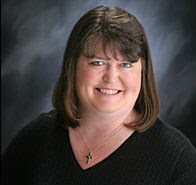
Mary’s writing journey is similar to a lot of others. Boil it down to persistence, oh, go ahead and call it stubbornness. She just kept typing away. She think the reason she did it was because she was more or less a dunce around people—prone to sit silently when she really ought to speak up(or far worse, speak up when she ought to sit silently).
So, Mary had all these things, she want to say, in her head; the perfect zinger to the rude cashier, which you think of an hour after you’ve left the store, the perfect bit of wisdom when someone needs help, which doesn’t occur to you until they solve their problems themselves, the perfect guilt trip for the kids, which you don’t say because you’re not an idiot. She keep all this wit to herself, much to the relief of all who know her, and then wrote all her great ideas into books. It’s therapeutic if nothing else, and more affordable than a psychiatrist.
So then a very nice, oh so nice publishing company like Barbour Heartsong comes along and says, “Hey, we’ll pay you money for this 45,000 word therapy session.” That’s as sweet as it gets.
Mary’s journey to publication is the same as everyone’s except for a few geniuses out there who make it hard for all of us. And even they probably have an Ode to Roast Beef or two in their past.
There are two other books in this Lassoed In Texas Series: Petticoat Ranch and Calico Canyon
ABOUT THE BOOK
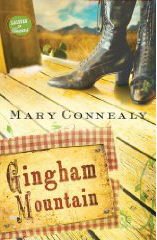 All aboard for a delightful, suspense-filled romance, where a Texan is torn between his attraction to a meddlesome schoolmarm and the charms of a designing dressmaker. When Hannah Cartwright meets Grant, she’s determined to keep him from committing her orphans to hard labor on his ranch. How far will she go to ensure their welfare?
Grant Cooper is determined to provide a home for the two kids brought in by the orphan train as runs head-on into the new school marm, who believes he’s made slave labor out of eight orphaned children. He crowds too many orphans into his rickety house, just like Hannah Cartwright’s cruel father. Grant’s family of orphans have been mistreated too many times by judgmental school teachers. Now the new schoolmarm is the same except she’s so pretty and she isn’t really bad to his children, it’s Grant she can’t stand.
But he is inexplicably drawn to Hannah. Can he keep his ragtag family together while steering clear of love and marriage? Will he win her love or be caught in the clutches of a scheming seamstress?
If you would like to read the first chapter of Gingham Mountain, go HERE
by Jason Joyner | Feb 16, 2009 | Blog, CFBA, fiction
Jason sez: My wife was going to read this book to review, but alas, Real Life Intervenes (TM) once again. Here’s the official CFBA blurb.
ABOUT THE AUTHOR:
 Mary’s writing journey is similar to a lot of others. Boil it down to persistence, oh, go ahead and call it stubbornness. She just kept typing away. She think the reason she did it was because she was more or less a dunce around people—prone to sit silently when she really ought to speak up(or far worse, speak up when she ought to sit silently).
So, Mary had all these things, she want to say, in her head; the perfect zinger to the rude cashier, which you think of an hour after you’ve left the store, the perfect bit of wisdom when someone needs help, which doesn’t occur to you until they solve their problems themselves, the perfect guilt trip for the kids, which you don’t say because you’re not an idiot. She keep all this wit to herself, much to the relief of all who know her, and then wrote all her great ideas into books. It’s therapeutic if nothing else, and more affordable than a psychiatrist.
So then a very nice, oh so nice publishing company like Barbour Heartsong comes along and says, “Hey, we’ll pay you money for this 45,000 word therapy session.” That’s as sweet as it gets.
Mary’s journey to publication is the same as everyone’s except for a few geniuses out there who make it hard for all of us. And even they probably have an Ode to Roast Beef or two in their past.
There are two other books in this Lassoed In Texas Series: Petticoat Ranch and Calico Canyon
ABOUT THE BOOK
 All aboard for a delightful, suspense-filled romance, where a Texan is torn between his attraction to a meddlesome schoolmarm and the charms of a designing dressmaker. When Hannah Cartwright meets Grant, she’s determined to keep him from committing her orphans to hard labor on his ranch. How far will she go to ensure their welfare?
Grant Cooper is determined to provide a home for the two kids brought in by the orphan train as runs head-on into the new school marm, who believes he’s made slave labor out of eight orphaned children. He crowds too many orphans into his rickety house, just like Hannah Cartwright’s cruel father. Grant’s family of orphans have been mistreated too many times by judgmental school teachers. Now the new schoolmarm is the same except she’s so pretty and she isn’t really bad to his children, it’s Grant she can’t stand.
But he is inexplicably drawn to Hannah. Can he keep his ragtag family together while steering clear of love and marriage? Will he win her love or be caught in the clutches of a scheming seamstress?
If you would like to read the first chapter of Gingham Mountain, go HERE
by Jason Joyner | Feb 11, 2009 | Biblical worldview, Blog, culture, family
The NY Times recently had an article entitled “And Baby Makes How Many?” that was triggered from the woman with the octuplets and 6 other kids, as well as the popularity of shows featuring The Duggars (17 kids) and Jon and Kate plus eight. The article discussed how family size in the U.S. is shrinking overall, which is making large families an exception that is more and more looked down upon.
Replacement level for a population is 2.1, and that is the current American birth rate, even though it has actually been lower recently and only got back UP to 2.1 in the last year stats were available. The article focuses on megafamilies, with 6+ kids, but it stated that people with more than 3 kids often get “raised eyebrows”.
The article itself is pretty respectful and non-judgmental, although it mentions that people with larger families could be considered “freak show attractions” nowadays. The comments to the article…now that is a different story.
The commenters mostly decried people having more than 2 kids “irresponsible” and “selfish”, trashing Earth’s resources for their own self-fulfillment (or more clinically put, “evolutionary need to replicate”-reminds me of the part in The Matrix when Agent Smith compares humanity to a virus). Some were generous enough to deem it appropriate to have 2 kids, then adopt needy kids/orphans if you HAD to have more than two. Heaven forbid the carbon footprint that is left by a family of 4 kids or more.
The majority of comments were disturbing on many levels. Besides the judgments and disdain for some people’s “choice” when it collides with their own self-interest, there were some issues that no one in the comments noted. I wanted to post there, but the comments were closed by the time I read the article.
First of all, do we want to become like other societies that have effective “family planning?” Countries like Japan, where a demographic crisis is looming because they are getting older without a young workforce to support the elderly? Perhaps Germany, which is rapidly becoming less German, since German families don’t hit the replacement level of 2.1 kids, but immigrant families from Eastern Europe and Turkey are filling the void, keeping their own culture without assimilating to German ways in the process? I know, how about China? Since their one child rule, the percentage of male to females is dangerously imbalanced, which is already causing human trafficking from other Asian countries to provide wives to the men who can’t find the very in-demand Chinese women?
Some in the comments cited the 70’s era Population Boom scare, which has not occurred as doomsayers were predicting back then. Technological advances have continued to allow us to produce enough food, even if political and infrastructure problems still keep way too many people without proper resources.
I am willing to become a better steward of our resources, and I want to see poverty eradicated so people in undeveloped countries have more opportunities other than having many kids so some will have a chance of surviving. However, the crass hypocrisy and judgmentalism from the commenters is pretty remarkable in a country where all sorts of “freedoms” are promoted, unless it goes against the current postmodern, environment-worshipping culture we seem to have at this time. Overall, as a parent of four wonderful children, whom I plan on educating to be the best possible citizens of Earth during their sojourn, even as I hopefully help them reach their potential in the Kingdom of heaven, I want to say as carefully and intelligently as I can to those commenters:
Mind your own business.
(Bonus-I love some of the comebacks from parents of the megafamilies:
How can you afford so many? “Lifestyles are expensive, not kids.”
Don’t you know what causes that? “Oh, yes, I now wash my husband’s underwear separately.”
Do you get any time for yourselves? “Obviously, or we wouldn’t have six kids.”)
—
by Jason Joyner | Feb 11, 2009 | Biblical worldview, Blog, culture, family
The NY Times recently had an article entitled “And Baby Makes How Many?” that was triggered from the woman with the octuplets and 6 other kids, as well as the popularity of shows featuring The Duggars (17 kids) and Jon and Kate plus eight. The article discussed how family size in the U.S. is shrinking overall, which is making large families an exception that is more and more looked down upon.
Replacement level for a population is 2.1, and that is the current American birth rate, even though it has actually been lower recently and only got back UP to 2.1 in the last year stats were available. The article focuses on megafamilies, with 6+ kids, but it stated that people with more than 3 kids often get “raised eyebrows”.
The article itself is pretty respectful and non-judgmental, although it mentions that people with larger families could be considered “freak show attractions” nowadays. The comments to the article…now that is a different story.
The commenters mostly decried people having more than 2 kids “irresponsible” and “selfish”, trashing Earth’s resources for their own self-fulfillment (or more clinically put, “evolutionary need to replicate”-reminds me of the part in The Matrix when Agent Smith compares humanity to a virus). Some were generous enough to deem it appropriate to have 2 kids, then adopt needy kids/orphans if you HAD to have more than two. Heaven forbid the carbon footprint that is left by a family of 4 kids or more.
The majority of comments were disturbing on many levels. Besides the judgments and disdain for some people’s “choice” when it collides with their own self-interest, there were some issues that no one in the comments noted. I wanted to post there, but the comments were closed by the time I read the article.
First of all, do we want to become like other societies that have effective “family planning?” Countries like Japan, where a demographic crisis is looming because they are getting older without a young workforce to support the elderly? Perhaps Germany, which is rapidly becoming less German, since German families don’t hit the replacement level of 2.1 kids, but immigrant families from Eastern Europe and Turkey are filling the void, keeping their own culture without assimilating to German ways in the process? I know, how about China? Since their one child rule, the percentage of male to females is dangerously imbalanced, which is already causing human trafficking from other Asian countries to provide wives to the men who can’t find the very in-demand Chinese women?
Some in the comments cited the 70’s era Population Boom scare, which has not occurred as doomsayers were predicting back then. Technological advances have continued to allow us to produce enough food, even if political and infrastructure problems still keep way too many people without proper resources.
I am willing to become a better steward of our resources, and I want to see poverty eradicated so people in undeveloped countries have more opportunities other than having many kids so some will have a chance of surviving. However, the crass hypocrisy and judgmentalism from the commenters is pretty remarkable in a country where all sorts of “freedoms” are promoted, unless it goes against the current postmodern, environment-worshipping culture we seem to have at this time. Overall, as a parent of four wonderful children, whom I plan on educating to be the best possible citizens of Earth during their sojourn, even as I hopefully help them reach their potential in the Kingdom of heaven, I want to say as carefully and intelligently as I can to those commenters:
Mind your own business.
(Bonus-I love some of the comebacks from parents of the megafamilies:
How can you afford so many? “Lifestyles are expensive, not kids.”
Don’t you know what causes that? “Oh, yes, I now wash my husband’s underwear separately.”
Do you get any time for yourselves? “Obviously, or we wouldn’t have six kids.”)
—
by Jason Joyner | Feb 9, 2009 | Blog, books, culture, faith
I’ve been enjoying a new devotional that I recently picked up: A Faith and Culture Devotional: Daily Readings in Art, Science, and Life. I saw it mentioned on The Point blog, and so far I haven’t been disappointed. I’m not very far into it, but it has already had articles from or quoting from Francis Collins of the Human Genome Project and Francis Schaeffer, with future articles from Erwin McManus, Chuck Colson, Scot McKnight, Dallas Willard, Lee Strobel, and J. P. Moreland.
The subjects are collected under Bible and Theology, History, Philosophy, Science, Literature, Arts, and Contemporary Culture. Quite a diversity, but the reading I’ve done so far is quite thought-provoking.
As a teaser, here’s a quote from “Art-A Response to God’s Beauty” by Lael Arrington, with an extensive quote from one of my favorites, Francis Schaeffer.
Schaeffer concludes, “What a Christian portrays in his art is the totality of life. Art is not to be solely a vehicle for some self-conscious evangelism…Christians ought not to be threatened by fantasy and imagination…The Christian is the really free man-he is free to have imagination. This is our heritage. The Christian is the one whose imagination should fly beyond the stars.
by Jason Joyner | Feb 9, 2009 | Blog, books, culture, faith
I’ve been enjoying a new devotional that I recently picked up: A Faith and Culture Devotional: Daily Readings in Art, Science, and Life. I saw it mentioned on The Point blog, and so far I haven’t been disappointed. I’m not very far into it, but it has already had articles from or quoting from Francis Collins of the Human Genome Project and Francis Schaeffer, with future articles from Erwin McManus, Chuck Colson, Scot McKnight, Dallas Willard, Lee Strobel, and J. P. Moreland.
The subjects are collected under Bible and Theology, History, Philosophy, Science, Literature, Arts, and Contemporary Culture. Quite a diversity, but the reading I’ve done so far is quite thought-provoking.
As a teaser, here’s a quote from “Art-A Response to God’s Beauty” by Lael Arrington, with an extensive quote from one of my favorites, Francis Schaeffer.
Schaeffer concludes, “What a Christian portrays in his art is the totality of life. Art is not to be solely a vehicle for some self-conscious evangelism…Christians ought not to be threatened by fantasy and imagination…The Christian is the really free man-he is free to have imagination. This is our heritage. The Christian is the one whose imagination should fly beyond the stars.


