by Jason Joyner | Apr 12, 2010 | Blog, CSFF, Lost Mission, speculative fiction
Are you ready to get Lost?
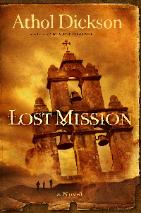
This month the CSFF Tour is featuring an intriguing book, Lost Mission. It is the latest book by Athol Dickson, who has written some memorable books in the CBA market over the last few years. I recall on the old blog faith*in*fiction that his book River Rising was highly touted. I read his last book, Winter Haven in ’09, and came away feeling that it was a good enough book, but it didn’t really live up to my expectations from prior publicity.
Does Lost Mission rise to the level of his reputation?
Before I answer that, I need to address some context…
What would a Mexican housekeeper, a minister running a shelter ministry, a grief-stricken billionaire, and an illegal immigrant working in construction have in common with an ugly Franscican friar from the 1700’s? As smoke from different little conflagurations can swirl together before it becomes a gigantic flame, so these disparate people are drawn together in a dramatic repeat of the doom of the Mission de Santa Dolores, the Spanish mission where Fray Alejandro met the flames so many years ago. Will they succumb to the same evil, or will faith rise above the fire?
Lost Mission is being marketed as “magical realism”, as smoke from a fire in the 1700’s helps guide one of the main characters, Lupe de la Garza even in the present time. There’s a lot to dig into with this book – enough that it deserves a couple more posts to delve into the mysteries.
But if you can’t wait, check out my compatriots below or visit Athol Dickson’s blog. Just be sure to follow the smoke back here tomorrow, winds permitting…
Brandon Barr
Keanan Brand
Amy Browning
Valerie Comer
CSFF Blog Tour
Stacey Dale
D. G. D. Davidson
Jeff Draper
April Erwin
Timothy Hicks
Jason Isbell
Becky Jesse
Cris Jesse
Julie
Carol Keen
Krystine Kercher
Dawn King
Rebecca LuElla Miller
New Authors Fellowship
John W. Otte
Donita K. Paul
Crista Richey
Chawna Schroeder
James Somers
Steve Trower
Fred Warren
Phyllis Wheeler
KM Wilsher
In conjunction with the CSFF Blog Tour, I received a free copy of this book from the publisher.
—

by Jason Joyner | Apr 7, 2010 | Blog, CFBA, christian fiction
This week, the
Christian Fiction Blog Alliance
is introducing
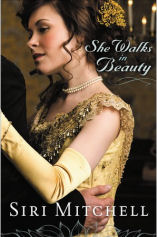
She Walks in BeautyBethany House (April 2010)by
Siri Mitchell
ABOUT THE AUTHOR:
 Siri Mitchell graduated from the University of Washington with a business degree and worked in various levels of government. As a military spouse, she has lived all over the world, including in Paris and Tokyo. Siri enjoys observing and learning from different cultures. She is fluent in French and loves sushi.
But she is also a member of a strange breed of people called novelists. When they’re listening to a sermon and taking notes, chances are, they’ve just had a great idea for a plot or a dialogue. If they nod in response to a really profound statement, they’re probably thinking, “Yes. Right. That’s exactly what my character needs to hear.” When they edit their manuscripts, they laugh at the funny parts. And cry at the sad parts. Sometimes they even talk to their characters.
Siri wrote 4 books and accumulated 153 rejections before signing with a publisher. In the process, she saw the bottoms of more pints of Ben & Jerry’s than she cares to admit. At various times she has vowed never to write another word again. Ever. She has gone on writing strikes and even stooped to threatening her manuscripts with the shredder.
ABOUT THE BOOK
For a young society woman seeking a favorable marriage, so much depends on her social season debut. Clara Carter has been given one goal: secure the affections of the city’s most eligible bachelor.
Debuting means plenty of work–there are corsets to be fitted, dances to master, manners to perfect. Her training soon pays off, however, as celebrity’s spotlight turns Clara into a society-page darling.
Yet Clara soon wonders if this is the life she really wants. Especially when she learns her best friend has also set her sights on Franklin De Vries.
When a man appears who seems to love her simply for who she is and gossip backlash turns ugly, Clara realizes it’s not just her marriage at stake–the future of her family depends on how she plays the game.
If you would like to read the first chapter of She Walks in Beauty, go HERE.
—
by Jason Joyner | Apr 7, 2010 | Blog, CFBA, christian fiction
This week, the
Christian Fiction Blog Alliance
is introducing
She Walks in BeautyBethany House (April 2010)by
Siri Mitchell
ABOUT THE AUTHOR:
Siri Mitchell graduated from the University of Washington with a business degree and worked in various levels of government. As a military spouse, she has lived all over the world, including in Paris and Tokyo. Siri enjoys observing and learning from different cultures. She is fluent in French and loves sushi.
But she is also a member of a strange breed of people called novelists. When they’re listening to a sermon and taking notes, chances are, they’ve just had a great idea for a plot or a dialogue. If they nod in response to a really profound statement, they’re probably thinking, “Yes. Right. That’s exactly what my character needs to hear.” When they edit their manuscripts, they laugh at the funny parts. And cry at the sad parts. Sometimes they even talk to their characters.
Siri wrote 4 books and accumulated 153 rejections before signing with a publisher. In the process, she saw the bottoms of more pints of Ben & Jerry’s than she cares to admit. At various times she has vowed never to write another word again. Ever. She has gone on writing strikes and even stooped to threatening her manuscripts with the shredder.
ABOUT THE BOOK
For a young society woman seeking a favorable marriage, so much depends on her social season debut. Clara Carter has been given one goal: secure the affections of the city’s most eligible bachelor.
Debuting means plenty of work–there are corsets to be fitted, dances to master, manners to perfect. Her training soon pays off, however, as celebrity’s spotlight turns Clara into a society-page darling.
Yet Clara soon wonders if this is the life she really wants. Especially when she learns her best friend has also set her sights on Franklin De Vries.
When a man appears who seems to love her simply for who she is and gossip backlash turns ugly, Clara realizes it’s not just her marriage at stake–the future of her family depends on how she plays the game.
If you would like to read the first chapter of She Walks in Beauty, go HERE.
—

by Jason Joyner | Mar 24, 2010 | Blog, CSFF, Faery Rebels, fantasy
I wanted to get a few more words in about this month’s CSFF Tour feature – Faery Rebels: Spell Hunter by R. J. Anderson.
The tours can be interesting. Sometimes we have a book that has a mixed reception. Some of the members like it, and others don’t. We have had occasions where the book had lukewarm reception across the board. We’ve had good debates about all of this.
And sometimes we have consensus that a book is pretty doggone good.
Faery Rebels: Spell Hunter seems to be the latter. I missed out on it somehow, but I’ve watched the other tour members because I was intrigued about this when it was brought up as a possibility for the tour. I especially watched for the reaction of some of our “manly men”.
Everyone has had positive reviews of it. The story and characters have been consistently praised. The themes are also noted, although a few folks have wondered where this book comes under a “Christian” label. The consensus appears to be that it is not overtly Christian, but that there are themes of self-sacrifice, especially for those with eyes to see.
I am interested in picking this one up and catching up with what I missed! If you want more about the book from people who actually read the thing, check out this post, as it lists all the participants in one spot.
I’ll catch up on the next tour!
—
by Jason Joyner | Mar 24, 2010 | Blog, CSFF, Faery Rebels, fantasy
I wanted to get a few more words in about this month’s CSFF Tour feature – Faery Rebels: Spell Hunter by R. J. Anderson.
The tours can be interesting. Sometimes we have a book that has a mixed reception. Some of the members like it, and others don’t. We have had occasions where the book had lukewarm reception across the board. We’ve had good debates about all of this.
And sometimes we have consensus that a book is pretty doggone good.
Faery Rebels: Spell Hunter seems to be the latter. I missed out on it somehow, but I’ve watched the other tour members because I was intrigued about this when it was brought up as a possibility for the tour. I especially watched for the reaction of some of our “manly men”.
Everyone has had positive reviews of it. The story and characters have been consistently praised. The themes are also noted, although a few folks have wondered where this book comes under a “Christian” label. The consensus appears to be that it is not overtly Christian, but that there are themes of self-sacrifice, especially for those with eyes to see.
I am interested in picking this one up and catching up with what I missed! If you want more about the book from people who actually read the thing, check out this post, as it lists all the participants in one spot.
I’ll catch up on the next tour!
—
by Jason Joyner | Mar 22, 2010 | Blog, CSFF, Faery Rebels, fantasy
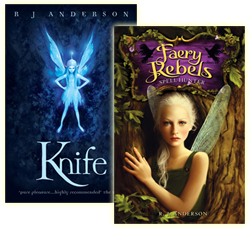
 After an unusual month hiatus (in which the secret Narnian overlords of Zeta Prime gave a conference to our members), the Christian Sci-fi/Fantasy (CSFF) tour returns with our latest feature book: Faery Rebels: Spell Hunter. The book is sold as Knife in the UK.
The book talks about a young faery Bryony who is altogether too curious about the dangerous world away from the faery folk. Especially those most risky creatures – humans!
When the faery colony is under risk of extinction due to the sickness called The Silence, Bryony ends up building a relationship with one of the very creatures blamed for the cursed illness, a boy named Paul.
Somehow I didn’t end up getting a review copy, and I didn’t realize it in time to pick up a copy and review it myself. I may have to get it still. So far some of the manly men of the CSFF (John, Fred, Stacey Dale’s husband) are coming out saying they really enjoyed it. So a real man can enjoy a faery book now and again. The book also has mostly positive reviews at Amazon, with many 5 stars, some 4 stars, and only a few 3 stars with nothing lower. That’s usually a sign of a good story!
Unfortunately I don’t have much more insight at this point. I’ll see if I can find something useful to contribute further to the tour. Or even non-useful but fun and distracting. Either way, you can find out more at the author’s website, blog, or by twittering with her on Twitter.
And of course there are my intrepid tourmates below, some of them with actual constructive things to say! Be sure to say Jason sent you, that way I get a little credit! Becky Miller always keeps track of those who post through the tour, so she is always a good place to stop.
Sally Apokedak
Brandon Barr
Amy Browning
Melissa Carswell
CSFF Blog Tour
Stacey Dale
D. G. D. Davidson
Jeff Draper
April Erwin
Timothy Hicks
Jason Isbell
Becky Jesse
Cris Jesse
Julie
Carol Keen
Krystine Kercher
Dawn King
Rebecca LuElla Miller
New Authors Fellowship
Nissa
John W. Otte
Donita K. Paul
Crista Richey
Chawna Schroeder
Andrea Schultz
James Somers
Steve Trower
Fred Warren
Phyllis Wheeler
KM Wilsher
—
by Jason Joyner | Mar 22, 2010 | Blog, CSFF, Faery Rebels, fantasy
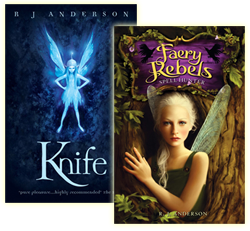
After an unusual month hiatus (in which the secret Narnian overlords of Zeta Prime gave a conference to our members), the Christian Sci-fi/Fantasy (CSFF) tour returns with our latest feature book: Faery Rebels: Spell Hunter. The book is sold as Knife in the UK.
The book talks about a young faery Bryony who is altogether too curious about the dangerous world away from the faery folk. Especially those most risky creatures – humans!
When the faery colony is under risk of extinction due to the sickness called The Silence, Bryony ends up building a relationship with one of the very creatures blamed for the cursed illness, a boy named Paul.
Somehow I didn’t end up getting a review copy, and I didn’t realize it in time to pick up a copy and review it myself. I may have to get it still. So far some of the manly men of the CSFF (John, Fred, Stacey Dale’s husband) are coming out saying they really enjoyed it. So a real man can enjoy a faery book now and again. The book also has mostly positive reviews at Amazon, with many 5 stars, some 4 stars, and only a few 3 stars with nothing lower. That’s usually a sign of a good story!
Unfortunately I don’t have much more insight at this point. I’ll see if I can find something useful to contribute further to the tour. Or even non-useful but fun and distracting. Either way, you can find out more at the author’s website, blog, or by twittering with her on Twitter.
And of course there are my intrepid tourmates below, some of them with actual constructive things to say! Be sure to say Jason sent you, that way I get a little credit! Becky Miller always keeps track of those who post through the tour, so she is always a good place to stop.
Sally Apokedak
Brandon Barr
Amy Browning
Melissa Carswell
CSFF Blog Tour
Stacey Dale
D. G. D. Davidson
Jeff Draper
April Erwin
Timothy Hicks
Jason Isbell
Becky Jesse
Cris Jesse
Julie
Carol Keen
Krystine Kercher
Dawn King
Rebecca LuElla Miller
New Authors Fellowship
Nissa
John W. Otte
Donita K. Paul
Crista Richey
Chawna Schroeder
Andrea Schultz
James Somers
Steve Trower
Fred Warren
Phyllis Wheeler
KM Wilsher
—

by Jason Joyner | Mar 17, 2010 | arts, Blog, Mass Effect 2, stories, video games
In my last post I gave a couple of highlights from a podcast featuring author Dick Staub and film producer Ralph Winter. They talked about a world shown in film (but applicable to novels) that draws in the viewer so much that they would want to live in and explore it. That was a quality of a great movie.
Storytelling has evolved from fire-side epics, to the written word, to immersive 3-D visual films. But what if you could watch AND interact in the story?
An example of a new possibility in storytelling is in the world of video games. I don’t think Pong had much of a backstory, but all games nowadays do. However, few offer the type of experience that comes from Mass Effect 2, from BioWare.
Obviously video games have an aspect of interactivity, since the gamer controls the main character. There are also limitations, as the gamer can only do things that are within the parameters of programming.
BioWare has been known for producing some of the highest quality role-playing games (RPG’s) in the last decade, including the award-winning Star Wars: Knights of the Old Republic (KotOR). They have been able to evolve the storytelling mechanism to new heights with Mass Effect 2.
The game is a science fiction story where humanity has just recently joined the galactic community by discovering old technology called Mass Relays created by an ancient race. You control Commander Shepard, a human (either male or female) who is Earth’s finest soldier, and the first human inductee into the special unit of Spectres, a group that is the Galactic Council’s personal force to deal with situations.
The storyline through the first two games is epic, and isn’t necessarily the scope of this post. I also don’t intend this as a review. The game is listed as Mature, and it definitely has areas that people need to use discernment concerning violence, morality, and how it is played.
My point is the excellent use of storytelling to elevate the game from an exciting action-based shooter (which it is) or a standard RPG where one builds a character up throughout the game (which it is as well, perhaps more so in ME1 compared to the second). The point is that the developers have enabled the gamer to feel like they fully own what Shepard does throughout the series.
BioWare has long tried to explore choices and their consequences, back to KotOR where a player’s choices would push the main Jedi character either to the Light or Dark Side of the Force. They’ve managed a new level in Mass Effect. The gamer can choose to have their Shepard to be a Paragon of virtue, a Renegade willing to do whatever it takes to achieve a goal, or somewhere in between.
In the midst of these choices, it drives how the story unfolds. The supporting characters, especially in ME2, are well-written and rounded personalities with their own strengths and hang-ups. Shepard’s interactions drive how they respond, whether they are loyal to the player or not. If a character dies, there are consequences. If you were kind or mean to a secondary character, that can come back to haunt or help. The plot of the game can be altered, up to a certain framework, depending on choices made.
Overall, the settings, missions, and characters make it a unique universe that is immersive and very enjoyable. The alien scientist Mordin became my favorite. He was involved with a very questionable moral decision in his past, and Shepard has to work with him to deal with it. As Shepard I can support it or condemn it, and Mordin wrestles with his decision in such a way that I felt it. He didn’t make a giant, easy flip to my point of view, but there was nuance in how he reacted.
The biggest development can be in how Shepard develops, if the player so chooses (definitely players can be calloused and just be in it for the blasting). It makes the story immersive. It creates an intriguing world. I have always been a Star Wars fan, since my childhood. I think the Mass Effect universe has actually supplanted the galaxy far, far away as my favorite sci-fi destination.
I’m not trying to just blow sunshine and rainbows at BioWare. I have a few issues with how some things are handled. Still, the game is an example of what quality writing can do for any medium, be it film, novels, television, or games.
—
by Jason Joyner | Mar 17, 2010 | arts, Blog, Mass Effect 2, stories, video games
In my last post I gave a couple of highlights from a podcast featuring author Dick Staub and film producer Ralph Winter. They talked about a world shown in film (but applicable to novels) that draws in the viewer so much that they would want to live in and explore it. That was a quality of a great movie.
Storytelling has evolved from fire-side epics, to the written word, to immersive 3-D visual films. But what if you could watch AND interact in the story?
An example of a new possibility in storytelling is in the world of video games. I don’t think Pong had much of a backstory, but all games nowadays do. However, few offer the type of experience that comes from Mass Effect 2, from BioWare.
Obviously video games have an aspect of interactivity, since the gamer controls the main character. There are also limitations, as the gamer can only do things that are within the parameters of programming.
BioWare has been known for producing some of the highest quality role-playing games (RPG’s) in the last decade, including the award-winning Star Wars: Knights of the Old Republic (KotOR). They have been able to evolve the storytelling mechanism to new heights with Mass Effect 2.
The game is a science fiction story where humanity has just recently joined the galactic community by discovering old technology called Mass Relays created by an ancient race. You control Commander Shepard, a human (either male or female) who is Earth’s finest soldier, and the first human inductee into the special unit of Spectres, a group that is the Galactic Council’s personal force to deal with situations.
The storyline through the first two games is epic, and isn’t necessarily the scope of this post. I also don’t intend this as a review. The game is listed as Mature, and it definitely has areas that people need to use discernment concerning violence, morality, and how it is played.
My point is the excellent use of storytelling to elevate the game from an exciting action-based shooter (which it is) or a standard RPG where one builds a character up throughout the game (which it is as well, perhaps more so in ME1 compared to the second). The point is that the developers have enabled the gamer to feel like they fully own what Shepard does throughout the series.
BioWare has long tried to explore choices and their consequences, back to KotOR where a player’s choices would push the main Jedi character either to the Light or Dark Side of the Force. They’ve managed a new level in Mass Effect. The gamer can choose to have their Shepard to be a Paragon of virtue, a Renegade willing to do whatever it takes to achieve a goal, or somewhere in between.
In the midst of these choices, it drives how the story unfolds. The supporting characters, especially in ME2, are well-written and rounded personalities with their own strengths and hang-ups. Shepard’s interactions drive how they respond, whether they are loyal to the player or not. If a character dies, there are consequences. If you were kind or mean to a secondary character, that can come back to haunt or help. The plot of the game can be altered, up to a certain framework, depending on choices made.
Overall, the settings, missions, and characters make it a unique universe that is immersive and very enjoyable. The alien scientist Mordin became my favorite. He was involved with a very questionable moral decision in his past, and Shepard has to work with him to deal with it. As Shepard I can support it or condemn it, and Mordin wrestles with his decision in such a way that I felt it. He didn’t make a giant, easy flip to my point of view, but there was nuance in how he reacted.
The biggest development can be in how Shepard develops, if the player so chooses (definitely players can be calloused and just be in it for the blasting). It makes the story immersive. It creates an intriguing world. I have always been a Star Wars fan, since my childhood. I think the Mass Effect universe has actually supplanted the galaxy far, far away as my favorite sci-fi destination.
I’m not trying to just blow sunshine and rainbows at BioWare. I have a few issues with how some things are handled. Still, the game is an example of what quality writing can do for any medium, be it film, novels, television, or games.
—
by Jason Joyner | Mar 10, 2010 | arts, Blog, creativity, Dick Staub, Ralph Winter, stories
I’ve mentioned Dick Staub and his podcasts on Kindlings Muse – a discussion of art and faith. He had a recent interview with Ralph Winter, who is a Hollywood producer. He’s worked on several highly successful films, such as X-Men 1 and 2. He is also a Christian who has managed to have a long career in Hollywood though the ups and downs of the “culture war”.
You can listen to the whole interview here. I just wanted to pull out a couple of points they talk about regarding the art of storytelling.
Ralph is talking about screenplays in particular, but he talks about the importance of knowing who the hero is, and how the most powerful moment in the movie is when the main character reveals “something about themselves they didn’t know at the beginning of the journey.” He feels this is when the reader or viewer is going to get emotionally involved.
Staub and Winter go on to discuss C.S. Lewis and his statement about a great book being one you want to read over and over. Winter relates this to movies, and talks about some of his favorites, like Ben Hur and Gladiator. He loves the journey, the choices the leads make, and he ultimately says he wants to live in that world.
So, how do we create a world that is engrossing enough we want to live there? How do we make our protagonists engaging enought that the reader is taken along the journey and experiences something when the protagonist has their “revelation?”
I think these are good points to ponder, but they also help me segue into the next topic I wanted to talk about…next time…
—