by Jason Joyner | Jan 20, 2011 | arts, Biblical worldview, Blog, Christianity, creativity
In this blog I’ve been an advocate for Christian artists to have the freedom to make art for beauty’s sake, that our creativity can give glory to God even if it is not specifically relating Jesus or other aspects of Christianity. I made the argument of Francis Schaeffer, that if you look over a Christian artist’s work over time, you would see their worldview coming out, even if a specific work did not seem to have a Biblical worldview. This post has the links to my longest run of posts concerning Christianity and art, and it goes into greater detail and nuance.
|
| Made to worship? |
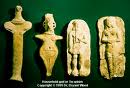
Having said this, lately I have concerns. I love to see thoughtful creativity, and I think it is an act of worship to emulate our Creator. However, I think like everything else, it can become an idol.
We can’t sacrifice truth or faith for creativity.
There are different types of creative people. I believe I’m creative, but I like a certain amount of structure and I do well in a circumstance where I know the expectations and can shoot for a level of achievement. Some creatives are *very much* creative. Their whole personality is geared toward experimenting, pushing, exploring, and having a sense of freedom. They can be great people to be around.
The problem can be they put too much on the freedom. They start to clash with standards, guidelines, boundaries. This can become a problem area for Christians. If too much emphasis is put on creativity and the freedom to explore it, they can lose sight of what we are called to in the Bible. They end up worshipping the creative process over the Creator of it all.
I’m not necessarily talking about their art. I can see a musician writing an angry song that doesn’t seem to be Biblical, or an author writing a character or story that don’t have any apparent redeeming value – as long as what they do isn’t directly advocating sin. In a grander scope of their body of work, there may be a point being made by such work that continues to show a Biblical worldview, but it isn’t as apparent taken out of context.
I see more of a problem with their lives getting caught in the “creative life”, and the artist leaving behind the Kingdom life. Instead of following Christ and doing art in the wide beauty of His creation and Kingdom, they follow “the muse” wherever it takes them.
 |
| This may be an idol… |
I think an example of this would be Katy Perry. It is well-known that she started in Christian music, but has evolved into a secular artist that likes to sing and dress provocatively. In reading articles about her, I think she also has let ambition and a desire for fame to drive her life as much as her “art”, but I’m sure her creative side contributes as well.
What is an artist to do? As Christians, we need to offer fellowship and prayer for those who explore the creative life. The beauty that can revealed about God through wonderful art is a true gift we all can and should enjoy. The temptation is letting ourselves go into the creative act so much that we lose our moorings. I’ve had very creative friends that have been misunderstood. Evangelicalism in America especially can have trouble with the questions raised by these type of people. The artist must choose to stay within the boundaries of Kingdom life, but we can do our best to love and encourage them so they can use their curiosity and imagination without losing themselves to the process.
—
by Jason Joyner | Jan 20, 2011 | arts, Biblical worldview, Blog, Christianity, creativity
In this blog I’ve been an advocate for Christian artists to have the freedom to make art for beauty’s sake, that our creativity can give glory to God even if it is not specifically relating Jesus or other aspects of Christianity. I made the argument of Francis Schaeffer, that if you look over a Christian artist’s work over time, you would see their worldview coming out, even if a specific work did not seem to have a Biblical worldview. This post has the links to my longest run of posts concerning Christianity and art, and it goes into greater detail and nuance.
|
| Made to worship? |
Having said this, lately I have concerns. I love to see thoughtful creativity, and I think it is an act of worship to emulate our Creator. However, I think like everything else, it can become an idol.
We can’t sacrifice truth or faith for creativity.
There are different types of creative people. I believe I’m creative, but I like a certain amount of structure and I do well in a circumstance where I know the expectations and can shoot for a level of achievement. Some creatives are *very much* creative. Their whole personality is geared toward experimenting, pushing, exploring, and having a sense of freedom. They can be great people to be around.
The problem can be they put too much on the freedom. They start to clash with standards, guidelines, boundaries. This can become a problem area for Christians. If too much emphasis is put on creativity and the freedom to explore it, they can lose sight of what we are called to in the Bible. They end up worshipping the creative process over the Creator of it all.
I’m not necessarily talking about their art. I can see a musician writing an angry song that doesn’t seem to be Biblical, or an author writing a character or story that don’t have any apparent redeeming value – as long as what they do isn’t directly advocating sin. In a grander scope of their body of work, there may be a point being made by such work that continues to show a Biblical worldview, but it isn’t as apparent taken out of context.
I see more of a problem with their lives getting caught in the “creative life”, and the artist leaving behind the Kingdom life. Instead of following Christ and doing art in the wide beauty of His creation and Kingdom, they follow “the muse” wherever it takes them.
|
| This may be an idol… |
I think an example of this would be Katy Perry. It is well-known that she started in Christian music, but has evolved into a secular artist that likes to sing and dress provocatively. In reading articles about her, I think she also has let ambition and a desire for fame to drive her life as much as her “art”, but I’m sure her creative side contributes as well.
What is an artist to do? As Christians, we need to offer fellowship and prayer for those who explore the creative life. The beauty that can revealed about God through wonderful art is a true gift we all can and should enjoy. The temptation is letting ourselves go into the creative act so much that we lose our moorings. I’ve had very creative friends that have been misunderstood. Evangelicalism in America especially can have trouble with the questions raised by these type of people. The artist must choose to stay within the boundaries of Kingdom life, but we can do our best to love and encourage them so they can use their curiosity and imagination without losing themselves to the process.
—

by Jason Joyner | Jan 13, 2011 | arts, Blog, creativity, internet, resources
I’ve been a fan of Charlie Peacock and his music since I first found out about him in 1991 (sheesh, that sounds long ago…). His music is intelligent, creative, risky, and often has a great beat to dance to.
He’s taken his love of God and his artistic nature and fused into something that sounds pretty special. The Art House is the ministry in Nashville with his wife Andi where they host artistic types of all kinds and nurture them in creativity and faith. It has spun off to a physical location in Dallas as well, plus the internet home at Art House America. You can find out more of their vision on the About page.
Not all of us will get the chance to go there (though I’m holding my breath). The website has articles from thinkers on subjects of artistry (music, books, film), justice, creation care, and hospitality, just to name a few. I really enjoyed an article by Andi on raising artful kids, from her perspective as a grandmother. Neat stuff there!
I encourage my creative friends to check out Art House America. Maybe God has something to speak to you from there.
—
by Jason Joyner | Jan 13, 2011 | arts, Blog, creativity, internet, resources
I’ve been a fan of Charlie Peacock and his music since I first found out about him in 1991 (sheesh, that sounds long ago…). His music is intelligent, creative, risky, and often has a great beat to dance to.
He’s taken his love of God and his artistic nature and fused into something that sounds pretty special. The Art House is the ministry in Nashville with his wife Andi where they host artistic types of all kinds and nurture them in creativity and faith. It has spun off to a physical location in Dallas as well, plus the internet home at Art House America. You can find out more of their vision on the About page.
Not all of us will get the chance to go there (though I’m holding my breath). The website has articles from thinkers on subjects of artistry (music, books, film), justice, creation care, and hospitality, just to name a few. I really enjoyed an article by Andi on raising artful kids, from her perspective as a grandmother. Neat stuff there!
I encourage my creative friends to check out Art House America. Maybe God has something to speak to you from there.
—

by Jason Joyner | Jan 5, 2011 | Blog, books, CSFF, fantasy, reviews
|
| “I always feel like…somebody’s watching me!” |
Have you been following the discussion in this month’s CSFF Tour featuring
The Wolf of Tebron? If not, you’re missing out on fairy tales, allegories, and how these can fit into speculative fiction. As always, Becky Miller keeps track of
all the rabble and their varied posts – check it out!
If you’re wondering what
The Wolf of Tebron is about, my synopsis is on
day 1 of our tour. Yesterday I talked about the tricky place
Tebron is in marketing-wise with it being a “fairy tale allegory.” I promised a review today.
Let me start off by saying that in learning more about Ms. Lakin, I can see that she is a well-read individual who has attempted an ambitious project in her Gates of Heaven series, which Tebron kicks off. She has a discussion in the back of the book that describes her desire to meld a fairy tale structure with allegorical images of God’s relationship while weaving in apologetics, philosophy, and poetry.
Sounds impressive, and is certainly a lofty goal to shoot for in book.
The book starts with a prologue and then takes the protaganist, Joran, through different journeys as he seeks the Moon, the Sun, the South Wind, and the Western Sea in progression. Lakin enjoys a descriptive style, and it usually serves the story well, creating a vivid picture of the different locales – once Joran gets there. Sometimes though, the journey gets repetitious, and the description struggles at the lack of variety. Other times the action is nebulous (see p182-184), so the description is confusing. I had to skim some sections as there were gaps without a lot going on, it seemed.
There aren’t a lot of characters in the book. Joran is an everyman type, and he didn’t connect with me very well. A lot of his struggle in the book is internal as much as external. I know that in life we most often deal with internal strife, and it is hard to make that exciting. The other major character is Ruyah the wolf, who becomes Joran’s companion throughout the journey. He is a noble creature with a unique voice, and he is the best part of the book. He is a wise mentor to Joran, and even though it would be easy to compare him with Aslan the lion, Ruyah stands apart from his Narnian counterpart. As others have noted, sometimes Ruyah’s wisdom seems a little outside of Biblical standing, but he was enjoyable overall.
 |
| Do you hear laughing? |
The major destinations of the Moon, Sun, etc. are personified, and this technique is used well. The Sun’s mother, Sola, was very interested in knowledge, and she offered up some things like listening to specific symphonies and mentioned “rocket science,” which threw me out of the fictive world of Tebron each time.
The conclusion of the book ties together various threads from the book with varying success. I felt the most emotional connection to Joran and his wife Charris at this time, but other things came across too contrived.
Overall, I obviously had a hard time with The Wolf of Tebron. I admire what she was trying to do – I just think there was so much attempted it didn’t come together well. I don’t like being critical, because I realize the hard, hard work it is to pour yourself into writing a book, but as Fred Warren says in his day 3 post, it doesn’t work for everyone. Others on the tour really enjoyed the plot, spiritual allegory, and characters. I felt distant to it the whole time. Do check out other people on the tour to get a balanced view, and I wish Ms. Lakin much success in the future.
I think the CSFF is playing catch up a little, and there will be another tour later in January. Hope to see you then!
—
by Jason Joyner | Jan 5, 2011 | Blog, books, CSFF, fantasy, reviews
|
| “I always feel like…somebody’s watching me!” |
Have you been following the discussion in this month’s CSFF Tour featuring
The Wolf of Tebron? If not, you’re missing out on fairy tales, allegories, and how these can fit into speculative fiction. As always, Becky Miller keeps track of
all the rabble and their varied posts – check it out!
If you’re wondering what
The Wolf of Tebron is about, my synopsis is on
day 1 of our tour. Yesterday I talked about the tricky place
Tebron is in marketing-wise with it being a “fairy tale allegory.” I promised a review today.
Let me start off by saying that in learning more about Ms. Lakin, I can see that she is a well-read individual who has attempted an ambitious project in her Gates of Heaven series, which Tebron kicks off. She has a discussion in the back of the book that describes her desire to meld a fairy tale structure with allegorical images of God’s relationship while weaving in apologetics, philosophy, and poetry.
Sounds impressive, and is certainly a lofty goal to shoot for in book.
The book starts with a prologue and then takes the protaganist, Joran, through different journeys as he seeks the Moon, the Sun, the South Wind, and the Western Sea in progression. Lakin enjoys a descriptive style, and it usually serves the story well, creating a vivid picture of the different locales – once Joran gets there. Sometimes though, the journey gets repetitious, and the description struggles at the lack of variety. Other times the action is nebulous (see p182-184), so the description is confusing. I had to skim some sections as there were gaps without a lot going on, it seemed.
There aren’t a lot of characters in the book. Joran is an everyman type, and he didn’t connect with me very well. A lot of his struggle in the book is internal as much as external. I know that in life we most often deal with internal strife, and it is hard to make that exciting. The other major character is Ruyah the wolf, who becomes Joran’s companion throughout the journey. He is a noble creature with a unique voice, and he is the best part of the book. He is a wise mentor to Joran, and even though it would be easy to compare him with Aslan the lion, Ruyah stands apart from his Narnian counterpart. As others have noted, sometimes Ruyah’s wisdom seems a little outside of Biblical standing, but he was enjoyable overall.
|
| Do you hear laughing? |
The major destinations of the Moon, Sun, etc. are personified, and this technique is used well. The Sun’s mother, Sola, was very interested in knowledge, and she offered up some things like listening to specific symphonies and mentioned “rocket science,” which threw me out of the fictive world of Tebron each time.
The conclusion of the book ties together various threads from the book with varying success. I felt the most emotional connection to Joran and his wife Charris at this time, but other things came across too contrived.
Overall, I obviously had a hard time with The Wolf of Tebron. I admire what she was trying to do – I just think there was so much attempted it didn’t come together well. I don’t like being critical, because I realize the hard, hard work it is to pour yourself into writing a book, but as Fred Warren says in his day 3 post, it doesn’t work for everyone. Others on the tour really enjoyed the plot, spiritual allegory, and characters. I felt distant to it the whole time. Do check out other people on the tour to get a balanced view, and I wish Ms. Lakin much success in the future.
I think the CSFF is playing catch up a little, and there will be another tour later in January. Hope to see you then!
—
by Jason Joyner | Jan 4, 2011 | Blog, books, CSFF, fantasy, marketing, speculative fiction
Welcome back to the second star-studded day of the CSFF Tour. We’re featuring The Wolf of Tebron, the first in a series by author C.S. Lakin.
Yesterday I gave an overview of the book, and tomorrow I want to give my review. What do I have in store for today?
A puzzle.
How does an author effectively market their book – to get it into the hands of the type of reader that will appreciate their genre/style?
I ask this today because The Wolf of Tebron is billed as a “fairy tale allegory of God’s love.” The designation fairy tale isn’t used often nowadays outside of the Disney realm. I thought it was an interesting angle to go with this book. Since this tour features fantasy and science fiction novels (more broadly speculative fiction, including alternate history novels like The Gifted series by Lisa Bergren), it is a logical book to spotlight. I don’t think anyone in our group, when choosing books, paused when they saw the description.
I think a lot of the books we feature run into a tricky problem of how to market the story. In 2010 we featured Lost Mission by Athol Dickson. It was set alternately in the 1700’s and the modern day. It was labeled as “magical realism.” What is that, exactly? And who is the market for that? It worked enough to get us to review it, but it isn’t an easy book to summarize. It is not fantasy, but there was a fantastic element that was a key plot item.
The Wolf of Tebron is probably closer to fairy tale than true fantasy, so the designation is appropriate. Will it capture a potential buyer with that moniker? Of course, it also bills itself as an allegory. True allegories are hard to find. The Pilgrim’s Progress is probably the most famous one in Christian literature. The publicity letter I received with Tebron considered C.S. Lewis in the allegorical realm. I wrestle with that. I don’t think it is a true allegory. In my mind an allegory has point-by-point connection with whatever it is trying to emulate. Yes, Aslan is a Christ-figure, but how many other direct connections are there? There is much symbolism, but I don’t think allegory is the best way to describe the Narnia series.
Enough with the nit-picking. The point is, I think speculative fiction has a harder time marketing itself because the term is encompasses several sub-genres. If a book is a mystery or a romance, there can be variations: detective vs. noir, chick lit vs. historical. Still, the category is pretty focused. Speculative fiction is a wide berth, and it is tricky when a fantasy book doesn’t match a Lord of the Rings pattern.
So the author and publisher have to call it something. For those in the tour, what do you think? Was “a fairy tale allegory” the best way to market Tebron? Is there a better way for this book to reach its readers?
Check to see what the rest of the CSFF gang is saying on Becky Miller’s post. I’ll give my review of the book tomorrow, with a little more on marketing…
—
by Jason Joyner | Jan 4, 2011 | Blog, books, CSFF, fantasy, marketing, speculative fiction
Welcome back to the second star-studded day of the CSFF Tour. We’re featuring The Wolf of Tebron, the first in a series by author C.S. Lakin.
Yesterday I gave an overview of the book, and tomorrow I want to give my review. What do I have in store for today?
A puzzle.
How does an author effectively market their book – to get it into the hands of the type of reader that will appreciate their genre/style?
I ask this today because The Wolf of Tebron is billed as a “fairy tale allegory of God’s love.” The designation fairy tale isn’t used often nowadays outside of the Disney realm. I thought it was an interesting angle to go with this book. Since this tour features fantasy and science fiction novels (more broadly speculative fiction, including alternate history novels like The Gifted series by Lisa Bergren), it is a logical book to spotlight. I don’t think anyone in our group, when choosing books, paused when they saw the description.
I think a lot of the books we feature run into a tricky problem of how to market the story. In 2010 we featured Lost Mission by Athol Dickson. It was set alternately in the 1700’s and the modern day. It was labeled as “magical realism.” What is that, exactly? And who is the market for that? It worked enough to get us to review it, but it isn’t an easy book to summarize. It is not fantasy, but there was a fantastic element that was a key plot item.
The Wolf of Tebron is probably closer to fairy tale than true fantasy, so the designation is appropriate. Will it capture a potential buyer with that moniker? Of course, it also bills itself as an allegory. True allegories are hard to find. The Pilgrim’s Progress is probably the most famous one in Christian literature. The publicity letter I received with Tebron considered C.S. Lewis in the allegorical realm. I wrestle with that. I don’t think it is a true allegory. In my mind an allegory has point-by-point connection with whatever it is trying to emulate. Yes, Aslan is a Christ-figure, but how many other direct connections are there? There is much symbolism, but I don’t think allegory is the best way to describe the Narnia series.
Enough with the nit-picking. The point is, I think speculative fiction has a harder time marketing itself because the term is encompasses several sub-genres. If a book is a mystery or a romance, there can be variations: detective vs. noir, chick lit vs. historical. Still, the category is pretty focused. Speculative fiction is a wide berth, and it is tricky when a fantasy book doesn’t match a Lord of the Rings pattern.
So the author and publisher have to call it something. For those in the tour, what do you think? Was “a fairy tale allegory” the best way to market Tebron? Is there a better way for this book to reach its readers?
Check to see what the rest of the CSFF gang is saying on Becky Miller’s post. I’ll give my review of the book tomorrow, with a little more on marketing…
—
by Jason Joyner | Jan 3, 2011 | Blog, books, CSFF, fantasy
Welcome to another Christian Sci-fi and Fantasy blog tour. This is a group passionate about quality speculative fiction with a Christian worldview, and there are always good discussions on the books we highlight each month.
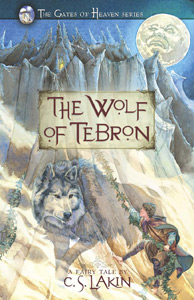
I believe we’re having two tours this month, with the first featuring The Wolf of Tebron by C.S. Lakin.
The backcopy to the book says it is a “stirring allegory of God’s love in classic fairy tale tradition.” It follows the adventures of Joran, a young blacksmith with the gift of mindspeaking with animals. He has a recurrent dream that his wife is trapped by the Moon after he sends her away in a fit of anger. On his journey he rescues a large wolf, who becomes his companion on traveling to the four ends of the world to solve the riddle of his dream and rescuing his wife. Joran suffers through many trials in his journey, but in the end a sacrifice is needed to finish his task. Will Joran risk all for what seems to be a dream?
Ms. Lakin appears to be a prolific writer, as she has another contemporary book that was recently released, Someone to Blame, (the CFBA tour will be featuring it later this month). You can find out more about her from the website for The Wolf of Tebron and her personal blog.
As always, you can find different opinions from my varied tourmates below. I will have a review of the book in a later post as well.
Noah Arsenault
Amy Bissell
Red Bissell
Justin Boyer
Keanan Brand
Grace Bridges
Beckie Burnham
Jeff Chapman
Christian Fiction Book Reviews
Carol Bruce Collett
Valerie Comer
CSFF Blog Tour
D. G. D. Davidson
April Erwin
Andrea Graham
Nikole Hahn
Katie Hart
Ryan Heart
Bruce Hennigan
Becky Jesse
Cris Jesse
Becca Johnson
Julie
Carol Keen
Dawn King
Shannon McDermott
Matt Mikalatos
Rebecca LuElla Miller
Joan Nienhuis
Nissa
John W. Otte
Chawna Schroeder
Tammy Shelnut
Kathleen Smith
James Somers
Rachel Starr Thomson
Robert Treskillard
Fred Warren
Phyllis Wheeler
—
I did receive an advanc reader copy of this book for review purposes.
by Jason Joyner | Jan 3, 2011 | Blog, books, CSFF, fantasy
Welcome to another Christian Sci-fi and Fantasy blog tour. This is a group passionate about quality speculative fiction with a Christian worldview, and there are always good discussions on the books we highlight each month.
I believe we’re having two tours this month, with the first featuring The Wolf of Tebron by C.S. Lakin.
The backcopy to the book says it is a “stirring allegory of God’s love in classic fairy tale tradition.” It follows the adventures of Joran, a young blacksmith with the gift of mindspeaking with animals. He has a recurrent dream that his wife is trapped by the Moon after he sends her away in a fit of anger. On his journey he rescues a large wolf, who becomes his companion on traveling to the four ends of the world to solve the riddle of his dream and rescuing his wife. Joran suffers through many trials in his journey, but in the end a sacrifice is needed to finish his task. Will Joran risk all for what seems to be a dream?
Ms. Lakin appears to be a prolific writer, as she has another contemporary book that was recently released, Someone to Blame, (the CFBA tour will be featuring it later this month). You can find out more about her from the website for The Wolf of Tebron and her personal blog.
As always, you can find different opinions from my varied tourmates below. I will have a review of the book in a later post as well.
Noah Arsenault
Amy Bissell
Red Bissell
Justin Boyer
Keanan Brand
Grace Bridges
Beckie Burnham
Jeff Chapman
Christian Fiction Book Reviews
Carol Bruce Collett
Valerie Comer
CSFF Blog Tour
D. G. D. Davidson
April Erwin
Andrea Graham
Nikole Hahn
Katie Hart
Ryan Heart
Bruce Hennigan
Becky Jesse
Cris Jesse
Becca Johnson
Julie
Carol Keen
Dawn King
Shannon McDermott
Matt Mikalatos
Rebecca LuElla Miller
Joan Nienhuis
Nissa
John W. Otte
Chawna Schroeder
Tammy Shelnut
Kathleen Smith
James Somers
Rachel Starr Thomson
Robert Treskillard
Fred Warren
Phyllis Wheeler
—
I did receive an advanc reader copy of this book for review purposes.
