by Jason Joyner | Oct 8, 2006 | Blog, Uncategorized
I still am teaching Romans in my church’s adult Sunday school class. I said a long time ago that I would post a little about our study and any pearls gleaned from it, but I have been pretty negligent in that.
Oh well. Today we are studying Romans 6. As a study guide, we are using Francis Schaeffer’s book The Finished Work of Christ, (why yes, I do happen to like Schaeffer :P). In a passage discussing Romans 6:4, he says:
Jesus didn’t die on the cross just to die on the cross. Jesus died on the cross in order that we might be redeemed. Likewise, we are not called upon to die daily just in order to be dead; we are called upon to die daily in order that we might experience the reality of being alive in Christ.
There are too many gems in Romans to list them all. And Schaeffer’s book is an excellent study guide to go along with the book
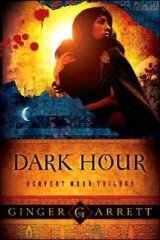
by Jason Joyner | Oct 6, 2006 | Blog, Uncategorized
Today is part of a blog tour for Dark Hour, the most recent book from Ginger Garrett. She is an expert in ancient women history, and she uses her knowledge and research to bring biblical times to light.
And now, a special Q&A with Ginger Garrett:
1.) First, tell us a bit about Dark Hour.
I was praying about what book to write after Chosen, and accidentally left my open Bible on the kitchen table. (A dangerous thing, since in my house, small children and large dogs routinely scavenge with dirty hands and noses for snacks!) As I walked past it, I saw a caption about someone named Athaliah and a mass murder. I stopped cold. I knew it was my story.
Athaliah was the daughter of Jezebel–a real woman in history–who tried to destroy all the descendents of King David in a massacre. God made a promise that a descendent of King David would always sit on the throne, and one day a Messiah would come from this line. If Athaliah succeeded, she would break the promise between God and the people, and destroy all hope for a Messiah.One woman, her step-daughter, Jehoshebeth, defied her. She stole a baby during the massacre and hid him. Between them, the two women literally fought for the fate of the world.
2.) What drew you to write biblical fiction?
The similarities between the lives of ancient women and our lives. We get distracted by their “packaging,” the way they dressed and lived, but at heart, our stories are parallel.
3.) How much time is spent researching the novel versus writing the novel?
Equal amounts, and I don’t stop researching while I write. I have a historical expert, probably the best in the world in his field, review the manuscript and point out errors. The tough part is deciding when to ignore his advice. He pointed out that most everyone rode donkeys if they weren’t in the military, but a key scene in the novel involves riding a horse to the rescue. It would have been anti-climatic to charge in on a donkey! 🙂 So I ignored his advice on that one.
4.) Dark Hour takes its reader deep into the heart of palace intrigue and betrayals. Were parts of this book difficult to write?
I left out much of the darkest material I uncovered in research. It was important to show how violent and treacherous these times and this woman (Athaliah) could be, but I tried to be cautious about how to do it. The story was so powerful and hopeful–how one woman’s courage in the face of evil saved the world–but the evil was depressing. I tried to move quickly past it. I wanted balance. Our heroine suffers and some wounds are not completely healed in her lifetime. That’s true for us, too.
5.) What would modern readers find surprising about ancient women?
They had a powerful sense of the community of women. They also wore make-up: blush, glitter eyeshadow, lipstick, powder, and perfume! They drank beer with straws, and enjoyed “Fritos”: ground grains, fried and salted. Many of our foods are the same today, but they loved to serve pate made from dried locusts, finely ground. Ugh!
***
One other special for this blog tour – I am authorized by her publicist to hold a contest for one copy of Dark Hour! All you have to do is leave a comment to this post, and I will draw a name by October 9th to determine the winner. (This is limited to this post, so don’t get it confused with my other contest on the Art and the Bible series.)
by Jason Joyner | Oct 6, 2006 | Blog, Uncategorized
Today is part of a blog tour for Dark Hour, the most recent book from Ginger Garrett. She is an expert in ancient women history, and she uses her knowledge and research to bring biblical times to light.
And now, a special Q&A with Ginger Garrett:
1.) First, tell us a bit about Dark Hour.
I was praying about what book to write after Chosen, and accidentally left my open Bible on the kitchen table. (A dangerous thing, since in my house, small children and large dogs routinely scavenge with dirty hands and noses for snacks!) As I walked past it, I saw a caption about someone named Athaliah and a mass murder. I stopped cold. I knew it was my story.
Athaliah was the daughter of Jezebel–a real woman in history–who tried to destroy all the descendents of King David in a massacre. God made a promise that a descendent of King David would always sit on the throne, and one day a Messiah would come from this line. If Athaliah succeeded, she would break the promise between God and the people, and destroy all hope for a Messiah.One woman, her step-daughter, Jehoshebeth, defied her. She stole a baby during the massacre and hid him. Between them, the two women literally fought for the fate of the world.
2.) What drew you to write biblical fiction?
The similarities between the lives of ancient women and our lives. We get distracted by their “packaging,” the way they dressed and lived, but at heart, our stories are parallel.
3.) How much time is spent researching the novel versus writing the novel?
Equal amounts, and I don’t stop researching while I write. I have a historical expert, probably the best in the world in his field, review the manuscript and point out errors. The tough part is deciding when to ignore his advice. He pointed out that most everyone rode donkeys if they weren’t in the military, but a key scene in the novel involves riding a horse to the rescue. It would have been anti-climatic to charge in on a donkey! 🙂 So I ignored his advice on that one.
4.) Dark Hour takes its reader deep into the heart of palace intrigue and betrayals. Were parts of this book difficult to write?
I left out much of the darkest material I uncovered in research. It was important to show how violent and treacherous these times and this woman (Athaliah) could be, but I tried to be cautious about how to do it. The story was so powerful and hopeful–how one woman’s courage in the face of evil saved the world–but the evil was depressing. I tried to move quickly past it. I wanted balance. Our heroine suffers and some wounds are not completely healed in her lifetime. That’s true for us, too.
5.) What would modern readers find surprising about ancient women?
They had a powerful sense of the community of women. They also wore make-up: blush, glitter eyeshadow, lipstick, powder, and perfume! They drank beer with straws, and enjoyed “Fritos”: ground grains, fried and salted. Many of our foods are the same today, but they loved to serve pate made from dried locusts, finely ground. Ugh!
***
One other special for this blog tour – I am authorized by her publicist to hold a contest for one copy of Dark Hour! All you have to do is leave a comment to this post, and I will draw a name by October 9th to determine the winner. (This is limited to this post, so don’t get it confused with my other contest on the Art and the Bible series.)
by Jason Joyner | Oct 4, 2006 | Blog, Uncategorized
As I mentioned yesterday, evangelicals are sometimes faulted for being interested just in the Truth or focusing on getting souls saved. The feeling is that “time is short” and we need to be serious about what we do. Writing fiction is just wasting time in imaginary worlds, and don’t have “eternal value”.
Francis Schaeffer argues in Art and the Bible that “true spirituality includes the Lordship of Christ over the whole man (p 376).” The first point he makes is that God made man and woman in His own image. Who is God but the ultimate Creator? If we are to truly honor God in all we do, it makes sense that we would be creative beings as well.
Too often spirituality in American evangelicalism takes on a dichotomy of body and soul, or sacred and secular. “I don’t listen to secular music, only Christian rock.” This is actually a Platonic idea instead of a scriptural idea. As Schaeffer says, “Redemption is for the whole man (p 376).” As a saved person, my whole life is under the lordship of Christ. It doesn’t stop at the church doors on Sunday, but it extends to my work, my relationships, and everything I do – including my creative aspects. I’ve said it elsewhere: we don’t have Christian plumbers, we have plumbers who happen to be Christians. An author shouldn’t be labeled a “Christian” author to give them a special distinction from a regular author. Too often this label only keeps the author from being recognized outside of our Christian ghettos.
The arts and sciences do have a place in the Christian life – they are not peripheral. For a Christian, redeemed by the work of Christ and living within the norms of Scripture and under the leadership of the Holy Spirit, the Lordship of Christ should include an interest in the arts. A Christian should use these arts to the glory of God – not just as tracts, but as things of beauty to the praise of God. An art work can be a doxology in itself (p 377).
Tomorrow we’ll look at examples of art in the Bible.
Leave your comments to be entered in the Deliver Me from Evelyn contest!
P.S. All quotes are from Art and the Bible, book five in A Chrisitan Worldview of the Bible as Truth, Volume 2 of The Complete Works of Francis A. Schaeffer: A Christian Worldview.
by Jason Joyner | Oct 4, 2006 | Blog, Uncategorized
As I mentioned yesterday, evangelicals are sometimes faulted for being interested just in the Truth or focusing on getting souls saved. The feeling is that “time is short” and we need to be serious about what we do. Writing fiction is just wasting time in imaginary worlds, and don’t have “eternal value”.
Francis Schaeffer argues in Art and the Bible that “true spirituality includes the Lordship of Christ over the whole man (p 376).” The first point he makes is that God made man and woman in His own image. Who is God but the ultimate Creator? If we are to truly honor God in all we do, it makes sense that we would be creative beings as well.
Too often spirituality in American evangelicalism takes on a dichotomy of body and soul, or sacred and secular. “I don’t listen to secular music, only Christian rock.” This is actually a Platonic idea instead of a scriptural idea. As Schaeffer says, “Redemption is for the whole man (p 376).” As a saved person, my whole life is under the lordship of Christ. It doesn’t stop at the church doors on Sunday, but it extends to my work, my relationships, and everything I do – including my creative aspects. I’ve said it elsewhere: we don’t have Christian plumbers, we have plumbers who happen to be Christians. An author shouldn’t be labeled a “Christian” author to give them a special distinction from a regular author. Too often this label only keeps the author from being recognized outside of our Christian ghettos.
The arts and sciences do have a place in the Christian life – they are not peripheral. For a Christian, redeemed by the work of Christ and living within the norms of Scripture and under the leadership of the Holy Spirit, the Lordship of Christ should include an interest in the arts. A Christian should use these arts to the glory of God – not just as tracts, but as things of beauty to the praise of God. An art work can be a doxology in itself (p 377).
Tomorrow we’ll look at examples of art in the Bible.
Leave your comments to be entered in the Deliver Me from Evelyn contest!
P.S. All quotes are from Art and the Bible, book five in A Chrisitan Worldview of the Bible as Truth, Volume 2 of The Complete Works of Francis A. Schaeffer: A Christian Worldview.
by Jason Joyner | Oct 4, 2006 | Blog, Uncategorized
Make sure to check out
Scenes & Beans today – our favorite fishy pastor again deals with the aqueous kind.
by Jason Joyner | Oct 4, 2006 | Blog, Uncategorized
Make sure to check out
Scenes & Beans today – our favorite fishy pastor again deals with the aqueous kind.
by Jason Joyner | Oct 3, 2006 | Blog, Uncategorized
If you were asked to name one of the great Christian thinkers in the 20th century, one name that should be at the top of the list is Francis Schaeffer. I really can’t think of anyone who did more to promote a complete Christian/Biblical worldview for all of life. Actually, Schaeffer considered himself an evangelist, with a heart for reaching the jaded college students of Europe. However, reaching that particular group meant having a complete, comprehensive worldview.
I would recommend any of his works. There is a classic “trilogy” of his works: The God Who Is There, Escape from Reason, and He Is There and He Is Not Silent. These books give a solid basis for understanding his theology and some of the basic principles he draws from. Then you can get the complete works of Francis Schaeffer as well – 5 volumes of deep digging; plenty of jewels here to uncover.
In Volume 2 there is a small little book called Art and the Bible. It is only 38 pages long, but it gives a great defense of art in the Christian life.
I will confess that I am not a great one for what may be called “high art”: painting, poetry, sculpture, or classical music. I can appreciate classical music better than an abstract painting, to be sure, and I do enjoy these forms. However, I am more interested in what Schaeffer terms “popular art”: the novel, movies, popular music, and theatre. There could definitely be a debate about comic books and video games being included here nowadays!
As this blog focuses on fiction, I want to bring what Schaeffer has to say about art to bear on the craft of writing. I think an initial point to make here is that there is a sense out “there” (that nebulous there) in evangelical circles that time is short, and that we shouldn’t be wasting our time with fictitious worlds when there is so much going on in the real world. What would Schaeffer say to this? I’ll talk about this more next time.
————————
And as I mentioned last week, to encourage comments I have a little contest planned. I don’t know how long this discussion will go, but whoever leaves a comment anytime during this discussion will be eligible to win a copy of Deliver Me from Evelyn, the latest novel from Chris Well. Chris has a quirky, unique style that will draw you in and keep you guessing! So leave those comments people, and you may be the winner!
by Jason Joyner | Oct 3, 2006 | Blog, Uncategorized
If you were asked to name one of the great Christian thinkers in the 20th century, one name that should be at the top of the list is Francis Schaeffer. I really can’t think of anyone who did more to promote a complete Christian/Biblical worldview for all of life. Actually, Schaeffer considered himself an evangelist, with a heart for reaching the jaded college students of Europe. However, reaching that particular group meant having a complete, comprehensive worldview.
I would recommend any of his works. There is a classic “trilogy” of his works: The God Who Is There, Escape from Reason, and He Is There and He Is Not Silent. These books give a solid basis for understanding his theology and some of the basic principles he draws from. Then you can get the complete works of Francis Schaeffer as well – 5 volumes of deep digging; plenty of jewels here to uncover.
In Volume 2 there is a small little book called Art and the Bible. It is only 38 pages long, but it gives a great defense of art in the Christian life.
I will confess that I am not a great one for what may be called “high art”: painting, poetry, sculpture, or classical music. I can appreciate classical music better than an abstract painting, to be sure, and I do enjoy these forms. However, I am more interested in what Schaeffer terms “popular art”: the novel, movies, popular music, and theatre. There could definitely be a debate about comic books and video games being included here nowadays!
As this blog focuses on fiction, I want to bring what Schaeffer has to say about art to bear on the craft of writing. I think an initial point to make here is that there is a sense out “there” (that nebulous there) in evangelical circles that time is short, and that we shouldn’t be wasting our time with fictitious worlds when there is so much going on in the real world. What would Schaeffer say to this? I’ll talk about this more next time.
————————
And as I mentioned last week, to encourage comments I have a little contest planned. I don’t know how long this discussion will go, but whoever leaves a comment anytime during this discussion will be eligible to win a copy of Deliver Me from Evelyn, the latest novel from Chris Well. Chris has a quirky, unique style that will draw you in and keep you guessing! So leave those comments people, and you may be the winner!
by Jason Joyner | Sep 29, 2006 | Blog, Uncategorized
Being a proud original member of Violet Dawn so I could read the story and audition for Pastor Hank Detcher, one of the side characters in the book. I read the book several months ago, but I wanted to wait for the blog tour to talk about it in depth.
“Paige Williams harbored a restless kinship with the living dead.”
With that line, the adventure in Kanner Lake begins. I remember Brandilyn sharing that line on her blog one day, and I thought “What on earth could she be planning?”
Never doubt the possibilities when it comes to a Brandilyn Collins book.
Hot tubs are supposed to be sanctuary from the weariness of the world. As Paige slips into her rental’s hot tub in the middle of the night, all she is thinking about is getting some rest. But as tendrils of hair wrap around her, she leaps out of the tub, since she is sharing it with a dead body.
The book takes place over the next 14 hours, as Paige frantically tries to deal with her situation. She is concerned with survival. The real murderer is concerned with death. Sheriff Vince Edwards works on finding the truth in the midst of his own trials. Leslie Brymes, young hot shot reporter for the local paper is looking for the big scoop to advance her career.
Brandilyn’s tagline is “Don’t forget to b r e a t h e…” and this book doesn’t disappoint. The opening chapter grabs you, and the final chapter ties the opening round of the Kanner Lake series with a satisfying close – see if you can find the significance of the final words. The suspense keeps you turning the pages, wanting to see what happened next. I remember reading outside of my work on nice spring days, cursing that lunch was over so that I couldn’t keep reading.
Besides the twists and turns of suspense that keeps you guessing, the characterization mostly puts you in the place of Paige, Leslie, and Bailey nicely. I felt that Sheriff Edwards major character point was forced in the midst of the action. Otherwise, the characters have good motivation by what they do, and it spills over into the side details about them. Leslie Brymes “in-your-face” nature is shown not only by her determination to get the story, but her bright green VW bug with a pink daisy on it!
Overall Violet Dawn is a wonderful book. It is a good read with interesting pacing and plot, and you have to read it to see fully what I’m saying. So check it out, and tell Brandilyn that Pastor Hank sent you 😉
————————–
I mentioned a couple weeks ago that I was going to do a little series out of Francis Schaeffer’s book Art and the Bible. The various blog tours I’m involved in changed schedules up some, and it threw me off. Next week I plan on starting this. And I have a little something for those who read this series. Leave a comment anytime throughout the Art and the Bible discussion, and I’ll send you a free book! More details coming…


