by Jason Joyner | Aug 11, 2007 | Blog, books, CFBA, fiction
I highly encourage you to check out the following book for the book tour. I read the first book in this series in January, and it remains my favorite book of the year so far. I goofed up somewhere when it came time to request this book, or I would’ve already read it. Look for my personal review later on, because I am literally on my way to Amazon RIGHT NOW to by it. Without further ado:
This week, the
Christian Fiction Blog Alliance
is introducing
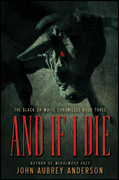
AND IF I DIE
(Faithwords August 2007)
by
John Aubrey Anderson
ABOUT THE AUTHOR:
John grew up in Mississippi cotton country. After graduating from Mississippi State, he received an Air Force commission and has recently retired after flying twenty-eight years for a major airline. He lives in Texas with his wife, Nan.
ABOUT THE BOOK:AND IF I DIE is the third book in the Black and White Chronicles. The first was Abiding Darkness (August, 2006), the second was Wedgewood Grey (February, 2007).
In 1945, a spirit voice told Mr. A. J. Mason to “Be ready.”
In 1960, the spirit drew near and said the same words to the same man. “Be ready.”
On both occasions Mason ended up in bloody battles with the forces of evil. On both occasions, he saved the life of a young girl named Missy Parker. And on both occasions good people died.
It’s 1968.Missy Parker has been married to Dr. Patrick Patterson for nine years; they live in Denton, Texas. Missy plays tennis and golf; Pat is chairman of the philosophy department at North Texas State University.
Mose Washington, a black man Missy refers to as her almost-daddy, is hiding behind a new name—Mose Mann. Mose and the young black man who poses as his grandson have spent eight years successfully evading the FBI, a murderous congresswoman, and creatures from the demonic realm. They now live in Pilot Hill, Texas—fifteen miles from Pat and Missy. Mose is committing the autumn of his life to the pursuit of the knowledge of God and the protection of his “grandson”. His “grandson” is interested in honing his skills as a bull rider.
Close friends see portents of danger in events of the early summer and converge on Pilot Hill to warn the two black men that yet another confrontation with malevolent beings may be looming.
In the pre-dawn hours, on the second day of the North Texas Rodeo, the voice of an invisible being speaks to Missy Parker Patterson. The voice warns her that it is now she, not A. J. Mason, who has been chosen as the person who needs to “Be ready” . . . and Missy doesn’t want the job.
by Jason Joyner | Aug 11, 2007 | Blog, books, CFBA, fiction
I highly encourage you to check out the following book for the book tour. I read the first book in this series in January, and it remains my favorite book of the year so far. I goofed up somewhere when it came time to request this book, or I would’ve already read it. Look for my personal review later on, because I am literally on my way to Amazon RIGHT NOW to by it. Without further ado:
This week, the
Christian Fiction Blog Alliance
is introducing
AND IF I DIE
(Faithwords August 2007)
by
John Aubrey Anderson
ABOUT THE AUTHOR:
John grew up in Mississippi cotton country. After graduating from Mississippi State, he received an Air Force commission and has recently retired after flying twenty-eight years for a major airline. He lives in Texas with his wife, Nan.
ABOUT THE BOOK:AND IF I DIE is the third book in the Black and White Chronicles. The first was Abiding Darkness (August, 2006), the second was Wedgewood Grey (February, 2007).
In 1945, a spirit voice told Mr. A. J. Mason to “Be ready.”
In 1960, the spirit drew near and said the same words to the same man. “Be ready.”
On both occasions Mason ended up in bloody battles with the forces of evil. On both occasions, he saved the life of a young girl named Missy Parker. And on both occasions good people died.
It’s 1968.Missy Parker has been married to Dr. Patrick Patterson for nine years; they live in Denton, Texas. Missy plays tennis and golf; Pat is chairman of the philosophy department at North Texas State University.
Mose Washington, a black man Missy refers to as her almost-daddy, is hiding behind a new name—Mose Mann. Mose and the young black man who poses as his grandson have spent eight years successfully evading the FBI, a murderous congresswoman, and creatures from the demonic realm. They now live in Pilot Hill, Texas—fifteen miles from Pat and Missy. Mose is committing the autumn of his life to the pursuit of the knowledge of God and the protection of his “grandson”. His “grandson” is interested in honing his skills as a bull rider.
Close friends see portents of danger in events of the early summer and converge on Pilot Hill to warn the two black men that yet another confrontation with malevolent beings may be looming.
In the pre-dawn hours, on the second day of the North Texas Rodeo, the voice of an invisible being speaks to Missy Parker Patterson. The voice warns her that it is now she, not A. J. Mason, who has been chosen as the person who needs to “Be ready” . . . and Missy doesn’t want the job.
by Jason Joyner | Aug 7, 2007 | Blog, books, non-fiction, parenting
This was a different type of tour than I am used to. I’ll stick to reviewing fiction, but I did enjoy this book, and again recommend it heartily. I wouldn’t do this lightly either – not with a subject like this.
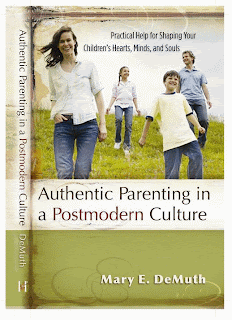
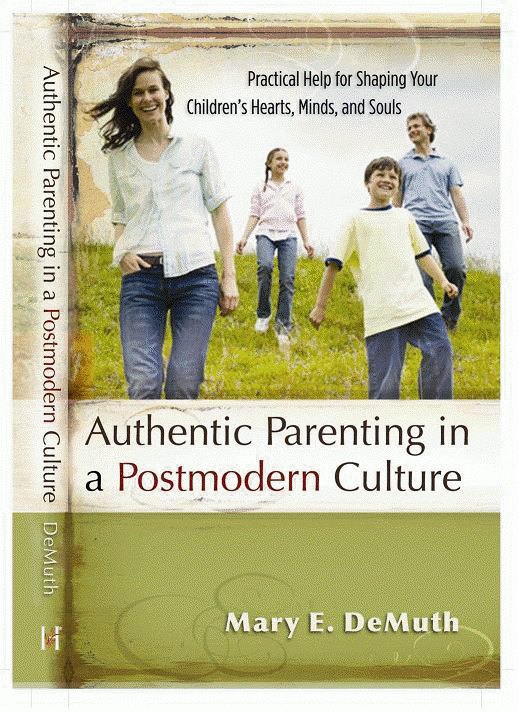
 The book we’ve been discussing, Authentic Parenting in a Post-Modern Culture, by Mary DeMuth is available now. You can purchase your autographed copy directly from Mary at the link above. I encourage you pick it up today!
by Jason Joyner | Aug 7, 2007 | Blog, books, non-fiction, parenting
This was a different type of tour than I am used to. I’ll stick to reviewing fiction, but I did enjoy this book, and again recommend it heartily. I wouldn’t do this lightly either – not with a subject like this.
 The book we’ve been discussing, Authentic Parenting in a Post-Modern Culture, by Mary DeMuth is available now. You can purchase your autographed copy directly from Mary at the link above. I encourage you pick it up today!
by Jason Joyner | Aug 7, 2007 | Blog, non-fiction, parenting, reviews
Yesterday I introduced Mary DeMuth’s new book, Authentic Parenting for a Postmodern Culture. It was an easy book to read quickly, but it deserves a deeper wrestling with the issues that Mary raises. It deals a lot with heart attitudes, both with our kids and our relationship with God.
She brings out several areas or themes that are important areas to consider in our parenting:
1. Conversation. She encourages parents to keep the doors open in communication with our kids, because it will lead to unexpected opportunities for blessings (both for our kids and us!). She also discusses the power of the tongue, which can be a terrible thing used by impatient, harried parents (read: all of us) at times that hurts our kids instead of building them up. This is an issue I am just developing into since my kids are all younger than Mary’s. Initially kids need more directives – they need to be taught to listen and given concrete direction in what to do. However, this conversational parenting becomes a blessing as they grow older, because it keeps the relationship avenues open and flowing both ways.
2. Haven. We need to protect our children’s innocence and provide safety and security for them. Again, when they are young they need more protection. The ideal I get from Authentic is building a haven that gives them peace and security, without keeping them locked in a fortress. The world seems to be getting worse with debauchery and cruelty all the time. It is tempting to hide our children in a Christian safe house, avoiding any taint of culture. Now, I don’t want my kids to sin, but they are going to have to face the world and walk out in it someday. In a haven we can train our kids in how to understand and walk in wisdom and purity without being fully sequestered.
Mary’s family lived this out when they went to France to help pioneer a church. They could have cloistered their family from the secular education system in France (actively hostile to faith). By God’s leading they did put their kids in public school. They had several trials, but it led to opportunities for character growth.
3. Art/Creativity. She placed a premium on encouraging kids in their creativity as an avenue of worship to the Lord. Some of this chapter could sound a little weird to some people I suppose, but as a creative individual myself I thought it was a wonderful reminder of using everything we’ve been given to help our kids experience God. (This from the boy who got in trouble in 1st grade for coloring George Washington’s hair purple – Mom stood up for me though. Go Mom!) Our Lord is amazingly creative, and whether you like art, music, outdoors, or whatever, may it all be used to show our kids the glory of Jesus.
4. Authenticity. This can be a “buzz-word” in a postmodern discussion, but it is an important topic that is more than a tag-line. Mary speaks of being real in our faith, as opposed to Christians who put on a good outward show. She related families she’s seen who do the right things on the outside, but at home scream, belittle, and live a superficial life. We know the words Jesus had for the Pharisees that only lived religiously without having a proper heart. I’ve learned some of the things Mary discusses in this section. Like her husband, I have a temper, and I’ve had to go back to my kids after blowing my top and confess that Daddy just sinned and should not have acted that way. I don’t think my kids are my equals and require a justification for everything I do, but if I model humility when I’ve made a mistake, then hopefully they learn a lesson in how to walk out things when they make their own errors.
There’s a lot more I could draw out of this book, but I don’t want to re-write it here. Again, it is a book that helps us see heart issues in parenting. There are a lot of examples that are suggested, but it is not a “this is how you do it point-by-point” book. Authentic Parenting is a well-crafted resource for parents in considering their parenting skills and how to raise our kids to deal with the new world that is still in process of developing. Like any book, there are going to be points you may not fully agree with Mary on – so eat the meat and spit out the bones. Don’t choke on them, because you’ll miss good nourishment for your parenting life.
Thank you Mary, for your heart to share this. It was a valuable investment of time, and I hope it can be a blessing to many, many parents out there.
If you’d like to read an excerpt from the book, click here.
by Jason Joyner | Aug 7, 2007 | Blog, non-fiction, parenting, reviews
Yesterday I introduced Mary DeMuth’s new book, Authentic Parenting for a Postmodern Culture. It was an easy book to read quickly, but it deserves a deeper wrestling with the issues that Mary raises. It deals a lot with heart attitudes, both with our kids and our relationship with God.
She brings out several areas or themes that are important areas to consider in our parenting:
1. Conversation. She encourages parents to keep the doors open in communication with our kids, because it will lead to unexpected opportunities for blessings (both for our kids and us!). She also discusses the power of the tongue, which can be a terrible thing used by impatient, harried parents (read: all of us) at times that hurts our kids instead of building them up. This is an issue I am just developing into since my kids are all younger than Mary’s. Initially kids need more directives – they need to be taught to listen and given concrete direction in what to do. However, this conversational parenting becomes a blessing as they grow older, because it keeps the relationship avenues open and flowing both ways.
2. Haven. We need to protect our children’s innocence and provide safety and security for them. Again, when they are young they need more protection. The ideal I get from Authentic is building a haven that gives them peace and security, without keeping them locked in a fortress. The world seems to be getting worse with debauchery and cruelty all the time. It is tempting to hide our children in a Christian safe house, avoiding any taint of culture. Now, I don’t want my kids to sin, but they are going to have to face the world and walk out in it someday. In a haven we can train our kids in how to understand and walk in wisdom and purity without being fully sequestered.
Mary’s family lived this out when they went to France to help pioneer a church. They could have cloistered their family from the secular education system in France (actively hostile to faith). By God’s leading they did put their kids in public school. They had several trials, but it led to opportunities for character growth.
3. Art/Creativity. She placed a premium on encouraging kids in their creativity as an avenue of worship to the Lord. Some of this chapter could sound a little weird to some people I suppose, but as a creative individual myself I thought it was a wonderful reminder of using everything we’ve been given to help our kids experience God. (This from the boy who got in trouble in 1st grade for coloring George Washington’s hair purple – Mom stood up for me though. Go Mom!) Our Lord is amazingly creative, and whether you like art, music, outdoors, or whatever, may it all be used to show our kids the glory of Jesus.
4. Authenticity. This can be a “buzz-word” in a postmodern discussion, but it is an important topic that is more than a tag-line. Mary speaks of being real in our faith, as opposed to Christians who put on a good outward show. She related families she’s seen who do the right things on the outside, but at home scream, belittle, and live a superficial life. We know the words Jesus had for the Pharisees that only lived religiously without having a proper heart. I’ve learned some of the things Mary discusses in this section. Like her husband, I have a temper, and I’ve had to go back to my kids after blowing my top and confess that Daddy just sinned and should not have acted that way. I don’t think my kids are my equals and require a justification for everything I do, but if I model humility when I’ve made a mistake, then hopefully they learn a lesson in how to walk out things when they make their own errors.
There’s a lot more I could draw out of this book, but I don’t want to re-write it here. Again, it is a book that helps us see heart issues in parenting. There are a lot of examples that are suggested, but it is not a “this is how you do it point-by-point” book. Authentic Parenting is a well-crafted resource for parents in considering their parenting skills and how to raise our kids to deal with the new world that is still in process of developing. Like any book, there are going to be points you may not fully agree with Mary on – so eat the meat and spit out the bones. Don’t choke on them, because you’ll miss good nourishment for your parenting life.
Thank you Mary, for your heart to share this. It was a valuable investment of time, and I hope it can be a blessing to many, many parents out there.
If you’d like to read an excerpt from the book, click here.
by Jason Joyner | Aug 6, 2007 | Biblical worldview, Blog, books, non-fiction, parenting, reviews
Authentic Parenting in a Postmodern Culture
by Mary E. DeMuth
Harvest House, July 1, 2007
This blog has specialized in fiction, and it will remain that way overall. However, when I heard that Mary was having a blog tour to support her new parenting book, Authentic Parenting in a Postmodern Culture, I had no hesitation in signing up. I’ve frequented places on the web where I’ve had the privilege of witnessing the real faith of Mary DeMuth. For someone to move their family to France in order to help pioneer a church, it takes a lot of faith and guts.
There are plenty of parenting books out there. You may wonder if another one is needed, but this book definitely has a fresh perspective that helps us apply God’s grace with our children. I’ve already had the book in mind while dealing with my boys in different circumstances this last week.
The title may throw a few people. It seems that the word “postmodern” has taken on some baggage, which is unfortunate. Let me state up front that Mary stresses that her book is not about making your child a postmodern. It is parenting in a postmodern culture, which like it or not, we are living this culture currently. Please don’t overlook a good book over a word.
Mary’s book is very readable, with lots of stories from personal struggle in working these principles out in her own family. She is not afraid to share negative examples where they haven’t done things perfectly.
No parenting book can be exhaustive, and Authentic doesn’t pretend to be THE book. You won’t find tips or strategies in dealing with disobedience, discipline, etc. The focus on the book is advice in walking out the parenting life as examples. There are other books to deal with discipline issues, but if that’s what you’re looking for, this may not be the book for you. If you are seeking some inspiration on how to be a better parent, then this should be a book you explore.
I could get into a long post here, but I think I’ll wrap up this as a “highlight” and give some specifics next post. In the meantime, meet Mary and read her
crazy blog here. Or visit Mary’s
helpful and fun website here. Finally, you could read an excerpt from the book,
click here.
by Jason Joyner | Aug 6, 2007 | Biblical worldview, Blog, books, non-fiction, parenting, reviews
Authentic Parenting in a Postmodern Culture
by Mary E. DeMuth
Harvest House, July 1, 2007
This blog has specialized in fiction, and it will remain that way overall. However, when I heard that Mary was having a blog tour to support her new parenting book, Authentic Parenting in a Postmodern Culture, I had no hesitation in signing up. I’ve frequented places on the web where I’ve had the privilege of witnessing the real faith of Mary DeMuth. For someone to move their family to France in order to help pioneer a church, it takes a lot of faith and guts.
There are plenty of parenting books out there. You may wonder if another one is needed, but this book definitely has a fresh perspective that helps us apply God’s grace with our children. I’ve already had the book in mind while dealing with my boys in different circumstances this last week.
The title may throw a few people. It seems that the word “postmodern” has taken on some baggage, which is unfortunate. Let me state up front that Mary stresses that her book is not about making your child a postmodern. It is parenting in a postmodern culture, which like it or not, we are living this culture currently. Please don’t overlook a good book over a word.
Mary’s book is very readable, with lots of stories from personal struggle in working these principles out in her own family. She is not afraid to share negative examples where they haven’t done things perfectly.
No parenting book can be exhaustive, and Authentic doesn’t pretend to be THE book. You won’t find tips or strategies in dealing with disobedience, discipline, etc. The focus on the book is advice in walking out the parenting life as examples. There are other books to deal with discipline issues, but if that’s what you’re looking for, this may not be the book for you. If you are seeking some inspiration on how to be a better parent, then this should be a book you explore.
I could get into a long post here, but I think I’ll wrap up this as a “highlight” and give some specifics next post. In the meantime, meet Mary and read her
crazy blog here. Or visit Mary’s
helpful and fun website here. Finally, you could read an excerpt from the book,
click here.
by Jason Joyner | Aug 6, 2007 | arts, Biblical worldview, Blog
This article from the Washington Post, “Evangelicals Start Push in the Arts,” is encouraging. If they can notice, it must mean something is going on.
Hat tip to Mir, via Mick Silva.
by Jason Joyner | Aug 6, 2007 | arts, Biblical worldview, Blog
This article from the Washington Post, “Evangelicals Start Push in the Arts,” is encouraging. If they can notice, it must mean something is going on.
Hat tip to Mir, via Mick Silva.


