
by Jason Joyner | Jul 14, 2010 | Blog, books, CBA, fiction, reviews
I’ve talked in the last couple of posts about Robin Parrish and his latest novel, Nightmare, a paranormal suspense that has mostly glowing reviews with a couple of people giving a polite cough and wondering if it belongs in “Christian fiction.”
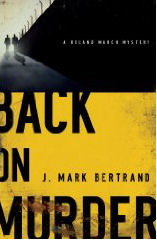
I wonder if a similar situation will occur with the latest
CFBA book tour feature:
Back on Murder by J. Mark Bertrand.
Back on Murder is the first in a series about Houston homicide detective Roland March. The book starts off on a note that doesn’t bode well for keeping a series going: “I’m on the way out.”
March has been a star detective in the past, but events personal and private have sapped him and pushed him to the periphery of his department. Now he handles the garbage cases no one wants, like the bait-and-switch “Cars for Criminals” program and investigating suicides within the department.
When the pretty blonde daughter of a prominent Houston televangelist goes missing, it captures all of the media attention. March ends up helping with a case flying under the radar, a gangbanger murder that seems like a typical hit. This last gasp gives him one last chance, and when he notices signs of something more at the crime scene, he is given a lifeline.
As he chases down leads others disregard, he starts to suspect a connection in these unrelated cases. March maneuvers the politics of the police department, weathers a hurricane along with the turmoil in his personal life, and tries to piece together the disparate clues to see if he can get “back on murder.”
—
J. Mark Bertrand is an author I interacted with on prior writing sites. He is a deep thinker and appreciates quality writing and a artistic use of language. He constantly challenged our group on what it means to write Christian fiction. Therefore I was very intrigued to read his first solo book (he co-authored a romantic suspense with Deeann Gist,
Beguiled).
I linked Nightmare and Back on Murder because they represent new frontiers in Christian/CBA fiction, not because they are very similar. They both take risks that may make some readers a little uncomfortable.
Mark talks in a
guest post at Forensics and Faith how he took risks with his book. Some of it is technique: he tells the book in a first person/present tense point of view. We see the events as Roland March ex
periences them, without a past tense introspection or other viewpoints that lets us see what is occurring elsewhere. The other risk is that there is a lot of ambiguity with the book. March is not a Christian, but he interacts with people from the
megachurch as they search for the missing daughter. Bertrand doesn’t shy away from subtle critique through March’s viewpoint, but he doesn’t preach through it.
So what about the story? It is a bit of a slow burn. It builds up carefully at first. There was enough to whet my appetite, but at times the action isn’t moving along as fast as a popcorn-special-effects cop flick. There is a little perseverance require to get the payoff as different threads slowly weave together. Mark does a good job of keeping some cards hidden for a long time, like the personal trauma that affects Roland in his marriage and work. The first third of the book suffers a little drag at times, but again, there is a rich and exciting ride that follows. The ending keeps the reader guessing, and there is a wrap-up on most points while leaving some questions hang for another book.
The characters are quite deep. Roland March has a voice that seems very authentic for a jaded detective. Other characters are fleshed out convincingly, and there are shades of grey all around. It isn’t a book where the bad guys twist mustaches or the good guys wear white hats. There’s a lot to plumb out of these flawed people.
How does it push the boundaries of the
CBA? Well, there is no clear-cut declaration of faith (which isn’t AS edgy anymore.) I’m not a big reader of detective mysteries, but it gives a realistic view of life as a detective with the grittiness intact. Faith interacts with the story, but it isn’t always pretty. Still, Mark does a great job looking at some modern Evangelical flaws without cynacism.
I think the biggest push is that the book isn’t neat and tidy. Hard things happen, the miracles aren’t always apparent, but hope is not lost. I think it has a distinctive voice that is unlike most CBA books.
This is where Nightmare and Back on Murder come back together. In reading reviews on Amazon (in general) I get the feeling a lot of CBA readers like uplifting tales that show life that is a little too polished. Everything gets a happy ending. There are certainly places for those type of books, but if you like a book that examines real life (BoM) or examines the supernatural what-ifs (Nightmare), then the good news is that CBA continues to evolve.
To sum up: Back on Murder asks a little investment, and in return you get a distinctive book that entertains and offers up scenarios that are thoughtful, without the author telling you what to think. I really enjoyed the book, and I will be looking forward to book two, Pattern of Wounds. As I said, this isn’t my typical genre, but Mark Bertand has earned my interest – and you would do well to check it out!
If you want to check out the first chapter of
Back On Murder, go
HERE.
Finally, I have a few more thoughts on Christian/CBA fiction that I’ll hopefully address tomorrow. I’d love to hear anyone’s thoughts on BoM or books in general.
—
by Jason Joyner | Jul 14, 2010 | Blog, books, CBA, fiction, reviews
I’ve talked in the last couple of posts about Robin Parrish and his latest novel, Nightmare, a paranormal suspense that has mostly glowing reviews with a couple of people giving a polite cough and wondering if it belongs in “Christian fiction.”
I wonder if a similar situation will occur with the latest
CFBA book tour feature:
Back on Murder by J. Mark Bertrand.
Back on Murder is the first in a series about Houston homicide detective Roland March. The book starts off on a note that doesn’t bode well for keeping a series going: “I’m on the way out.”
March has been a star detective in the past, but events personal and private have sapped him and pushed him to the periphery of his department. Now he handles the garbage cases no one wants, like the bait-and-switch “Cars for Criminals” program and investigating suicides within the department.
When the pretty blonde daughter of a prominent Houston televangelist goes missing, it captures all of the media attention. March ends up helping with a case flying under the radar, a gangbanger murder that seems like a typical hit. This last gasp gives him one last chance, and when he notices signs of something more at the crime scene, he is given a lifeline.
As he chases down leads others disregard, he starts to suspect a connection in these unrelated cases. March maneuvers the politics of the police department, weathers a hurricane along with the turmoil in his personal life, and tries to piece together the disparate clues to see if he can get “back on murder.”
—
J. Mark Bertrand is an author I interacted with on prior writing sites. He is a deep thinker and appreciates quality writing and a artistic use of language. He constantly challenged our group on what it means to write Christian fiction. Therefore I was very intrigued to read his first solo book (he co-authored a romantic suspense with Deeann Gist,
Beguiled).
I linked Nightmare and Back on Murder because they represent new frontiers in Christian/CBA fiction, not because they are very similar. They both take risks that may make some readers a little uncomfortable.
Mark talks in a
guest post at Forensics and Faith how he took risks with his book. Some of it is technique: he tells the book in a first person/present tense point of view. We see the events as Roland March ex
periences them, without a past tense introspection or other viewpoints that lets us see what is occurring elsewhere. The other risk is that there is a lot of ambiguity with the book. March is not a Christian, but he interacts with people from the
megachurch as they search for the missing daughter. Bertrand doesn’t shy away from subtle critique through March’s viewpoint, but he doesn’t preach through it.
So what about the story? It is a bit of a slow burn. It builds up carefully at first. There was enough to whet my appetite, but at times the action isn’t moving along as fast as a popcorn-special-effects cop flick. There is a little perseverance require to get the payoff as different threads slowly weave together. Mark does a good job of keeping some cards hidden for a long time, like the personal trauma that affects Roland in his marriage and work. The first third of the book suffers a little drag at times, but again, there is a rich and exciting ride that follows. The ending keeps the reader guessing, and there is a wrap-up on most points while leaving some questions hang for another book.
The characters are quite deep. Roland March has a voice that seems very authentic for a jaded detective. Other characters are fleshed out convincingly, and there are shades of grey all around. It isn’t a book where the bad guys twist mustaches or the good guys wear white hats. There’s a lot to plumb out of these flawed people.
How does it push the boundaries of the
CBA? Well, there is no clear-cut declaration of faith (which isn’t AS edgy anymore.) I’m not a big reader of detective mysteries, but it gives a realistic view of life as a detective with the grittiness intact. Faith interacts with the story, but it isn’t always pretty. Still, Mark does a great job looking at some modern Evangelical flaws without cynacism.
I think the biggest push is that the book isn’t neat and tidy. Hard things happen, the miracles aren’t always apparent, but hope is not lost. I think it has a distinctive voice that is unlike most CBA books.
This is where Nightmare and Back on Murder come back together. In reading reviews on Amazon (in general) I get the feeling a lot of CBA readers like uplifting tales that show life that is a little too polished. Everything gets a happy ending. There are certainly places for those type of books, but if you like a book that examines real life (BoM) or examines the supernatural what-ifs (Nightmare), then the good news is that CBA continues to evolve.
To sum up: Back on Murder asks a little investment, and in return you get a distinctive book that entertains and offers up scenarios that are thoughtful, without the author telling you what to think. I really enjoyed the book, and I will be looking forward to book two, Pattern of Wounds. As I said, this isn’t my typical genre, but Mark Bertand has earned my interest – and you would do well to check it out!
If you want to check out the first chapter of
Back On Murder, go
HERE.
Finally, I have a few more thoughts on Christian/CBA fiction that I’ll hopefully address tomorrow. I’d love to hear anyone’s thoughts on BoM or books in general.
—
by Jason Joyner | Jul 12, 2010 | Blog, CBA, christian fiction, Robin Parrish, speculative fiction
OK, not quite tomorrow. How about in a week?
In my last post I talked a little about Robin Parrish (Dominion Trilogy, Offworld) and his latest novel Nightmare. It was a featured book of the CFBA this week, and my copy has just arrived from Amazon. I haven’t started it, but I’ve heard not to read it too late at night.
It is being billed as a paranormal suspense. It deals with a girl whose parents were some of the country’s foremost ghost hunters. After a friend of hers disappears, she has to help the fiance find out what happened.
I’ve followed Robin for a long time, as he used to run a significant culture website called “Infuze” that examined the intersection of art and faith. I know that he loves the Lord. I also know that he has a particular taste in speculative fiction and is trying to explore some bigger ideas with his work. He was a big fan of Lost and I believe he uses that influence in his writing (never really watched it myself, so I can’t say for sure).
The point of this is, there were some reviews of Nightmare that questioned its place in the CBA realm of Christian fiction. (For the uninitiated, CBA is a term used to designate fiction written primarily for an evangelical Christian audience, usually through a store like Lifeway or Family Christian Bookstores. CBA is more precise here than saying “Christian fiction”).
It has been argued frequently and widely through the blogosphere on what constitutes Christian (CBA) fiction. Since I’ve been paying attention since around 2005, the tentpoles have increased significantly in just that time. The market is dominated by historical romance and Amish fiction, but includes quality suspense, chick lit, mystery, legal thrillers, and is starting to include more and more speculative fiction (such as science fiction and fantasy).
Having not read Nightmare yet, I’m a little limited in the claims I can make off of it right now. Still, is there room for CBA fiction to grow? Speculative fiction that encompasses more wide-ranging topics is very popular in mainstream culture (I’m quite interested in the upcoming moving Inception).
The CBA could move into other literary genres as well. My next post will talk about a new crime thriller, Back on Murder, that may also move boundaries some. Check back!
—
by Jason Joyner | Jul 12, 2010 | Blog, CBA, christian fiction, Robin Parrish, speculative fiction
OK, not quite tomorrow. How about in a week?
In my last post I talked a little about Robin Parrish (Dominion Trilogy, Offworld) and his latest novel Nightmare. It was a featured book of the CFBA this week, and my copy has just arrived from Amazon. I haven’t started it, but I’ve heard not to read it too late at night.
It is being billed as a paranormal suspense. It deals with a girl whose parents were some of the country’s foremost ghost hunters. After a friend of hers disappears, she has to help the fiance find out what happened.
I’ve followed Robin for a long time, as he used to run a significant culture website called “Infuze” that examined the intersection of art and faith. I know that he loves the Lord. I also know that he has a particular taste in speculative fiction and is trying to explore some bigger ideas with his work. He was a big fan of Lost and I believe he uses that influence in his writing (never really watched it myself, so I can’t say for sure).
The point of this is, there were some reviews of Nightmare that questioned its place in the CBA realm of Christian fiction. (For the uninitiated, CBA is a term used to designate fiction written primarily for an evangelical Christian audience, usually through a store like Lifeway or Family Christian Bookstores. CBA is more precise here than saying “Christian fiction”).
It has been argued frequently and widely through the blogosphere on what constitutes Christian (CBA) fiction. Since I’ve been paying attention since around 2005, the tentpoles have increased significantly in just that time. The market is dominated by historical romance and Amish fiction, but includes quality suspense, chick lit, mystery, legal thrillers, and is starting to include more and more speculative fiction (such as science fiction and fantasy).
Having not read Nightmare yet, I’m a little limited in the claims I can make off of it right now. Still, is there room for CBA fiction to grow? Speculative fiction that encompasses more wide-ranging topics is very popular in mainstream culture (I’m quite interested in the upcoming moving Inception).
The CBA could move into other literary genres as well. My next post will talk about a new crime thriller, Back on Murder, that may also move boundaries some. Check back!
—
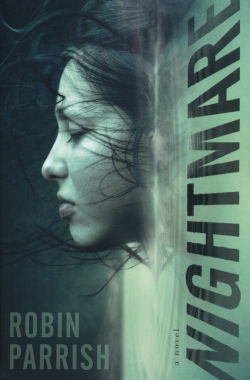
by Jason Joyner | Jul 6, 2010 | Blog, books, Robin Parrish, speculative fiction
This week the CFBA is featuring
Nightmare by Robin Parrish. I didn’t sign up for this tour because I wanted to support Parrish by buying the book (the one downside of participating in the tour sometimes). The book is on its way, and I am looking forward to getting into his mind again.
Still, I want to add a little support to the CFBA tour. Robin provides some interesting thoughts for Christian (CBA) fiction. What are the boundaries of Christian fiction? What can this market accept? Mind you, I haven’t read Nightmare to give any opinions on its content, but I’ve seen a review on Amazon that questions its place in CBA fiction.
Let’s talk more about CBA’s boundaries tomorrow. In the meantime, if you would like to read the first chapter of
Nightmare, go
HERE.
—
