by Jason Joyner | Sep 15, 2010 | Blog, CFBA, fiction, reviews, suspense, Ted Dekker
Read on below, to find out about a free giveaway contest!
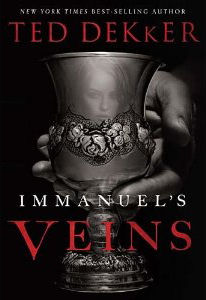
This week, the CFBA Tour is featuring the latest thriller from Ted Dekker:
Is this the book that changes what Christian fiction can be about? First, the concept:
It is set in Eastern Europe in 1772, a time of war between the Russian and Turkish empires. The small principality of Moldova, neighbor to Transylvania, is wedged between these two powers, and is a strategic interest.
The empress Catherine the Great sends one of her best soldiers, Toma Nicolescu, to guard over the Cantemir estate. This noble family holds the key to politics in this critical area. It is ruled over by the matriarch Kesia Cantemir, and her twin daughters Natasha and Lucine.
Toma enters this world just as a neighboring duke begins to make his presence known to the Cantemirs. The dashing Vlad van Valerik has his sights on one of the Cantemir twins. But Toma has been smitten by one of the beauties as well.
As passions intertwine, a torrid love story bursts forth. Evil seduces. Death will be known. Love will bloom. And as the back copy says, “Blood will flow.”
—
Ted Dekker is one of the most imaginative writers in CBA fiction today. He writes taut suspense that seldom fails to grip the reader until the last page. He takes chances, and Immanuel’s Veins is a bold thrust against some of the prevailing themes in popular fiction right now.
Dekker will not win over the literati with this novel. This book has a strong idea, and it pushes that idea relentlessly. The two main characters are noble but flawed, and their choices have consequences. Other characters serve the plot, and are not fully fleshed out. In other books, this would bother me. In Immanuel’s Veins, this almost seems necessary, as it is a love affair between two people, in the best sense of the phrase.
It certainly is a sensual book. Dekker dedicates it to King Solomon, he who is often thought to be the author of the Biblical Song of Solomon. He doesn’t hold back in driving home the emotion. He doesn’t titillate, but some may not be able to handle the force he uses to write this book.
Some are saying this is Ted Dekker’s version of a vampire story. I suppose you could say that. Perhaps you should check it out for yourself.
The end point: I am a fan of Dekker’s, but not every book of his is a home run. Immanuel’s Veins is unique in his bibliography, and it is a significant contribution to what fiction can do. I enjoyed it, and I ponder it still. It certainly gets the blood pumping, and it may just be my favorite Dekker book.
He asks the question “what is sacrificial love?” It is a novel written to address that one idea. In conjuction with it, I wrote about it yesterday.
And what did I mean by “Is this the book that changes what Christian fiction can be about?”
Well it seems I’m out of time for today ;). Check back tomorrow for that thought.
And I promised a giveaway! One person who comments on this post will be chosen at random to win a special t-shirt designed by Dekker’s publisher to help share the message “spread the love”. It is a cool T, and I think you’ll like it! Leave a comment, and I’ll choose a winner by Monday, Sept 20.
by Jason Joyner | Sep 15, 2010 | Blog, CFBA, fiction, reviews, suspense, Ted Dekker
Read on below, to find out about a free giveaway contest!
This week, the CFBA Tour is featuring the latest thriller from Ted Dekker:
Is this the book that changes what Christian fiction can be about? First, the concept:
It is set in Eastern Europe in 1772, a time of war between the Russian and Turkish empires. The small principality of Moldova, neighbor to Transylvania, is wedged between these two powers, and is a strategic interest.
The empress Catherine the Great sends one of her best soldiers, Toma Nicolescu, to guard over the Cantemir estate. This noble family holds the key to politics in this critical area. It is ruled over by the matriarch Kesia Cantemir, and her twin daughters Natasha and Lucine.
Toma enters this world just as a neighboring duke begins to make his presence known to the Cantemirs. The dashing Vlad van Valerik has his sights on one of the Cantemir twins. But Toma has been smitten by one of the beauties as well.
As passions intertwine, a torrid love story bursts forth. Evil seduces. Death will be known. Love will bloom. And as the back copy says, “Blood will flow.”
—
Ted Dekker is one of the most imaginative writers in CBA fiction today. He writes taut suspense that seldom fails to grip the reader until the last page. He takes chances, and Immanuel’s Veins is a bold thrust against some of the prevailing themes in popular fiction right now.
Dekker will not win over the literati with this novel. This book has a strong idea, and it pushes that idea relentlessly. The two main characters are noble but flawed, and their choices have consequences. Other characters serve the plot, and are not fully fleshed out. In other books, this would bother me. In Immanuel’s Veins, this almost seems necessary, as it is a love affair between two people, in the best sense of the phrase.
It certainly is a sensual book. Dekker dedicates it to King Solomon, he who is often thought to be the author of the Biblical Song of Solomon. He doesn’t hold back in driving home the emotion. He doesn’t titillate, but some may not be able to handle the force he uses to write this book.
Some are saying this is Ted Dekker’s version of a vampire story. I suppose you could say that. Perhaps you should check it out for yourself.
The end point: I am a fan of Dekker’s, but not every book of his is a home run. Immanuel’s Veins is unique in his bibliography, and it is a significant contribution to what fiction can do. I enjoyed it, and I ponder it still. It certainly gets the blood pumping, and it may just be my favorite Dekker book.
He asks the question “what is sacrificial love?” It is a novel written to address that one idea. In conjuction with it, I wrote about it yesterday.
And what did I mean by “Is this the book that changes what Christian fiction can be about?”
Well it seems I’m out of time for today ;). Check back tomorrow for that thought.
And I promised a giveaway! One person who comments on this post will be chosen at random to win a special t-shirt designed by Dekker’s publisher to help share the message “spread the love”. It is a cool T, and I think you’ll like it! Leave a comment, and I’ll choose a winner by Monday, Sept 20.
by Jason Joyner | Sep 14, 2010 | Blog, love, sacrifice, Ted Dekker
I was asked to consider this question recently:
What is sacrificial love?
A deep question. How does one respond?
Do I love my wife with a sacrificial love? If I think hard about it, probably not for the most part. I’m selfish. I do things to my advantage a lot of times. I’m not saying I don’t love her. I love her dearly, deeply, almost desperately. I would like to think I do. But often I am not at the level of true sacrifice. I do things for her that I would otherwise not do, but I don’t know how much of a “sacrifice” they are.
My kids? I would sacrifice myself for them if there was a choice of them living or me living. I would throw myself in front of a car to save them. But here also, I often do things for myself, and not for the best of my children. I could make a deeper choice. Instead of taking Thursday nights to relax for myself, I could spend quality time with them, but that is not my habit.
As a Christian, the highest ideal is sacrificial love. Jesus gave His life, His very blood for us. It drained out of His body, stained the ground beneath the cross, all to wash away my sins. Your sins.
I find it is a very hard thing to live up to that example.
What say you? What thoughts do you have about what sacrificial love is? I really would like your input on this.
—
by Jason Joyner | Sep 14, 2010 | Blog, love, sacrifice, Ted Dekker
I was asked to consider this question recently:
What is sacrificial love?
A deep question. How does one respond?
Do I love my wife with a sacrificial love? If I think hard about it, probably not for the most part. I’m selfish. I do things to my advantage a lot of times. I’m not saying I don’t love her. I love her dearly, deeply, almost desperately. I would like to think I do. But often I am not at the level of true sacrifice. I do things for her that I would otherwise not do, but I don’t know how much of a “sacrifice” they are.
My kids? I would sacrifice myself for them if there was a choice of them living or me living. I would throw myself in front of a car to save them. But here also, I often do things for myself, and not for the best of my children. I could make a deeper choice. Instead of taking Thursday nights to relax for myself, I could spend quality time with them, but that is not my habit.
As a Christian, the highest ideal is sacrificial love. Jesus gave His life, His very blood for us. It drained out of His body, stained the ground beneath the cross, all to wash away my sins. Your sins.
I find it is a very hard thing to live up to that example.
What say you? What thoughts do you have about what sacrificial love is? I really would like your input on this.
—

by Jason Joyner | Sep 8, 2010 | Blog, boundaries, CBA, christian fiction, music
And in other news, ABC hates CBS and NBC.
Aside from abbreviation proliferation, I’ve been thinking about the continuing (continuous?) debate in CBA fiction circles about how to expand the “boundaries” of Christian fiction. On one side there are people defending the industry, pointing to its growth in the publishing world over the last several years, and the greater variety of genres/books being published. Another camp feels stifled by the unspoken limits of what is acceptable, and wonders how CBA/Christian fiction can reach unbelievers in its current status.
(Realize that the “industry” is a disparate group of authors, editors, agents, publishers, marketers, and booksellers, each with their own agenda. People speak of the CBA as some monolithic organization, which it certainly is not.)
|
Doncha dig the font
and hairdos? |
I’ve considered another industry that has had similar growing pains. CCM stands for Contemporary Christian Music, and it is another nebulous designation to speak of a variety of interests in music.
CCM started in the late 60’s/early 70’s with the revolution of sex, drugs, and rock n’ roll. As the hippie movement took full swing, there was a counter-revolution of young people getting saved, but retaining the new tastes in music and culture of their peers (without the sex and drugs part). As they naturally wrote music in the rock and folk genres, the initial music was often picked up by general market labels. Artists like Keith Green and Randy Stonehill were pioneers in these areas. Soon there was enough interest that labels were started to give further outlet to these musicians.
Since the people involved wanted to glorify the Lord as well as sell music, they became Christian publishers. This had the effect of sucking most of the blatantly Christian artists into a niche area, creating a music “ghetto” for lack of a better term. There were those like Bob Dylan with his Christian phase albums in the general market, but most artists producing specific Christian music (religious lyrics/subjects) were isolated from the general market airwaves. Christian music was on the outside looking in with the advent of MTV.
Slowly Christian artists tested the waters of “crossing over” to the general market, even as the Christian music ghetto flourished. Stryper was a famous Christian glam-metal band that got MTV airplay but was sold in (many, not all) Christian bookstores. Amy Grant was the first big crossover with her song “Baby Baby,” a syrupy-yet-catchy pop song that wasn’t specifically religious.
A debate raged at the time (early 90’s) whether these artists were “selling out” by writing lyrics that were ambiguous enough to be sung as a love song to the Lord or to a girlfriend. Michael W. Smith had a couple of hits on top 40 radio with such songs. In the mid-90’s Jars of Clay burst onto the scene when an early single, “Flood”, made waves in both markets. U2 remained a conundrum as they had spiritually insightful lyrics, but refused to be labeled a “Christian” band. Those darn Irish rockers wouldn’t let themselves be squeezed into the little CCM box!
Slowly, things have changed in the last 10 years in Christian music. Movies and TV shows started pulling songs from various Christian artists to play during the program. Switchfoot became a band that garnered a lot of respect in the general market, but were still considered “one of ours.” Relient k participated in the Vans Warped Tour with other general artists. P.O.D. broke through to both markets. Songs by The Afters, The Fray, and others got noticed. Skillet’s “Hero” was the major song for Sunday Night Football last year. The band Paramore is not considered a Christian band per se, but they have songs such as “Hallelujah” on their records.
Most of this has happened organically, without a lot of organization that I can tell. Perhaps there was behind the scenes maneuvering, but suddenly it was okay for bands to talk about spirituality without being black-listed to the CCM ghetto, and the CCM folks didn’t fuss about “selling out” nearly as much. This isn’t perfect: the band MuteMath sued their Christian distributor for being called a “Christian band”, as they felt it hurt their image since “Christian music” wasn’t considered the same quality as general market music. You don’t find songs blatantly speaking of Jesus on mainstream airwaves.
Could this be the model that CBA fiction follows? There are parallels – Ted Dekker is successfully publishing in both ABA/general market as well as Christian fiction. The CCM flow right now seems to leave room for the overtly Christian tunes, such as Chris Tomlin’s praise music along with the bands such as Superchick that have had some crossover appeal.
I can see this happening. I don’t know much about marketing and how books get out to the Barnes and Noble of the world, but it would be nice if relationships could be built with publishers and booksellers, getting more CBA books into areas of greater visibility. Hopefully the Ted Dekkers of the world will help pave a way for the Eric Wilsons and Robin Parrishs of the world for greater exposure.
—