by Jason Joyner | Mar 14, 2008 | Blog, fiction, theology, writing craft
Continuing on from my March 8th post, how can writers show the sovereignty of God along with a strong hero or protagonist? I used two examples from The Shadow and Night and The Legend of the Firefish, where two heroes believed very strongly that God was in control. These books had some very good, rich spiritual themes that they were communicating. I want to state up front that what I’m drawing out of these books to discuss are most likely not points the authors were trying to make. Please don’t read too much into my analysis, because I’m using the stories to try and explore a different question.
Having said that, is there any problem with my question? If we go to Webster’s Universal College Dictionary, sovereignty can be defined as “3. supreme and independent power or authority in a state.” The Evangelical Dictionary of Theology states the sovereignty of God is “the Biblical teaching that God is king, supreme ruler, and lawgiver of the entire universe.” To sum up, God is in control.
In fiction, generally a hallmark of a good story is a protagonist who acts. Stories and plots can carry a hero along, even one who is rather weak and not actively doing something. Usually though, readers prefer a strong leading man or lady – someone who may be thrown at times by what is happening within the framework of the story, but then finds a way to face the conflict and triumph over it. Many writing books talk about the need to have the main character ACT – to do something and not just be pushed around like a rag doll.
I think the potential conflict between God’s sovereignty and a strong hero becomes more evident with these definitions. I’ll look more at this conflict next.
by Jason Joyner | Mar 13, 2008 | Blog, CFBA, fiction, reviews
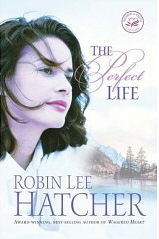
 The CFBA blog tour for Monday – Wednesday this week is the latest book from Robin Lee Hatcher, A Perfect Life. Robin is a highly prolific and talented author. When I asked my wife if she would like to read one of her books for the tour, I got the most enthusiastic response from any time I’ve asked her.
So without further ado, a special review from my wife, Beccy:
Robin Lee Hatcher is one of my favorite authors, so I was excited to get to read this book (in one day!) For a start, I loved this book because it was set in Idaho – a place I’m familiar with. It talked about a good Christian woman who had ministered to so many ladies with broken marriages and lives, and she was now thrust into the same type of situation.
This book is about heart issues. When faced with the same things she had said to others, she didn’t believe what her own advice had been. She had to come to the bottom of despair to realize that God was there for her, as well as the other women she had counseled. It made her a stronger, wiser woman.
The characterization was great. The reader knows the characters from the inside out. The realism in these people kept me interested enough to finish in one day. I don’t know what more to say, because it was a well written, enjoyable story.
by Jason Joyner | Mar 13, 2008 | Blog, CFBA, fiction, reviews
The CFBA blog tour for Monday – Wednesday this week is the latest book from Robin Lee Hatcher, A Perfect Life. Robin is a highly prolific and talented author. When I asked my wife if she would like to read one of her books for the tour, I got the most enthusiastic response from any time I’ve asked her.
So without further ado, a special review from my wife, Beccy:
Robin Lee Hatcher is one of my favorite authors, so I was excited to get to read this book (in one day!) For a start, I loved this book because it was set in Idaho – a place I’m familiar with. It talked about a good Christian woman who had ministered to so many ladies with broken marriages and lives, and she was now thrust into the same type of situation.
This book is about heart issues. When faced with the same things she had said to others, she didn’t believe what her own advice had been. She had to come to the bottom of despair to realize that God was there for her, as well as the other women she had counseled. It made her a stronger, wiser woman.
The characterization was great. The reader knows the characters from the inside out. The realism in these people kept me interested enough to finish in one day. I don’t know what more to say, because it was a well written, enjoyable story.
by Jason Joyner | Mar 8, 2008 | Blog, fiction, theology, writing craft
I left off my last post for this series introducing the books The Shadow and Night and Legend of the Firefish. So what is it that links a far-future sci-fi story with a fantasy-based pirate novel?
In Firefish, Packer Throme is a failed seminary student who ended up studying swordmanship. He intends to find the elusive Firefish, hoping the discovery will help save his village and prove his worth for his love interest. Packer maintains his faith despite his aborted seminary training. Through his adventures he ponders the way God is moving him through the different scenarios. Interestingly, Packer leans into God’s sovereignty in a few different episodes in the book. He stops even in times of great peril to decide that everything is God’s will, and he almost passively sits by to accept whatever happens. (I have more thoughts on this book in posts from a prior blog tour here)
The Shadow and Night starts slowly, as forester Merral D’Avanos stumbles across minor attitude changes in the redeemed world of Farholme. Soon, little quirks that seemed odd unrelated fluctuations start pointing to a return of something that has not been seen in the Assembly of Worlds for over 10,000 years: evil. Merral is in the center of all that is transpiring, yet he often is slow to act because he also is content to trust in God’s will. His confusion in the face of renewed evil is very understandable – since evil has been absent for such a long time, Merral and his colleagues have only ancient reports of how to act in the face of this adversity.
Is the theme I’m drawing out becoming more apparent?
I’m not discussing this as a criticism of these two books in this series. I want to discuss the idea of God’s sovereignty and how that can affect how a protagonist acts in a novel. These two books happen to be strong examples of the idea of sovereignty entering into a story of tension. We’ll continue on this track next time.
by Jason Joyner | Mar 8, 2008 | Blog, fiction, theology, writing craft
I left off my last post for this series introducing the books The Shadow and Night and Legend of the Firefish. So what is it that links a far-future sci-fi story with a fantasy-based pirate novel?
In Firefish, Packer Throme is a failed seminary student who ended up studying swordmanship. He intends to find the elusive Firefish, hoping the discovery will help save his village and prove his worth for his love interest. Packer maintains his faith despite his aborted seminary training. Through his adventures he ponders the way God is moving him through the different scenarios. Interestingly, Packer leans into God’s sovereignty in a few different episodes in the book. He stops even in times of great peril to decide that everything is God’s will, and he almost passively sits by to accept whatever happens. (I have more thoughts on this book in posts from a prior blog tour here)
The Shadow and Night starts slowly, as forester Merral D’Avanos stumbles across minor attitude changes in the redeemed world of Farholme. Soon, little quirks that seemed odd unrelated fluctuations start pointing to a return of something that has not been seen in the Assembly of Worlds for over 10,000 years: evil. Merral is in the center of all that is transpiring, yet he often is slow to act because he also is content to trust in God’s will. His confusion in the face of renewed evil is very understandable – since evil has been absent for such a long time, Merral and his colleagues have only ancient reports of how to act in the face of this adversity.
Is the theme I’m drawing out becoming more apparent?
I’m not discussing this as a criticism of these two books in this series. I want to discuss the idea of God’s sovereignty and how that can affect how a protagonist acts in a novel. These two books happen to be strong examples of the idea of sovereignty entering into a story of tension. We’ll continue on this track next time.
