Olympic Headlines You MIght Have Missed…
Protests Still Unwelcome in Beijing
Olympic Protester Returns to UK
Olympic Persecution: Inspiration for Olympic Prayer Band Arrested
Just trying to keep awareness up.

Protests Still Unwelcome in Beijing
Olympic Protester Returns to UK
Olympic Persecution: Inspiration for Olympic Prayer Band Arrested
Just trying to keep awareness up.
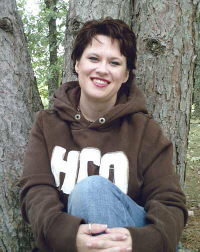
ABOUT THE AUTHOR:Tracey Bateman published her first novel in 2000 and has been busy ever since. There are two other books in the Drama Queen Series, Catch A Rising Star (#1) and You Had Me At Goodbye (#2)
She learned to write by writing, and improved by listening to critique partners and editors. She has sold over 30 books in six years.
She became a member of American Christian Fiction Writers in the early months of its inception in 2000 and served as president for a year.
She has been married to her husband Rusty for 18 years, has four kids, and lives in Lebanon, Missouri.
ABOUT THE BOOK
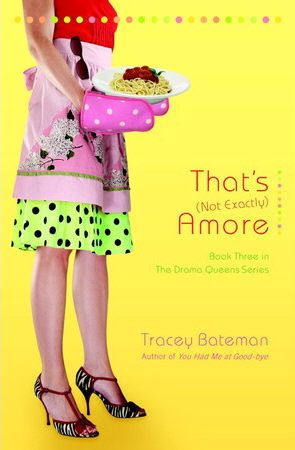 When Laini Sullivan lands a job designing Nick Pantalone’s coffee shop, there are two problems: one, Nick’s nephew Joe hates all of her ideas and two, Laini has to admit he’s right–she’s a disaster at design. Still, she can’t risk losing the job. To compromise, Joe brings in help on the project, while Laini continues to bake the goodies that keep his customers lining up.
Their relationship is moving along, so when new guy Officer Mark Hall implies that Joe’s family is tied to the mob, Laini doesn’t want to believe it. But things spin out of control when she meets the family, including “the uncles,” who seem to confirm Mark’s suspicions. To make things worse, Nana Pantalone makes it clear Laini isn’t the kind of girl she has in mind for her grandson. Laini’s not sure if she should give Joe the benefit of the doubt or just set her sights on Mark and fuhgetaboutit.
Jason says: My wife did read this one. She could tell it was in a series, but it was a refreshing, enjoyable read. She can sit and read all day if she gets into a book, and I didn’t really see her the day she dove into this one!
ABOUT THE AUTHOR:Tracey Bateman published her first novel in 2000 and has been busy ever since. There are two other books in the Drama Queen Series, Catch A Rising Star (#1) and You Had Me At Goodbye (#2)
She learned to write by writing, and improved by listening to critique partners and editors. She has sold over 30 books in six years.
She became a member of American Christian Fiction Writers in the early months of its inception in 2000 and served as president for a year.
She has been married to her husband Rusty for 18 years, has four kids, and lives in Lebanon, Missouri.
ABOUT THE BOOK
When Laini Sullivan lands a job designing Nick Pantalone’s coffee shop, there are two problems: one, Nick’s nephew Joe hates all of her ideas and two, Laini has to admit he’s right–she’s a disaster at design. Still, she can’t risk losing the job. To compromise, Joe brings in help on the project, while Laini continues to bake the goodies that keep his customers lining up.
Their relationship is moving along, so when new guy Officer Mark Hall implies that Joe’s family is tied to the mob, Laini doesn’t want to believe it. But things spin out of control when she meets the family, including “the uncles,” who seem to confirm Mark’s suspicions. To make things worse, Nana Pantalone makes it clear Laini isn’t the kind of girl she has in mind for her grandson. Laini’s not sure if she should give Joe the benefit of the doubt or just set her sights on Mark and fuhgetaboutit.
Jason says: My wife did read this one. She could tell it was in a series, but it was a refreshing, enjoyable read. She can sit and read all day if she gets into a book, and I didn’t really see her the day she dove into this one!
If you missed the first post, there were very good comments related to vampires and such in Christian fiction. One of the commenters was Sue Dent, who wrote the mentioned Never Ceese novel.
Evangeline noted my objective take on it – thanks. I was trying to present it evenly to see what people came up with before I threw in my own 2 cents. There are a few different facets to this discussion, so I don’t think it is a simple “yes it is eviiiiiil” or “no, there’s no problem”.
Sue brought out the importance of defining what is meant by Christian fiction. I was referring to the notion of the CBA/ECPA. As Sue noted, this is an umbrella group that is responsible for a certain type of “Christian fiction”, a type that usually gets ownership of that moniker. It is evangelical and conservative in outlook, and there are certain unwritten rules with these type of rules: no cussing, no sex (unless in marriage, and not on page), and as Sue mentioned, certain literary images like vampires, werewolves, etc., would not be generally welcome. (Oddly enough, you can have mass murderers, super assassins, and a high body count, but that’s another post…) “CBA” is almost a brand, but religious or Christian books are not limited to it. Very prominent examples of non-CBA Christian books would be the award-winning Gilead and Peace Like a River, and Sue’s novels. So you likely wouldn’t find a vampire novel in a Christian bookstore due to the CBA, as Sue mentions.
Evangeline talked about vampires as good objects for symbolism, metaphors, or allegory. This could potentially be a worthy use of the undead in CBA fiction. It would take a compelling author with a bold statement of faith to pull it off, likely.
Carole had interesting, thoughtful insights about the possibility of salvation for vampires, based on whether they were “fallen” men or demons. She also notes that vampires often act as a “bad boy” for the good girl to redeem, which might be a little prejudiced toward the “hot male vampires” LOL.
What are my thoughts? Jumbled as usual. I’ll list some out.
1. Regarding the Twilight series specifically, I have finished Twilight and am almost done with New Moon. I share Evangline’s concern about the sensualness of the series – even though Meyers keeps the clothes on and the physical touching limited to arms and faces, she still has a gift for romance and sexual tension. I wouldn’t want a young daughter of mine to read them. I also don’t like that Bella’s desire for immortality comes from wanting to become a vampire like Edward, over God’s ways.
2. We discussed the Twilight series in a home group/Bible study. A few people automatically didn’t like the idea of some many kids reading about vampires and werewolves, considering them evil and demonic, and wondering if Christians should be opening themselves up to such influences. I remember reading Dracula for high school, and my pastor’s wife cautioned me to be prayed up for it, as she read it and felt darkness from it. Considering the Twilight series, I told the group I couldn’t judge it without reading it for myself.
3. I have experienced evil influence from entertainment before. I used to play Dungeons and Dragons with friends around 9th-10th grade. We didn’t go for real heavy use of demons (mostly orcs and the like, Lord of the Ring-ish) and we always made our characters religion “Christian” on the player sheet. Still, it got to us. We had a sleep over one night where we got pretty freaked out with some weird stuff going on. I was the first to leave the group, feeling it was a bad situation. After this these good friends turned on me and I had some bad experiences with them. I wouldn’t be against any role-playing game, but I would not want my kids to play D&D specifically.
4. I have argued before for freedom for a Christian artist to produce the art they feel they should make. I wouldn’t condemn a Christian for using elements that I felt uncomfortable with, but I would use discernment whether it would be something for me to partake in or not.
5. Vampires and other mythological, typically evil creatures should be used carefully, but I think there is room for them to be used in a conscientious manner. I can’t help thinking of C.S. Lewis using witches, giants, the Greek god Bacchus, and other pagan-type supernatural events in his stories. A modern master of using the supernatural for a truly Godly end is Stephen Lawhead in many of his books.
6. Are vampires in essence a perversion of the gospel with their life coming from stealing the blood of people, as opposed to the life-giving power of the blood of Christ? This just came to me while writing this post – don’t know if I have the answer.
I think that’s more than enough to chew on for now. I’ll let y’all sink your teeth into it (grooooan).
If you missed the first post, there were very good comments related to vampires and such in Christian fiction. One of the commenters was Sue Dent, who wrote the mentioned Never Ceese novel.
Evangeline noted my objective take on it – thanks. I was trying to present it evenly to see what people came up with before I threw in my own 2 cents. There are a few different facets to this discussion, so I don’t think it is a simple “yes it is eviiiiiil” or “no, there’s no problem”.
Sue brought out the importance of defining what is meant by Christian fiction. I was referring to the notion of the CBA/ECPA. As Sue noted, this is an umbrella group that is responsible for a certain type of “Christian fiction”, a type that usually gets ownership of that moniker. It is evangelical and conservative in outlook, and there are certain unwritten rules with these type of rules: no cussing, no sex (unless in marriage, and not on page), and as Sue mentioned, certain literary images like vampires, werewolves, etc., would not be generally welcome. (Oddly enough, you can have mass murderers, super assassins, and a high body count, but that’s another post…) “CBA” is almost a brand, but religious or Christian books are not limited to it. Very prominent examples of non-CBA Christian books would be the award-winning Gilead and Peace Like a River, and Sue’s novels. So you likely wouldn’t find a vampire novel in a Christian bookstore due to the CBA, as Sue mentions.
Evangeline talked about vampires as good objects for symbolism, metaphors, or allegory. This could potentially be a worthy use of the undead in CBA fiction. It would take a compelling author with a bold statement of faith to pull it off, likely.
Carole had interesting, thoughtful insights about the possibility of salvation for vampires, based on whether they were “fallen” men or demons. She also notes that vampires often act as a “bad boy” for the good girl to redeem, which might be a little prejudiced toward the “hot male vampires” LOL.
What are my thoughts? Jumbled as usual. I’ll list some out.
1. Regarding the Twilight series specifically, I have finished Twilight and am almost done with New Moon. I share Evangline’s concern about the sensualness of the series – even though Meyers keeps the clothes on and the physical touching limited to arms and faces, she still has a gift for romance and sexual tension. I wouldn’t want a young daughter of mine to read them. I also don’t like that Bella’s desire for immortality comes from wanting to become a vampire like Edward, over God’s ways.
2. We discussed the Twilight series in a home group/Bible study. A few people automatically didn’t like the idea of some many kids reading about vampires and werewolves, considering them evil and demonic, and wondering if Christians should be opening themselves up to such influences. I remember reading Dracula for high school, and my pastor’s wife cautioned me to be prayed up for it, as she read it and felt darkness from it. Considering the Twilight series, I told the group I couldn’t judge it without reading it for myself.
3. I have experienced evil influence from entertainment before. I used to play Dungeons and Dragons with friends around 9th-10th grade. We didn’t go for real heavy use of demons (mostly orcs and the like, Lord of the Ring-ish) and we always made our characters religion “Christian” on the player sheet. Still, it got to us. We had a sleep over one night where we got pretty freaked out with some weird stuff going on. I was the first to leave the group, feeling it was a bad situation. After this these good friends turned on me and I had some bad experiences with them. I wouldn’t be against any role-playing game, but I would not want my kids to play D&D specifically.
4. I have argued before for freedom for a Christian artist to produce the art they feel they should make. I wouldn’t condemn a Christian for using elements that I felt uncomfortable with, but I would use discernment whether it would be something for me to partake in or not.
5. Vampires and other mythological, typically evil creatures should be used carefully, but I think there is room for them to be used in a conscientious manner. I can’t help thinking of C.S. Lewis using witches, giants, the Greek god Bacchus, and other pagan-type supernatural events in his stories. A modern master of using the supernatural for a truly Godly end is Stephen Lawhead in many of his books.
6. Are vampires in essence a perversion of the gospel with their life coming from stealing the blood of people, as opposed to the life-giving power of the blood of Christ? This just came to me while writing this post – don’t know if I have the answer.
I think that’s more than enough to chew on for now. I’ll let y’all sink your teeth into it (grooooan).