by Jason Joyner | Jun 22, 2010 | Blog, CSFF, Imaginary Jesus, speculative fiction
Prepare yourself. You are about to enter a blog post where anything can happen. Anything you can imagine may pop up.
A talking donkey?
Check.
A romp through space and time and Portland, Oregon?
Yup.
Jesus getting punched in the face?
Say what???
Welcome to the June edition of the Christian Sci-fi and Fantasy Blog Tour, a lively place to find some people talking passionately about speculative fiction with a Christian bent. I can promise you that this is the most interesting book we have ever talked about.
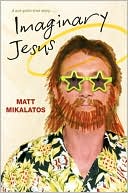
Imaginary Jesus.
This is the first book from Matt Mikalatos. I’ve interacted with Matt since the old faith*in*fiction blog days and have followed him off and on at his blog “Burning Hearts Revolution” since. His humor kept it very entertaining, as he talked about his girls’ adventures in soccer, traveling for ministry, or off-the-wall observations of life.
The last phrase is a good description of Imaginary Jesus.
It is an unusual novel, as it has a lot of autobiographical elements of Matt’s life woven through the book. In fact, he is the main character. The book starts with him hanging out at a Portland coffee shop with who he thinks is Jesus. At least, it is “his” Jesus.
When a burly fisherman type comes in and joins Matt, he is startled when the stranger accuses Jesus of not being real. This is where Jesus gets pounded in the nose.
Matt protests, but the stranger introduces himself as the apostle Peter, and he informs Matt, “I knew Jesus. That is not the real Jesus.”
From there the book takes the reader on a wild ride to discover the real Jesus. It involves time travel, talking donkeys, comic book shops, dinner with the President, and a “Houdini Dog.”
If that doesn’t pique your interest for my review tomorrow, then I may have to ask Matt to send you the Frog of Hate (TM).
If you require a little more instant gratification, check out the book’s website or my tour comrades below!
Brandon Barr
Keanan Brand
Grace Bridges
Beckie Burnham
Valerie Comer
R. L. Copple
Amy Cruson
CSFF Blog Tour
Stacey Dale
D. G. D. Davidson
Jeff Draper
April Erwin
Andrea Graham
Tori Greene
Becky Jesse
Cris Jesse
Julie
Carol Keen
Krystine Kercher
Dawn King
Leighton
Rebecca LuElla Miller
John W. Otte
Donita K. Paul
Crista Richey
Chawna Schroeder
Rachel Starr Thomson
Steve Trower
Fred Warren
Phyllis Wheeler
KM Wilsher
—
by Jason Joyner | Jun 21, 2010 | Blog, music, Star Wars
by Jason Joyner | Jun 15, 2010 | arts, Blog, Christianity, creativity
No, I’m not quite dead yet.
(May have felt close recently, but that’s nothing y’all want to hear about…)
Between being busy, having *ahem* issues, and having the first two items here sap my inspiration, I haven’t had the chance to post. Don’t give up on me though. There’s still some new stuff rattling around my cranium.
For instance, in reading Christianity Today from May 2010, I cam across a little segment they have at the end of the magazine entitled “Who’s Next: People You Should Know.” This month talked about W. David O. Taylor, an arts pastor in Austin, Texas, who has his first book entitled For the Beauty of the Church: Casting a Vision for the Arts just released.
Now, I’ve talked a lot about creativity and the Christian artist, and the importance of encouraging this as a form of worship and expression that the church needs. I’ve also promoted letting a Christian artist have freedom to produce what they have in mind without expectations. (Here’s a selection of posts of mine on the topic). I’ve usually gone to Francis Schaeffer as an authority on this, and how his book Art and the Bible shows that there is beauty created in the Bible for beauty’s sake, not for an evangelistic purpose.
In reading the short interview with David Taylor, I realized a bit of corrective needed to be applied to my argument. He makes this profound statement:
We shouldn’t stop with classical ideas about beauty; we also need to think about beauty Christologically. The moment we sever beauty from the death and resurrection of Christ, we risk sliding toward idealism or petty-ism.
I thought that was very important, and a point I have not made well enough in the past. Now, I still believe that art can be made for art’s sake, for beauty’s sake. But for the Christian artist, if we are truly walking in a redeemed mindset and a new life, then Christ needs to inform our work. The work of the cross affects what we do. I still don’t believe it has to be blantantly Christian, but a Christian is not free to do “whatever.” Not if we’re true to the One who gave us our gift and redeems it.
So add Mr. Taylor’s great statement to my previous positions about Christianity and the arts.
—
by Jason Joyner | Jun 15, 2010 | arts, Blog, Christianity, creativity
No, I’m not quite dead yet.
(May have felt close recently, but that’s nothing y’all want to hear about…)
Between being busy, having *ahem* issues, and having the first two items here sap my inspiration, I haven’t had the chance to post. Don’t give up on me though. There’s still some new stuff rattling around my cranium.
For instance, in reading Christianity Today from May 2010, I cam across a little segment they have at the end of the magazine entitled “Who’s Next: People You Should Know.” This month talked about W. David O. Taylor, an arts pastor in Austin, Texas, who has his first book entitled For the Beauty of the Church: Casting a Vision for the Arts just released.
Now, I’ve talked a lot about creativity and the Christian artist, and the importance of encouraging this as a form of worship and expression that the church needs. I’ve also promoted letting a Christian artist have freedom to produce what they have in mind without expectations. (Here’s a selection of posts of mine on the topic). I’ve usually gone to Francis Schaeffer as an authority on this, and how his book Art and the Bible shows that there is beauty created in the Bible for beauty’s sake, not for an evangelistic purpose.
In reading the short interview with David Taylor, I realized a bit of corrective needed to be applied to my argument. He makes this profound statement:
We shouldn’t stop with classical ideas about beauty; we also need to think about beauty Christologically. The moment we sever beauty from the death and resurrection of Christ, we risk sliding toward idealism or petty-ism.
I thought that was very important, and a point I have not made well enough in the past. Now, I still believe that art can be made for art’s sake, for beauty’s sake. But for the Christian artist, if we are truly walking in a redeemed mindset and a new life, then Christ needs to inform our work. The work of the cross affects what we do. I still don’t believe it has to be blantantly Christian, but a Christian is not free to do “whatever.” Not if we’re true to the One who gave us our gift and redeems it.
So add Mr. Taylor’s great statement to my previous positions about Christianity and the arts.
—

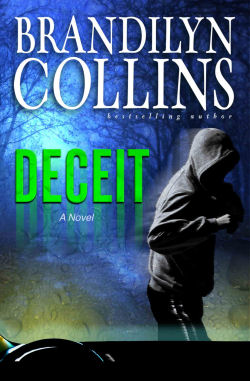
by Jason Joyner | Jun 5, 2010 | Blog, Brandilyn Collins, CFBA, christian fiction, suspense
This week, the
Christian Fiction Blog Alliance
is introducing
Deceit
Zondervan (June 18, 2010)
by
Brandilyn Collins
ABOUT THE AUTHOR:

Brandilyn Collins is an award-winning and best-selling novelist known for her trademark Seatbelt Suspense®. These harrowing crime thrillers have earned her the tagline “Don’t forget to b r e a t h e…”® Brandilyn’s first book, A Question of Innocence, was a true crime published by Avon in 1995. Its promotion landed her on local and national TV and radio, including the Phil Donahue and Leeza talk shows. Brandilyn is also known for her distinctive book on fiction-writing techniques, Getting Into Character: Seven Secrets a Novelist Can Learn From Actors (John Wiley & Sons). She is now working on her 20th book.
In addition, Brandilyn’s other latest release is Final Touch, third in The Rayne Tour series—young adult suspense co-written with her daughter, Amberly. The Rayne Tour series features Shaley O’Connor, daughter of a rock star, who just may have it all—until murder crashes her world.
ABOUT THE BOOK
Skip Tracer Joanne Weeks knows Baxter Jackson killed his second wife—and Joanne’s best friend—seven years ago. But Jackson, a church elder and beloved member of the town, walks the streets a free man.
The police tell Joanne to leave well enough alone, but Joanne is determined to bring Jackson down. Using her skip tracing skills, she sets out to locate Melissa Harkoff, now twenty-two, who lived in the Jackson home at the time of Linda Jackson’s disappearance.
As Joanne drives home on a rainy winter night, a hooded figure darts in front of her car. In her headlight beams she glimpses the half-concealed face of a man, a rivulet of blood jagging down his cheek. She squeals to a stop but clips him with her right fender. Shaking, she gets out of her car in the pouring rain. The man will not let her see his face. Before he limps off into the night he warns her not to talk to police.
As Joanne tries to find Melissa, someone seems to be after her. Who was the man she hit on the road. Is Baxter Jackson out to silence her? Or is some other skip she’s traced in the past now out for revenge?
If you would like to read the first chapter of Deceit, go HERE
—-